









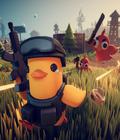
 Escape From Duckov is a single-player top-down looter-shooter game where you loot, escape, build, and eventually become a mighty bird soldier.
Team Soda knows how to make good shooting games that are novelties. Snake Force took the concept of the old-school game Snake and made it a shooting game where you need to watch where you shoot — lest you kill your own squad. Soda Crisis takes the side-scrolling, run-and-gun game and infuses it with non-stop action and more moves than you could ever hope to recall. Both games have the distinction of being very short experiences. It took a few years, but Team Soda's latest title is out, and when compared to the developer's previous titles, Escape From Duckov does a whole lot of things differently.
The planet of Duckov is dying. A series of catastrophic storms and the planet's internal combustion have signaled that it is only a matter of time before the world ceases to exist. Amidst the turmoil and fleeing inhabitants is you, a mallard that has been imprisoned but has suddenly received assistance from a mysterious person that is trying to help you escape. Once you finally break free, you find that the world around you is nothing but hostile, and the only thing you can do is try to loot as much as possible and survive until you can find a way off the planet. Overall, the story is relegated to the background, but it is nice to see some kind of narrative.
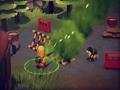
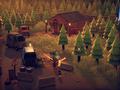
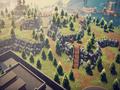

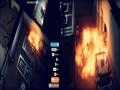
What you have is an extraction shooter that plays similarly to the Dark Zone section of The Division or full games like Hunt: Showdown 1896 or Escape From Tarkov, the namesake for this game. You go out into the world and try to search for as much stuff as your backpack can carry, and you fight off those that want to shoot you. Once you get what you came for, either from the environment or from enemies you've killed, you can return to your start point or find an extraction point and hold out until your means of escape appears. Should you make it home safely, you can use all of the stuff you scavenged to build up your base or prepare yourself for future excursions with better weapons and ammo.
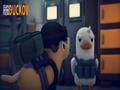
When it comes to the differences between this title and other extraction shooters, there are plenty, but there are three in particular that stand out. The first and most obvious of the changes is the inhabitants of the world. Everyone is either a duck or some other kind of bird. There are no humans to be found and no sign of long-dead humans or other animals on the planet. When you look at the title and the replacement of human mercenaries with feathered animals, you may immediately think that this is a joke or a spoof of a very popular title (something of a cottage industry on Steam). The game doesn't take too many opportunities to lean heavily into that joke. You may see fallen enemies quickly transform into cooked duck dinners, but you'll see loads of bloodshed before that moment. There may be a few normal non-related jokes and some oddball characters to meet, but the game takes itself very seriously, and it does a good job of getting you invested in the game instead of providing a throwaway experience where you'll giggle at a few jokes before uninstalling the title and moving on to something else.
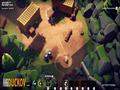
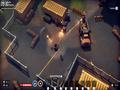
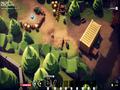
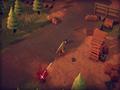
The second difference comes through in the game's viewpoint. Instead of taking on a first-person perspective, the game goes for an isometric viewpoint like most ARPGs. The wider camera perspective is helpful for those who find the first-person view to be too confining, but the game ensures a sense of balance by creating a light fog of war similar to what you'd see in Super Animal Royale. The world is visible, but you'll only be able to see enemies and some key items if they fall within your cone of vision. Adding this limitation evens things out because it prevents you from gaining an advantage in the field due to the chosen camera angle.
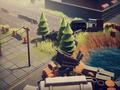
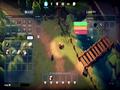
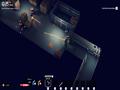
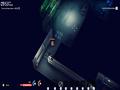

The third difference is with the multiplayer, or lack thereof. Unlike many other extraction shooters, this is a completely solo experience. There's no co-op, either locally or online, but there's also no PvP, so you don't have to worry about real people trying to hunt you down and take away your loot. That also means that you won't go up against people who know the game inside and out and pose a threat above your skill level. It is odd to say this considering what type of shooter this is, but the lack of human opposition creates an experience that isn't as stressful.
These differences don't suddenly transform the game into an easier extraction shooter, since most of the genre's hallmarks still remain. Ammo is not only limited in supply but also has various grades, which determine how much damage they can inflict. All of your weapons, from guns to melee weapons, have durability meters, so you need to constantly repair them or have lots of spares. Until your carrying capacity gets increased, you can only carry so many things at a time, so you'll have to make some hard decisions about what to carry and what to leave behind. Dying means that you lose everything, but the game grants you a bit of mercy; you can retrieve your goods like in Dark Souls, but the stash disappears if you die before reaching your fallen backpack. That's the case if you play with the Balanced difficulty level; a higher difficulty level means instantly losing everything once you die.
This is the kind of game where rushing into things will get you killed quickly. Gunfire from even the weakest weapon is good enough to kill you with a few well-placed shots, so you'll want to go slowly. Hearing a simple quack or footsteps is enough to place you on edge because you know a firefight may be coming. Hearing gunfire beforehand gives you a little relief, as you hope that other enemies are firing at each other long enough to leave you alone. In a way, this kind of tension with sporadic quick firefights will remind you of a hardcore military sim, but with cute animals.
The overall slow pace means that progressing through the game's five worlds is going to be a slow process. Completing the first map alone will take several hours, and that playtime gets longer as the later worlds get larger in scope. This is a good thing, since it means that it'll take a good while before you can fully master a map. However, another reason why you'll take so long is because of randomization. The map layouts and loot locations may be static, but the actual loot is completely randomized. You may get lucky and find exactly what you need for a mission in one run, only to be faced with a new mission that'll take several runs to complete because the items you need refuse to show up for long stretches of time. In a way, it emulates what you'd find in other multiplayer extraction shooters, but that doesn't mean it's any less frustrating.
One thing that might be divisive for players is the lack of gamepad support. The game is solely a keyboard/mouse endeavor, and the game makes good use of the plethora of buttons afforded by the presence of a keyboard. The game's isometric viewpoint and the fact that a large number of games coming out on the PC already support a controller makes this title a rarity in that department, especially for the genre.
The lack of built-in controller support is really felt if you're trying to play the game on the Steam Deck. There are already a large number of community presets for Valve's device, and while some of them are good, you'll really need to create your own from scratch or start tweaking some of the presets to get something you're comfortable with. Team Soda stated that controller support was happening eventually, but until that comes in, expect the experience on a TV or Steam Deck to be less than ideal. The game runs with the device's native 1280x800 resolution with a mix of low to medium settings. This results in a smooth 60fps while in your bunker but quickly drops to around 30fps when you're out in the field. Battery life from a full charge gets you around two-and-a-half hours of life, which isn't bad when you consider that the game's scope is rather large despite the visuals.
Speaking of which, the graphics are pretty good for what can be considered a simple-looking game. The models are simple in a way that makes the game look like a kids' title, despite the subject matter. The colors are a tad muted, but that's offset by the good lighting and particle effects. The engine does a good job of handling all of that on a moderate machine without dropping frame rates. As for the sound, what you have is sparse but reasonable, considering the type of game. Silence is golden, but the effects come through cleanly whenever you're in a firefight. The game features no voices outside of duck quacks and other bird noises, while the upbeat jazzy tunes are relegated to your hideout. It's a nice touch because it calms things down a bit before you need to venture into hostile territory.
Escape From Duckov is a pleasant surprise provided you have the patience for it. The focus on solo play for an extraction shooter relieves the game of any obvious griefing from overly ambitious players. The slow progression may irk those looking for constant action, but it also will please those players who appreciate being surprised by tense standoffs that start and end quickly. Even if the concept may have started out as a joke, the game shows that it can take itself seriously and provide an enjoyable experience. Unless you absolutely need native controller support, Escape from Duckov is a game worth checking out if you've always been interested in the extraction shooter concept but want to do so without real people constantly hunting you down.
Score: 7.5/10
More articles about Escape From Duckov