





 Step back into a vibrant world where daring escapades meet the art of commerce, as Will is hungrier than ever for adventure —and the treasures that come with it.
Moonlighter was a great game when it came out. Neither the adventure nor shopkeeping elements were distinct on their own, but the combination create a rare and very enjoyable experience. The game did well enough that we now have a sequel in the form of Moonlighter 2: The Endless Vault. While the core concept remains the same, there are enough changes that make the sequel feel very different. One of those differences is the fact that the game isn't out as a finished product but a Steam Early Access title.
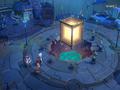
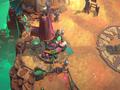
The story takes place after the events of the first game. After plundering the nearby dungeon for a constant supply of goods, your character, Will, stumbles upon an interdimensional portal from which a tyrant has come forth, claiming your town for his own. The villagers have successfully escaped but have become refugees who are forced to live in a different village. A few months later, you're far from your surrogate village and just hoping to survive. Luckily, your previous dungeon-raiding skills and a run-in with a mysterious voice have led you back to your surrogate village, where a cube tasks you with doing various things in the hope of fulfilling a wish. With various things at stake, you return to what you do best.
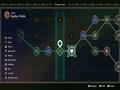
Just like the first game, your typical game loop is split into two different but complementary activities. Half of your time is spent roaming around the world and defeating monsters to gather materials for combat upgrades and relics. Those relics serve as the items you sell in your shop, and the likelihood of items being sold depends on you pricing them correctly. Give a base price that's too high, and people won't buy the item, but prices that are considered a huge bargain means that you aren't gaining much of a profit for your wares. Between the shopkeeping and the adventuring, you can go around the makeshift town to do some upgrades, like getting new weapons and potions for your adventuring, while also getting decorative upgrades for your store.
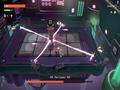

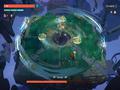
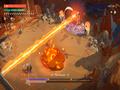
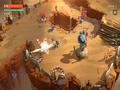
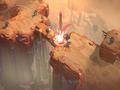
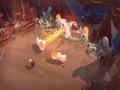
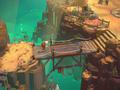
This is where the similarities end, as there are significant changes to just about every major section of the game. In combat, the game forgoes the top-down perspective in favor of a more isometric viewpoint with an immutable camera. The change in viewpoint makes you think of Hades, and that also plays out in other areas of combat. Your offensive capabilities include a projectile that refills over time and a special attack once you've hit enough things with your normal attack. You can also perform dodge rolls to get out of the way of attacks, some of which are telegraphed when you see an impact area on the ground. Enemies don't drop their relics; those things are only obtained once you defeat all of the enemies in an area. As you move from one dungeon area to another, you get a preview of what to expect in the next section, such as a mini-boss fight or if you get a break and get the chance to obtain a new relic. The overall combat system is new to the series but familiar for roguelike fans, and it copies the Hades formula well enough that it remains enjoyable no matter how many times you've seen it implemented before.
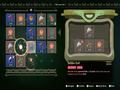
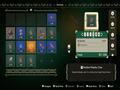
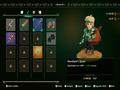
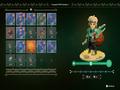
The relics system is also very different than before. You can still get the same items but fetch different prices for them if one is of a higher quality ranking than another. What's different is the presence of certain relics that affect other relics in your inventory. For example, you can get a relic that will boost the ranking of the relic directly to its left. Other relics may destroy items, but that makes the relic even more valuable. The presence of these particular relics makes the placement more of a minigame akin to something like Backpack Hero. You're trying to plan things carefully to maximize the value in the minimal amount of provided space.
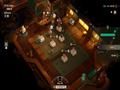
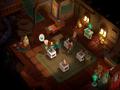
When it comes to the actual shopkeeping part, the changes are smaller but still impactful. The decorations you add to your place now affect prices and shopping habits. For example, you can place a banner next to an item, so shoppers can gravitate toward it first. You can also put an item on a special stand to increase its value slightly. There's a robot chest named K33per that helps you arrange your store layout while also acting as extra storage for your items. The most significant change is the presence of a log that keeps track of the various responses by customers for all of the price changes you've made for each item. Unless you're consulting a guide online, the process of correctly guessing the best prices is made easier with this guide, especially since the first game was missing this.
As it stands, Moonlight 2: The Endless Vault is shaping up to be just as good as the first game. The presentation is different but better, while the various changes are significant but don't negatively impact a very enjoyable gameplay loop. The game's Early Access status means that there's plenty of time for tweaks to the battle and economic systems, but considering 11 bit studio's track record thus far, the finished product will be a very good time for roguelike fans who don't mind having a little economic simulation in their adventures.




More articles about Moonlighter 2: The Endless Vault