








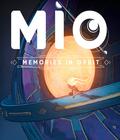
 MIO: Memories in Orbit is a new sci-fi odyssey that combines metroidvania and unique art direction.
MIO: Memories in Orbit puts you in the shoes of the titular Mio, a small robot who awakens on a mysterious vessel called … well, The Vessel. The Vessel is a lush and overgrown environment filled with plant life and robots. For some reason, the Vessel's systems have gone haywire, and the Pearls (the caretakers and guardians of the Vessel) have gone missing. To rescue the Vessel, Mio must venture out into the world and find the Pearls before it's too late.
Mio's plot is curious but somewhat obscured; it's told through poetic imagery and inference as much as being directly stated. It's not difficult to follow the plot, but it's almost more for the atmosphere than the actual storyline. The entire world has the vibes of a land descending into ruin, but everyone simply accepts the status quo. It gives the entire thing an interesting, almost melancholy, vibe that I found particularly engaging. It very much is a plot that is more vibes than story.



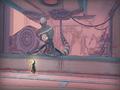
MIO is a Metroidvania title in the most classic way. You're thrown into a wide-open environment and tasked with finding your way to a variety of objectives. In true Metroidvania fashion, Mio will unlock new abilities as she progresses in the game. There are pretty interesting powers that offer a lot of mobility options. The first one you get is a hookshot that allows you pull yourself toward enemies or objects. You also can unlock a dodge that temporarily gives you invincibility frames. If you dodge an attack, it resets your double-jump, so you can use bullets to "bounce" across gaps. There's also a cool gliding ability, and my favorite is a spider-walk that allows you to easily crawl up any non-spiked wall.
The trick to these powers is that they all run on energy, a resource that is used up when you use the skill. The hookshot uses up all your energy, while the other skills gradually drain it. Without energy, you can't use the skills until you reach the ground and remain still for several seconds. The trick is that there are certain objects and enemies in the environment that replenish your energy instantly when hit. A good chunk of the game's platforming involves going from movement skill to bouncing off an enemy or object to another movement skill and so on. It lends a nice flow to the platforming as you figure out the exact right combination of moves to reach your destination.
MIO's level design is nicely freeform. With the exception of the very earliest areas in the game, you're not given a ton of direction about where to go. You can choose a direction and wander until you get roadblocked, but generally, each area allows you to explore quite far. Your general goal is to find whatever the new movement ability is for the area, defeat one or more bosses, and then collect the "pearl" that represents one of the ship's major functions. Since the game is so freeform, once you get a new movement ability, you can probably find new areas to explore right away. With some clever usages of powers, you can even skip certain areas. By bouncing off enemies, I managed to reach an area earlier than intended and could explore quite a bit further until I was restricted by a needed power-up. I even gained access to a different power-up that made my next platforming area much simpler.
Combat is fairly simple. Mio can use her "hair" to attack enemies by whipping them repeatedly, and executing enough attacks in a row activates a combo. Air combat is a big part of the game; attacking enemies resets your jump, allowing you to combo and jump over and over again. As you unlock new abilities, you can integrate them into combat. The hookshot "hairpin" ability allows you to instantly move to a distant enemy, while the dodge attack is crucial to maintaining your combo.
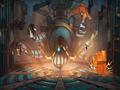
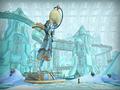
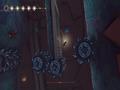


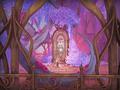
The boss fights can be slightly challenging, as there's no way to heal yourself mid-fight the way you can in something like Silksong. While most of the bosses have relatively simple patterns and the dodge move is incredibly strong, you're going to need to be fairly precise with your movements to get through because enemies can be fast, aggressive, and hit hard. You can gain more health bars, but some strong enemy attacks can take off multiple health bars at once. Most of the boss fights feel fair and fun, and despite the limitations, it shouldn't be too difficult to get through them.
MIO has a modification system somewhat akin to that seen in Nier: Automata. As you progress through the game, you can find various mods that give Mio different enhancements. One makes healing fountains free, one increases the damage you do after taking damage yourself, one lets you see enemy health bars, and so on. The key is that you have a limited (but upgradable) amount of memory in which you can equip these upgrades. Space is at a premium, and you're able to further modify it by taking on negatives. For example, you can gain extra memory but reduce the amount of invincibility frames the dodge ability gives you or choose to disable healing fountains.
This leads to an interesting push and pull because you can change your mods at any checkpoint. Do you really need enemy health bars in a full platforming segment? If you're fighting a difficult boss, you can disable healing fountains for some free bonus slots and use that to throw in some extra damage or defense. I stuck with a lot of the same mods throughout any given area, but the option to pile on bonuses for boss fights was quite nice and boosted my abilities in a tough fight.
If you do struggle with the boss fights or platforming, MIO has a handful of assist options that seem very intelligently designed. Instead of "make yourself invincible" like a lot of games like to do, these give you a genuine handicap that doesn't inherently invalidate the challenge. One gives you a bonus health that regenerates, but only if you remain on the ground for a certain period of time. This effectively feels like a heal, with the limitations of finding a safe time to activate it. Another weakens bosses each time you fight them, but the effect seemed rather small in my testing, so it's more akin to Hades' God mode than an instant win. The last makes non-boss enemies not attack until you attack them, which can lessen the stress.


I want to highlight that these assist options are some of the better ones I've seen in games. By offering an advantage that still requires you to learn the mechanics and engage with the gameplay, it feels like a way to give struggling players a useful advantage without feeling like cheating. The heal one in particular is excellent, since it adds a very fair and well balanced bonus that could easily have been a regular game mechanic. The only downside is that these advantages are mostly combat-focused. You still need to execute the platforming properly.
If I have one major problem with MIO, it pulls the somewhat-familiar Metroidvania twist of gradually descending into extreme precision platforming. As you get more abilities, the game begins to demand tighter and more elaborate executions, which isn't inherently a problem, but it reveals some of the weaknesses of the gameplay. There's one relatively late boss fight that took me multiple tries because the platforming felt awkward, either due to hitboxes that felt off or because the camera did a poor job of adapting to high-speed movement. It's certainly not game-ruining, but the game is at its strongest when it has a somewhat slower pace as opposed to weaving around a dozen rotating spikes.
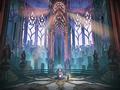
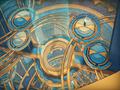
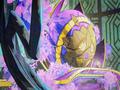
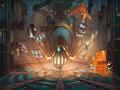
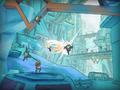
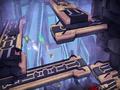
MIO is a gorgeous-looking game. The mix of overgrown colorful plant life and cold industrial corridors creates a distinct environment that is a visual delight to explore. Mio herself is full of charming animations, and I really enjoy the way her hair is used as an extra set of limbs, making her feel almost spider-like. I found most of the enemy designs to be a tad generic, but the standouts are strong enough to carry the rest of the game. The soundtrack is quite good, with a lot of pleasantly atmospheric songs that set the mood of each environment.
MIO: Memories in Orbit is a charming, enjoyable and perfectly well-made Metroidvania. The core gameplay loop is engaging, and there's enough room for upgrades and mastery of skills to keep the relatively simple combat feeling fun throughout. Some awkward platforming drags down the experience a little, but it's not enough to sour the whole. All in all, MIO feels like a great game for fans of Metroidvania-style games to play, and while it may not exactly reinvent the wheel, it shows that a well made game in the genre can still be addictive and fun.
Score: 8.0/10


More articles about MIO: Memories in Orbit