






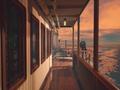
 Set on a desolate ship, Layers of Fear 2 will rely on the claustrophobic, ever-changing environments to keep players in the dark, never knowing what horror to expect around every corner and through every door.
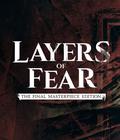
Bloober Team has been around for quite a long time. In the 17 years the studio has existed, it has experienced the lowest of lows with Basement Crawl, a game it had to yank from digital storefronts and replace with a slightly better title in the form of Brawl. It has also experienced one of the highest of highs with Silent Hill 2, a remake of Konami's horror classic that it handled quite masterfully. If you wanted to point at a title that started the studio's upward trajectory, it would be Layers of Fear, a horror game from 2016 that focuses on creeping psychological horror rather than on monsters and jump-scares. In 2023, the studio rolled that game, its sequel, and all related DLC into one remastered package that was also titled Layers of Fear. With the release of the Switch 2, the studio brought that remaster to Nintendo's new console with Layers of Fear: The Final Masterpiece Edition, and the results are fairly impressive, even if the compilation varies in quality.
The game starts off with a brand-new story that is meant to tie together everything into one cohesive narrative. You start the game as a writer who has recently won a contest, and the prize is to write while living in a historic lighthouse. The prize doesn't seem that glorious, but the location is meant to inspire a new book in a short amount of time. As usual in cases like this, the lighthouse hides some supernatural secrets, but you persist and write about several different artists who have spiraled into madness that is sometimes of their own making.
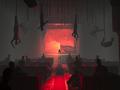
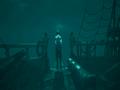
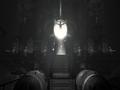
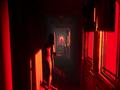
It's an interesting idea to use a new story to tie together all of the previous games, but the approach doesn't work too well in practice. The stories are only loosely tied together by the theme of art destroying your life when it becomes an obsession. Because the overall theme doesn't change much between each of the major stories, it often feels like the game wants to repeat this theme to the point where you become numb despite the changes with each artistic profession.
The segments featuring The Writer last a decent amount of time, but they act as bookends for the previously released games and their related DLC. This means that the first segment involves The Painter, someone who achieved success early on but is stuck in a creative rut that they can't get out of. The game goes into light adventure game territory, as you'll wander around each environment looking for clue scraps and assorted letters to help you piece together information about the past. You'll also unlock new areas to explore to keep the gameplay loop going.
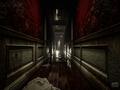
The Painter's section highlights some of the things that were inventive about the game when it was initially released. The first is the constantly changing environments. The game often changes the layout of the house and even the rooms that you go in. It tries to confuse you; opening a door can reveal a layout that makes no sense, but somehow, you'll still get led to where you need to go. The confusion becomes an uneasy feeling, and the game works with that to its fullest, especially since it greatly impacts the experience. The game also has a few environmental puzzles, but they're rather neat because they play with different perspectives to uncover new doors and items. Light and shadow are also used effectively in places for some puzzle-solving. For the most part, there's nothing that will get you truly stuck, so this feels more like a horror-tinged walking simulator. The overall runtime for this section feels perfect without overstaying its welcome.
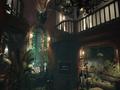
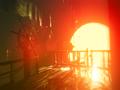
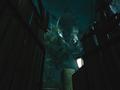
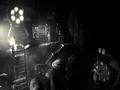
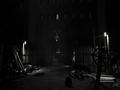
While The Painter's section remains intriguing, the sections with the Painter's wife and daughter don't provide anything new in the gameplay department. They're mostly present for lore expansion, and that's perfectly fine since the story in The Painter is easily the best part of the package. The same cannot be said, however, for the Director and Actor sections that comprise the second game in the series. These tales take place in an abandoned cruise liner filled with mannequins, and the hook is that you're going through various, unassociated movie scenes. They act as references to other popular horror films, which is fine but also a tad boring because you'll know exactly what to expect if you've seen the original films. The other weakness is that these sections take much longer than expected to complete, so even though they're using the same tricks from the first game, the wow factor isn't there anymore, especially with dialogue that crafts a less interesting story than The Painter's.
From a gameplay perspective, there are a few changes that make this compilation worth playing if you haven't already played the original titles on the original Switch. The first is the ability to play any tale you want without having it affect your main game. If you're trying to hunt down the different endings per section, this is a good way to do that without restarting the whole game. The second big change is in the accessibility options, where you can actually turn off the damage from the spirits that chase you from time to time. In the original incarnations of these games, those sections could be annoyances, so being able to nullify their ability to prematurely end the game is great for those who just want to explore the game at their own pace.
The move to the Switch 2 doesn't add any big exclusive features. If you're playing the game in portable mode, then you can use the touchscreen to navigate through the menus and interact with the environment. Motion controls and gyro controls are also present if you want an alternate way to control the game. That's really it, so the main hook is the ability to play the game portably if you don't already own a handheld PC.
The graphics are what most people will be interested in, and for the most part, they're pretty good. The game runs in Unreal Engine 5, and the big benefit here comes in the form of lighting and shadows. There's loads of it, and the general feeling is that it remains impressive to see this kind of game running on the Switch 2. No doubt that some form of upscaling is used to make the game look good, and it helps that the upscaling allows the title to run at near 60fps in either portable or docked mode. HDR is also present, but you'll want to turn that on if you have the system docked and hooked up to an OLED display. The system's own LCD display looks fine with the color technology but less impressive overall.
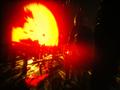
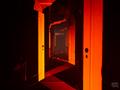
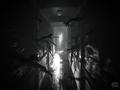
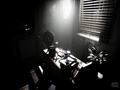
The advanced techniques provided by the engine show signs of pushing the hardware a touch too far on the visuals. Look at any light bulb, and you'll see lots of fizzle on the lights. The same occurs with any lit edge, but it isn't as pronounced when compared to the bulbs. Look at a letter, and things are fine until you decide to move the paper; any text becomes a blurry mess until the image stabilizes. The overall image still looks pretty good when you consider that you're playing a game made with an advanced engine on what is still considered a low-spec device, but these issues are still very noticeable to most players who aren't even looking for them.
Meanwhile, the sound is on par with that's present on other platforms. The musical selection is sparse, but what's available does a great job at keeping the atmosphere appropriately creepy. The sound effects carry that same foreboding tone, but it's rarely used to produce sharp jump-scares. The voice work is where the game sounds fine; some of the lines are delivered perfectly, while others can feel a little flat. It also doesn't help that the voices rarely speak all of the text presented on-screen, which creates a disconnect in the presentation.
In the end, Layers of Fear: The Final Masterpiece Edition is fine but nothing more than that. From a technical standpoint, seeing an Unreal Engine 5 game running on the Switch 2 still feels like magic, considering how underpowered the system is compared to other consoles. The shimmering lights and the blurring of moving elements show the engine's limitations rather clearly. From a narrative standpoint, the game starts off strongly with the story of The Painter, but it tapers off when you get to the rest of The Painter's family. The tales of the Actor, Director and Writer don't carry the same type of impact due to diminishing returns. From a gameplay perspective, the game starts off strongly, and while the later portions falter a bit, they get better if you use some of the game's built-in modifiers. While Layers of Fear may not be the best horror title in the Switch library, it remains a good one if you're a big fan of the genre.
Score: 6.5/10
More articles about Layers of Fear 2