


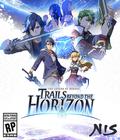
 The future of an entire continent is at stake in this milestone entry in the Trails RPG series, featuring three different protagonists and real-time/turn-based battles.
The Legend of Heroes: Trails Beyond the Horizon represents an interesting moment for the series. The Trails RPG franchise has been incredibly prolific, but the localization has run notably behind the Japanese releases, coming sometimes years or decades later. With the release of Trails Beyond the Horizon, the franchise has finally caught up to the Japanese releases, so English audiences can now play every single Trails game.It's rather fitting that the most recent release is also where the franchise starts to bring together everything, but beyond that, it's also a welcome improvement over Daybreak 2's muddy and inconsistent plotting.
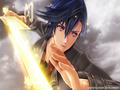
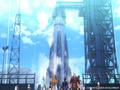
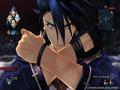
Trails Beyond the Horizon opens up not long after the events of Trails Through Daybreak 2. Van Arkride, do-gooder for hire, is still working with his assistant-slash-client Agnes Claudel to figure out the mystery behind the Oct-Genesis Devices that have been wreaking havoc around the nation of Calvard. Their attempts to solve the mystery run smack-dab into perhaps the biggest event in the history of the Zemurian continent: the first space flight, an attempt to figure out the mysteries surrounding the land. This groundbreaking event drags in Van Arkride and members of Thors Class VII, including the Ashen Chevalier Rean Schwarzer, and church's troubleshooter Father Kevin Graham. The path of these three heroes intersects as a new mystery unfolds that threatens the entire land.
If there were ever a Trails game to not start with, Horizon is probably it. It represents the point where the series has started to shift into its endgame and spends a huge chunk of time revisiting old plotlines and answering series-long mysteries. This isn't a bad thing, and it's nice to see the franchise finally starting to pay off the dozen previous games in the series and approach the climactic endgame, but it mean that you should play at least some of the older games outside of the Daybreak sub-franchise if you want to understand anything. It would be akin to watching "Avengers Infinity War" without seeing any previous Marvel movie.
While Horizon retroactively justifies some of Daybreak 2's weaker moments, Horizon is a huge improvement and marks a return to form for the franchise. The character writing feels a lot stronger, the consequences more significant, and the lack of the incredibly awkward time travel mechanic goes a long way toward making the game feel more engaging and exciting. Even things like the alignment system, which felt entirely vestigial in the previous game, feel more impactful now, even if not quite as much as in the original Daybreak. Throwing in two older protagonists in the form of Cold Steel's Rean and Trails in the Sky 3rd Chapter's Kevin feels more like fan service than a natural part of the plot, but it's also nice to see both characters again. It ends up paying off in the end, and it's been long enough that I'm just glad to see Kevin again.
Horizon's biggest problem is its pacing. The game is about two-thirds Trails through Daybreak 3 and one-third Trails of Reverie 2, and that ratio doesn't work in its favor all the time. Van's segment is slower paced and meanders more, focusing on the kind of character building and slower-paced mysteries that made the first Daybreak shine. This means that it takes a long while to get to a payoff. On the other hand, Rean and Kevin's segments are shorter and dense with reveals and twists, which is nice but can make them feel a little too busy. It can also make Van's segments feel slower than they actually are. The result is something that feels weaker than if the dev team had just done a standard Daybreak 3 instead. With this many mysteries being addressed, though, I understand why the dev team wanted a more diverse cast.
Overall, the core gameplay is pretty similar to Daybreak 1 and Daybreak 2. You'll spend most of your time wandering through various environments, completing side-quests, occasionally playing minigames, and taking on special 4SPG side-quests that provide more insight into the world, more items, and more gear. The game is divided into segments, usually following Van's crew, Rean and his allies, and Kevin, who hangs out with misfits. Each story has its own side-quests and stories, and there's a lot of content.
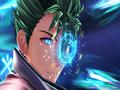
Also semi-returning from Daybreak 2 is the randomized Garten dungeon. This time, it's been taken over by the evil society Orobouros, who have transformed it from its previous form to a new, more edgy form called the Grim Garten. As in the previous game, this is a randomized dungeon that you can explore to find tons of rare loot and cool cosmetics, and you get the chance to power up your characters and use characters that normally aren't available. The biggest change is that instead of a "pick your route" option, the Grim Garten has you play a board game minigame where you move a piece around to collect treasures and select the dungeon areas you want to enter. It's mostly a reskin of the previous random dungeon, but having it be taken over by Ouroboros adds some zing.
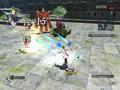
The combat system is also largely the same as it was in the previous two games. If you haven't played Daybreak, it's a hybrid action/turn-based RPG combat system. When in dungeons, you can move around and attack enemies freely by slashing at them, which builds up damage and allows you to use potent charge attacks and deadly Quick Spells. You can also dodge enemy attacks to get a chance for an ally to counterattack on the foe. Enemies can be defeated this way, and you'll do it a lot. At any time, you can deploy magical shards to enter a turn-based combat system where you can access potent moves and abilities that aren't available in action mode. In essence, action mode is for weaker foes, and turn-based mode is for bosses and stronger enemies that require the optimization of damage output.
Probably the biggest new feature is the "ZOC" mechanic. Outside of turn-based battles, you'll gradually build up a ZOC meter, and when it's full, you can temporarily slow time and deal increased damage. This gives you a far more effective way to defeat certain enemies in the action-based combat system. ZOC builds up super quickly, so you can use it very frequently, and the only minor annoyance is that it's bound to the right Joystick click, which can feel awkward to use in the heat of combat.
In turn-based combat, ZOC serves as an upgrade to the ability to Double Shard Boost from previous games. You build up a Shard Boost meter, which you can use to activate the enhanced powers of your character's Holo Cores, pretty much identically to the previous game. Doing this also activates ZOC, which instantly grants you a second turn directly after the first. This can be a game changer, since it means you can instantly cast Art, which usually requires a charge, and you can do things like buff and attack in the same turn or pile on tons of damage.
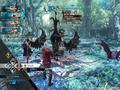
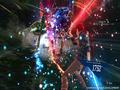
This is somewhat balanced by the existence of Shard Commands, which are functionally identical to the Brave Orders system found in the later Cold Steel games. By spending the Shard Boost meter, you can temporarily activate extremely powerful buffs that influence your own party. This can increase damage by huge amounts, restore HP, and more. Since these spend the same energy as Shard Boosting, you'll need to decide if it's better to boost your whole party or allow one character to act again.
The same goes for the S-Craft mechanic, which requires you to Boost at least once to use it. S-Crafts are probably the most powerful tool in your arsenal, but they're slightly harder to spam. You can only use one S-Craft per boost, and you can't use another until your boost runs out. Furthermore, they're not necessarily more effective than a Shard Command or ZOC. On the other hand, using S-Crafts in battle grants additional points of the Shard Gauge to use, so using them early can allow you to build up a greater reserve for later — and tougher — parts of boss fights.
Another new feature is Awakenings, which allows characters who have a special mode (such as Van or Judith) to power up while on the action combat screen. This gives them a huge damage boost, similar to ZOC, but it lasts longer. Entering turn-based combat while in Awakening also starts the character with a buff, depending on their specific Awakening. This can be a great way to get a huge boost on a midboss or other tough enemy, but otherwise, it's a way to quickly tear through trash mobs. It takes a touch longer to charge up than ZOC, but it can still be used pretty regularly.
Overall, the combat system in Horizon feels familiar. The bulk of what has been done to it are either returning features under a new name or attempts to balance some of the most egregiously powerful abilities from the previous game. "Familiar" doesn't mean bad, though. The combat can feel a tad too easy at times, especially if you optimize your characters well, but it remains engaging throughout and hits the best balance of all three of the Van-led games to date.
Despite having even more features than before, Horizon's combat still feels simplistic, and while you have more ways to kill things quickly, it's pretty much button-mashing and basic dodging. Additionally, the flaws (like the game's somewhat janky camera) come into focus because you're using them more often, and it's clear that most of the enemies don't have much in the way of AI or moves. It's not a serious flaw, but if Falcom wants to emphasize the action side of combat, it should put more effort into making the action feel more engaging.
Horizon also represents another step forward in Falcom's visuals department. Each game in the franchise has gotten better looking, and it's clear by this point that the developer has a much better grasp on cut scene direction and how to make the big scenes look more dynamic and interesting. The remake of Trails in the Sky 1st Chapter looks even better, but it's also a more recent game in terms of the original release date. The Switch 2 port of Horizon mostly looks good and runs well. Some of the textures seem a little weak, and I noticed some slowdown during busy areas, but nothing ruined the experience. The music and voice acting retain the same overall high quality that the franchise has known for, and it's clear a lot of the actors have gotten very comfortable with their characters. There are a few oddities (like characters discussing similar accents that don't sound similar in the dub), but overall, it's good stuff.
The Legend of Heroes: Trails Through the Horizon is the franchise's first step into its endgame, and for the most part, it sticks the landing admirably. The gameplay hasn't changed much from the previous entries, but the overall storytelling and character beats are a massive step up from Daybreak 2. Its biggest flaws are some overall slow pacing and the fact that you'll need a lot of prior Trails knowledge to feel invested in the game. It's nothing that would stop longtime fans from having fun. The whole franchise is available now, so it's the best time to catch up — until the next main game comes out, that is.
Score: 8.5/10
More articles about The Legend Of Heroes: Trails Beyond The Horizon