









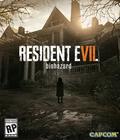
 Resident Evil 7 is the latest game in the series, and is focused on immersive horror with the main concept building upon the series' roots of fear, exploration and tense atmosphere.
The release of Resident Evil: Requiem on the Switch 2 is a big deal, as it marks the first time that a Resident Evil game will come out day and date with other platforms. The release is also significant because it takes a game originally made for PS5, Xbox Series X|S, and PC and makes it fit into the relatively low-powered hardware of the Switch 2. Considering that Requiem is the latest of the new set of first-person mainline Resident Evil titles, Capcom thought it fitting to release Switch 2-specific versions of both Resident Evil 7: Biohazard and Resident Evil Village, and we'll be looking at the former in this review.
This is actually the second time that Resident Evil 7: Biohazard has appeared on a Nintendo console, as the title also appeared on the first Switch. However, that was a cloud version of the game, which had a bunch of caveats. The most notable caveat was that you needed a constant internet connection to play the game, which somewhat kills the whole idea of the Switch if you often take the system on the go and don't always keep it online. The fact that the game is being streamed may save on storage space on the system, but it also means that the quality and consistency of your internet connection will determine every aspect of the game. If you're on Wi-Fi, there's no guarantee that your connection will be stable. Graphical breakups, sound disappearing, and extreme latency are just some of the issues you'd have to worry about, in addition to the heightened chance that you'll get dropped from the game if the connection goes bad. Since this game isn't saving all the time, it's dicey to play through a level on the cloud when the system requires extra equipment for a solid connection.
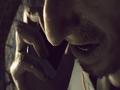


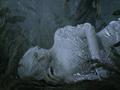
For those unfamiliar with the game, RE7: Biohazard is an entry that acts as a brand-new jumping-on point for the series. The familiar characters are still here but relegated to the background, as the game focuses on Ethan Winters, a man whose wife had disappeared three years ago. Out of the blue, he gets a message revealing that she is alive but held captive in the Baker Farm in Louisiana. Despite the message stating that he shouldn't go, Ethan goes anyway and finds himself trapped in a dilapidated house full of characters who aren't what they seem.
The story isn't the only thing that got a change, as the gameplay perspective has also transformed. Much like Resident Evil 4 when it went from the fixed camera angles of past games to a third-person, over-the-shoulder view, Biohazard changes perspectives once more to a completely first-person presentation. Even the cut scenes adopt this viewpoint, so you're in Ethan's shoes from the start until the end credits roll. The perspective change felt like a gimmick initially when the game was revealed. It was as if Capcom was trying to chase down the trend that many indie horror games had at the time of being done in the first-person view. The more you play, the more you realize that there's still plenty of Resident Evil DNA to make that perspective change work, including the constant exploration for items to solve semi-esoteric puzzles, enemies that aren't so easy to kill and are best avoided, and the story's constant twists that make sense but don't feel overdone. It all feels fresh thanks to the camera change, which makes things feel more personal.
We've already reviewed the game twice on the site, and the verdicts from those reviews remain unchanged. This is still a horror game that favors tension over cheap jump-scares. The combat that was more prominent in Resident Evil 6 takes a back seat to good old puzzle-solving and playing things smartly versus just blasting things to bits. Despite the changes to the viewpoint, the more intimate horror house setting makes the game feel like a return to its roots, which the series really needed at the time and still makes the game feel good today.

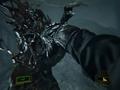
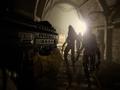


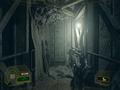
If you're looking for something exclusive to this release, there's not much. You have the option to use motion controls, which is nice since this version has no mouse option. This is also the Gold Edition on offer, so you have all of the previously released DLC in tow. That's really it, which is absolutely fine unless you were hoping for some touch-screen controls in portable mode, which feels non-essential.
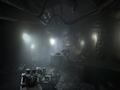
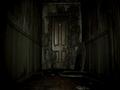
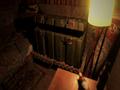
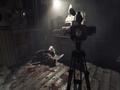
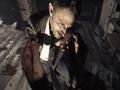
The question for many people reading this is whether the game looks and performs well on Nintendo's latest hybrid console. When docked, Biohazard looks quite nice in terms of resolution, but we didn't do a pixel count to see what this is running at. There are signs that DLSS is involved due to things like some fizzled shadows near light sources. The shadows themselves seem to be of a lower resolution, given their lack of sharpness. There are lower resolution textures present on some surfaces, but unless you're really looking for them, there are only a few times you'll notice such things, such as when you see blood on Ethan's arms or sleeves. Despite this, the game still looks great thanks to the eerie lighting and well animated character models. The low-resolution texture issue isn't seen on people or anything else of major importance, so the game doesn't feel like a lesser version of what's on the other consoles. There's also HDR support, which comes off rather well when in the drearier parts of the estate.
The best part, which many people will appreciate, is that the game runs at 60fps almost all of the time. Drops are so few and far between that you'd be forgiven for thinking that this was a solid 60fps from beginning to end. This places the game's performance on par with the other consoles, and even though this isn't necessarily a fast-paced game, a smooth frame rate with a first-person perspective is always welcome over a prettier picture with clunky movement.
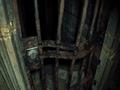
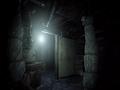
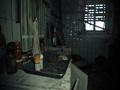
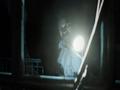
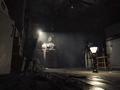
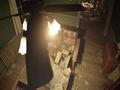
All of that analysis was done when the console was docked. For those who value portable play, the good news is that the game doesn't falter from a graphical standpoint. The game still shows off some low-resolution textures, but the device's screen does well coping with that, so the texture resolution is less of an irritation when compared to playing on a TV. The frame rate remains at 60fps almost all of the time, and any frame drops are nearly imperceptible. The experience is great, but you'll really wish that Nintendo put an OLED screen on the device to take advantage of the HDR presence.
When it comes to the audio, things remain the same as they did on other platforms. The effects play a big part in amplifying the creepiness factor of the game, and everything is pitch-perfect. The music is used sparsely, but it does a perfect job in keeping things tense whenever it plays, since you know something significant is about to happen. The voice work is also excellent all around, with Ethan being the only occasional weak spot, when his emotions seem too subdued in delivering some lines. All of this comes through very well in surround sound, a feature that has been part of the console since the first Switch but rarely gets used by games.
The Switch 2 version of Resident Evil 7: Biohazard is very good, especially from a technical standpoint. Low-resolution textures aside, the game looks excellent, and the near-constant 60fps really makes the game feel close to what you got on the PS4, only now it's in a portable form. The core game remains as solid as ever, and with everything in one package, Biohazard is an easy choice for a Resident Evil fan who only has access to Nintendo platforms.
Score: 8.5/10


More articles about Resident Evil 7