







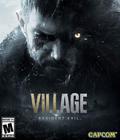
 Experience survival horror like never before in Resident Evil Village, which will elevate each desperate fight to survive by showcasing the most realistic and terrifying graphics to date.
Resident Evil: Requiem isn't being released exclusively for the Switch 2 but the fact that it is arriving on the system at all without a significant delay is significant. With the possible tie-ins with the previously released first-person centric Resident Evil titles, it only seemed fitting that Capcom also bring those titles to the platform. We previously took a look at Resident Evil 7: Biohazard and found it to be an absolutely solid port of a game that doesn't have any significant differences over its original Xbox One and PS4 versions. Now we take a look at Resident Evil Village and find that the quality is similar.
Like the seventh mainline entry of the series, Resident Evil Village was also released on the original Switch with a cloud version that suffered from the same issues. The most notable issue was the fact that you needed a constant internet connection to play the game, which somewhat kills the whole idea of the Switch if you often take the system on the go and don't always keep it online. The fact that the game is being streamed may save on storage space on the system, but it also means that the quality and consistency of your internet connection determines every aspect of the game. If you're on Wi-Fi, there's no guarantee that your connection will be stable. Graphical breakups, sound disappearing, and extreme latency are just some of the issues you'd have to worry about, in addition to the heightened chance that you'll get dropped from the game if the connection goes bad. Since this game isn't saving all the time, it's dicey to play through a level on the cloud when the system requires extra equipment for a solid connection. To add insult to injury, you also had to pay for some extra DLC, and on a service where we've already seen some cloud versions of games disappear, it may not seem advisable to rely on that version of Resident Evil Village on a new platform .
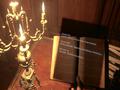
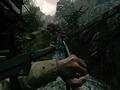
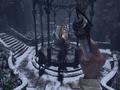

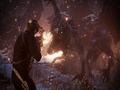
This game is really a direct sequel to the previous title, marking a rarity, as consecutive entries in most Resident Evil games don't have the same protagonist twice in a row. With the help of Chris Redfield, Ethan Winters and his wife Mia have moved to Europe after the incident at the Baker Farm left them changed forever. Life has been complicated, but things have settled a bit, and the couple even have a child together named Rosemary. One night, the unexpected happens as Chris enters the house, kills Mia, takes away Rosemary, and knocks out Ethan so he can also be taken away. When Ethan awakens, he finds himself near a wrecked truck outside of a snowy village. His main goal is to find and rescue Rosemary.
If the story of Resident Evil 7 can be seen as a more serious return to form, then the story of Resident Evil Village can be seen as the game leaning toward camp once more. Several game aspects and scenes demonstrate this well. Several seemingly regular people have powers that make them feel slightly overpowered. The heads of the area all demonstrate flourishes that lean toward the silly, even if they remain frightening in context. Scenes where you're trapped and looking at several monsters hold court over things tangentially related to you can feel both odd yet on brand, while the plot takes on several twists that become both shocking and laughable. This isn't a knock on the plot, as the camp is still handled in a way that is entertaining instead of groanworthy but it is a tonal shift from what was offered in the previous title.



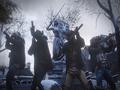
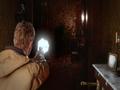
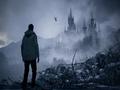
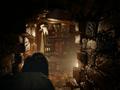
We reviewed Village when it originally arrived in 2021, and our impressions of the title haven't changed since. Aside from the aforementioned camp, the game emulates parts of Resident Evil 4 not just in its setting but with the increased focus on combat versus outright scares. Your newfound military training gives you more experience with handling weapons, and while ammo is still a scarcity on the field, you can craft bullets if you have the necessary ingredients. Shops are also a thing, so you can get more stuff and not feel like you're on a knife's edge toward being helpless. The boss fights still feel great, but the expanded roster of monsters to fight is the real highlight, as the game feels fresher due to this, especially compared to the overall lack of different foes in the previous title. That monster variety is complemented by a wider variety of environments that are vastly different yet equally as disturbing. By the end, the adventure as a whole remains satisfying, and that's further amplified by both the return of Mercenaries mode and the extra bit of DLC that provides some closure to the main story thread.
Aside from the presence of motion controls, there are no Switch 2-exclusive features. There's no touch-screen support for portable mode and no way to use the mouse function of the second Joy-Con. This is the gold edition of the game, so you get all of the DLC that was ever made, but it is odd to see that there's a main menu option to go to the eShop, even though there's no need to do that. You also get access to a third-person camera, something that arrived on other platforms only after a patch. For those wondering, there is no option to transfer your cloud version's save to this version, but few people on the platform would be inclined to try that in the first place.
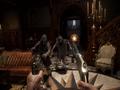
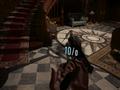
Switch 2 owners will find that the game looks great, especially when you're playing on an OLED set where HDR is present. DLSS is used effectively, and even though you can still see telltale signs of the technology used on objects with finer details, the overall image still looks good. This is especially true when taking lighting effects into account, as the shadows are more pronounced with only a minimal amount of fizzling present. Again, the one thing that people will like is that the game runs at 60fps almost constantly while in docked mode. The Switch 2 has been around long enough that we've seen enough titles reach PS4 levels of graphical quality, so something like this shouldn't be surprising at all. Seeing this in action still has the ability to impress, since it's being done on a console that sips power in comparison to its competition.
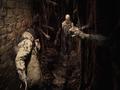
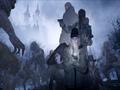
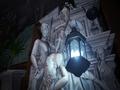



Much like the Switch 2 port of Resident Evil 7, the graphical performance of Village in portable mode is well done. The low resolution of many textures is less noticeable in portable mode, but the game still looks great. The frame rate holds to 60fps most of the time, but there are more instances when the frame rate drops to what seems like the 40fps level when compared to Resident Evil 7 in portable mode. Other than that, the experience remains solid enough that the game doesn't greatly suffer when the system is sipping on less power compared to docked mode.
The audio does a good job of elevating the game's overall horror. The voice work helps to play up the camp factor significantly, but the voices are excellent and fit with every character very well. The music still aims for a more serious tone like it does in the previous title, while the effects pack a real punch, a real benefit given the game's more action-oriented stance.
The Switch 2 version of Resident Evil Village stands up there with Resident Evil 7: Biohazard as being an absolutely solid port for the hybrid console. The frame rate is almost rock solid throughout, and while a good chunk of lower-resolution textures is still present, they aren't as noticeable as before. The core game is still excellent, but it caters more to the action crowd like Resident Evil 4 did instead of the true survival-horror vibe of the previous title. Those who only own Nintendo consoles but love horror will get a kick out of this title, especially since it comes in a more reliable form than the original Switch version.
Score: 8.5/10




More articles about Resident Evil Village