



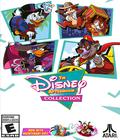
 The Disney Afternoon Collection is a compilation of eight games that feature beloved Disney TV characters from the 80s and 90s in fun-filled adventures.
The Disney Afternoon Collection originally came out in April 2017 on the PS4, Xbox One and PC. The notable exception to this list was the Nintendo Switch, which had just debuted one month prior to this game's release. While it may have been understandable not to release on Nintendo's newest console at the time, especially since the platform's success wasn't yet guaranteed, it remained a sore point for Nintendo-owning retro fans that the compilation never made it to the system, despite the package consisting of all NES games. Almost nine years to the day, The Disney Afternoon Collection has finally arrived on both Switch and Switch 2, and it does so with some extra content to serve as an apology for being so late.
This is a retro compilation that contains loads of Capcom-developed games revolving around the different TV shows from The Disney Afternoon, an animated block of TV back when syndicated afternoon cartoons were still a thing. Keep in mind that the library is restricted to these shows, so while Capcom was responsible for some other Disney games like The Little Mermaid and Mickey Mousecapade, they aren't included because they were never part of The Disney Afternoon. Also keep in mind that this collection is restricted to only Capcom games, so those hoping to get a chance to play the likes of the Sega Genesis version or TaleSpin or the TurboGrafx-16 copy of Darkwing Duck are out of luck.
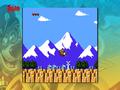
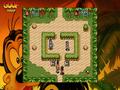
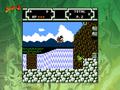
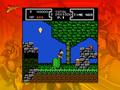
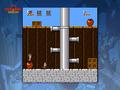
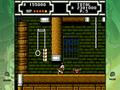
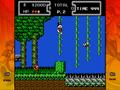
The version of the compilation released for other platforms contained six titles, all hailing from the NES era. Going in chronological order, we start with DuckTales released in 1989. You play the role of Scrooge McDuck, and your goal is to go around the world to retrieve five of the most valuable treasures. While this is a platformer, it is a bit different in that your attacks and other maneuvers are done with a control scheme that's slightly more complicated than what players were used to at the time. Provided you can come to grips with that, the game is awesome, and most people would already know how good the game is, since there was a remastered version that came out a few console generations ago. On any other platform, the presence of the remastered version would downplay the need for this title, but since DuckTales Remastered isn't on the Switch, fans of DuckTales on the Switch will already see this compilation as a must-have for their library.
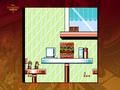
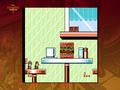
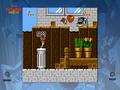
Next up from 1990 is Chip 'n Dale Rescue Rangers, one of the few multiplayer games in the lineup. The plot starts off with you trying to rescue your neighbor's cat, but that turns out to be a ruse; Fat Cat uses the opportunity to kidnap Gadget and force her to make new inventions for him. The gameplay is reminiscent of Super Mario Bros. 2, as the only way to attack anyone is to pick up objects in the environment and throw them at enemies. That'll be crates most of the time, but there are moments when you'll get ahold of iron boxes, large fruit, or even bombs. The game moves at a fast pace but is very enjoyable thanks to the solid level design, sly nods to the TV show, and hidden tricks to discover, such as hiding in a crate to protect yourself from some enemies. However, keep in mind that the game is very easy even though it is 10 levels long, and it doesn't take much effort to complete the game in one sitting. While many NES games have a reputation for being tough, this one is very breezy by comparison.
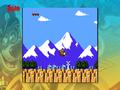
The next game is TaleSpin, originally released in 1991. The premise is that you're searching for cargo to ferry while avoiding air pirates. Unlike the other games in this compilation and the versions of TaleSpin that appeared on other systems, this isn't a platformer. Instead, this is a shooter that automatically scrolls sideways but sometimes goes vertical. The one gimmick the game introduces is the ability to flip your ship, so you can shoot behind you. That's nice, but the rest of the game has questionable design decisions. Even though this is a shooter released in 1991, you can only shoot one bullet at a time, so you can't fire your other bullet unless the previous one hits an object or goes off screen. The scrolling in either direction is fairly fast, but your own movement is slow, causing you to either be forced to miss some cargo drops or risk getting stuck behind scenery. The game allows you to tilt your plane up and down to shoot enemies, but the previously mentioned rules actually make this a hindrance because shooting diagonally may cause you to miss your shot. The game features these in the very first level, and while you can get used to these idiosyncrasies over time, it doesn't make for a good first impression. This feeling doesn't get better as the game progresses, which easily makes this the least desirable game of the bunch.
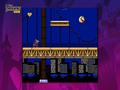
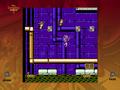
Darkwing Duck is the next game that originally came out in 1992, and it is a return to form after the disappointment of TaleSpin. The game is a platform shooter, similar to Capcom's own Mega Man series. You can select which level you want to play, and your gas gun serves up infinite bullets. You don't get any new power-ups for defeating bosses, but you can find different gas gun power-ups, including a lightning shot that fires diagonally and a heavy gas gun that spreads its limited projectiles on the ground. The level design is solid, and the boss fights are fun. The game also sports a few secrets that encourage some replayability. The game comes off as a tad tougher than the others, so those looking for some more of a challenge will be pleased.
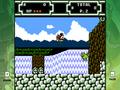
DuckTales 2 hails from 1993, and despite the popularity of the original game, this one isn't as well known, since it came so late in the NES life cycle that many potential players had already moved on to either the SNES or Genesis. That is a shame, since this game feels like an evolution of the first game's formula, even though the plot is essentially the same. You have the added ability to use your cane to pull objects and hang on hooks. You can now use your golf swing to propel yourself on inflatable rafts. The game features more hidden areas than before, including ones that can only be discovered if you put together pieces of a map hidden in each world. The level design remains as imaginative as before, and while the music isn't so memorable, the graphics see some tweaked improvements. This game is on par with the original as far as quality goes and is well worth playing.
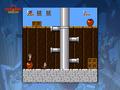
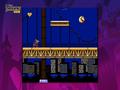
The last of the NES titles is Chip 'n Dale Rescue Rangers 2, another game that was missed by many since it was released in 1994 when the SNES was already hitting its stride. The plot follows a similar line as the first game in that your reason for going into action, a bomb planted in a restaurant, is simply a distraction since Fat Cat has escaped and is planning another heist. For the most part, the game plays exactly the same as before, but you can pick up and throw stunned enemies as well as throw items diagonally. You could be forgiven for not knowing about these, as the game doesn't really present too many opportunities where these maneuvers are essential. The level design is fine, but the ability to choose which levels you can go through is gone because the game is completely linear. One big change is that the bosses are tougher, so there is some legitimate strategy needed to defeat them, especially since you have to wait for throwable objects to appear instead of relying on a rubber ball for the job. It remains an easy title that's quite good, even though the original game is better.
To make good for Nintendo-owning fans having to wait around for nine years for this package, Capcom has thrown in the last two Disney Afternoon titles it made, both of which happen to be SNES titles. The first of these is Goof Troop, originally released in 1993. This title gained some notoriety in recent years when it was discovered that Shinji Mikami of Resident Evil fame helped design this title. The story definitely plays differently from what you'd see in the TV show, since the series was a sitcom with no focus on adventure. In the game, both Goofy and Pete decided to go on a fishing trip while taking their respective sons with them. Suddenly, a pirate ship appears, and both Pete and PJ get kidnapped. Goofy and Max give chase and ultimately end up on the pirate's island, where they need to rescue their friends.
Just like both Rescue Rangers titles, this is a co-op game taken from a top-down perspective. Both Goofy and Max can pick up a few objects to throw at enemies and they can also kick a few blocks to knock out foes. However, combat takes a back seat because the game focuses on puzzles and exploration. You'll travel from room to room, and you will encounter a few switch puzzles where blocks need to go to specific spots to unlock gates. Most of your time is spent using various tools, like grappling hooks and bells, to solve some of the puzzles. There's a need to frequently travel back and forth between rooms, so you can reach each level's boss fight.
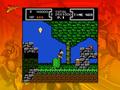
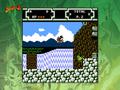
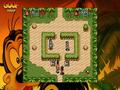
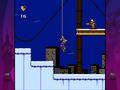
The gameplay holds up rather well after all of these years, and the only knock against this game is that it's short. The game only consists of five levels that aren't very long, so a gamer of moderate skill can knock out the game in around two hours. At the same time, the puzzles are enjoyable, and combat is fun enough that you won't mind the short length. Co-op is where the game really shines, as each person can only hold one tool at a time. There will be lots of passing of items back and forth and areas where some challenges in solo mode are made much easier with a partner. Overall, this isn't much of a hidden gem considering how well known the cartoon is, but it is a game that will get a bigger audience this time out, since more people know what to expect.
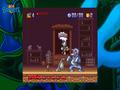
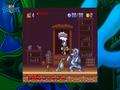
The second title is Bonkers, which was released in 1994 and is the last Disney Afternoon-related title from Capcom. You play the role of Bonkers D. Bobcat, a former cartoon star who became a Hollywood P.D. officer in the Toon division. Someone stole three of Hollywood's most valuable treasures: the hat from The Sorcerer's Apprentice, the lamp from Aladdin, and the mermaid's voice from The Little Mermaid. While explaining the importance of the crime to his human partner Lucky Piquel, Bonkers inadvertently causes Lucky to crash the squad car. This leaves Lucky in traction and spurs Bonkers into solving the case solo.
For the most part, the platforming is pretty basic. You can jump on enemies to get rid of them, and you also have a dash move that lets you turn into a ball if you duck during that dash. You can throw bombs at enemies and some obstacles, but your bomb count is limited, and you can only refill them by throwing bombs at certain balloons. You can increase your bomb count for every 10 badges you collect, and you can also eat food to increase your heart count to survive more hits before dying.
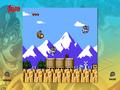
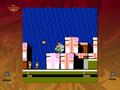
For the most part, Bonkers is decent even if it is considered to be more geared toward kids than seasoned players who prefer platformers. The one annoyance comes from the game's overall speed. Bonkers seems to move rather slowly overall, even when he dashes, so many people will think he's sluggish. Things get worse when you get hit; you'll always take a few seconds to show off an animation of you recovering before you regain control. This gets worse when you're in a boss fight, and it can ruin your timing; even though the few seconds of recovery don't result in enemies getting in cheap hits, the effect is enough to make the game feel like a chore.
The addition of these two SNES games makes this a more comprehensive version of Capcom's Disney Afternoon output but not necessarily a complete version. Like before, one sore spot is the fact that the Game Boy iterations of these titles are missing from the package. While they're similar enough to their NES counterparts, they are different enough that experiencing them on a modern platform would be welcome, especially since the chances are slim that they'd be released in a compilation of their own.
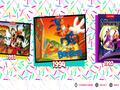
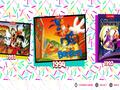
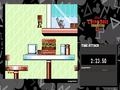
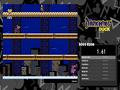
When it comes to the extras, what's available been slightly tweaked from before to include some content from the new titles. There's a music player with access to the songs from all eight games. You also have an art viewer that shows box art, behind-the-scenes sketches, print ads and the like. What's funny is that while the box art for the NES games have been edited to make no mention of Nintendo, that's not the case for Bonkers and Goof Troop, which have prominent logos for the Super NES. One thing missing are Boss Rush and Time Attack modes for the SNES games, even though they're present in the NES games in the collection. At least all of the games still feature the rewind feature, which is nice considering that some newer players might still find these titles to be a touch difficult, even though most of these games are on the easy side when compared to other NES and SNES titles of the time.
The Disney Afternoon Collection was already a solid package, but barring any updates on other platforms, the Switch and Switch 2 versions have now become the definitive versions of this title. Bonkers may be something of a dud, but Goof Troop is a hidden gem. The other titles in the collection are quite good, with TaleSpin being the only exception to that rule for the original game set. While the extras haven't expanded that much, what's present is still pretty nice. If you're a fan of retro games or have some nostalgia for these cartoons, be sure to pick up this compilation, especially since the addition of two more games didn't increase the price.
Score: 8.0/10
More articles about The Disney Afternoon Collection