







People of Note is set in a world where everything is determined by music. Everyone's a musician, the various towns are divided into music genres, and every place is all about the music. Players follow Candice, a young up-and-coming singer from the home of pop music. Desperate to earn her chance to sing onstage at the big upcoming concert, she sets out to gather potential bandmates from other cities across the land. However, she quickly becomes embroiled in a plot involving potent keys that supposedly hold untold power.
People of Note's plot is cute and relatively lighthearted. It trends toward the predictable, so you'll probably figure out most of the major plot beats within moments of meeting characters. It's fun enough that you don't mind, though. When a major villain breaks out into a perfectly choreographed dance number about his evil goals, it's goofy enough to be fun, so I don't mind that it was entirely predictable. At heart, it's a by-the-numbers RPG plot with musical dressing, but that is what it is trying to be.


What is going to make or break People of Note for players is how receptive they are to the structure of a musical. Most of the plot involves some minor setup, a big musical number, and then the issues are resolved or the plot is explained. It's not exactly out of place for the genre, but it can feel distracting when a character instantly gets over some pretty serious personal issues after a single song. It's also going to depend on how well the music hits for you. People of Note's characters and plot are absurdly cheesy, but that's what it is aiming for, so it's difficult to make that a criticism. Know that People of Note is a musical in the truest sense of the word.
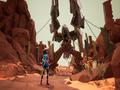
Each area in the game is its own puzzle dungeon built around specific gimmicks. One of the early examples involves solving color puzzles and figuring out how to make bouncers move around the environment. Later puzzles might require you to figure out how to bounce lights around the zone or use a harmonize mechanic that makes two different objects react at once. None of the puzzles are too complex (a couple of mechanics felt underutilized), but they work well for the short-but-sweet dungeon crawling. It should be noted that if you strongly dislike puzzles, the game offers the option to turn them off, but this would probably make the dungeons feel very bare.
People of Note has no random encounters. Instead, all the enemies you fight appear on the overworld and do not respawn after they are defeated. Fighting enemies earns you EXP, money and vinyls, the latter of which is a rare item you can trade to an in-dungeon merchant for powerful gear and accessories. If you do want to grind, the game allows you to "drop a beat," which instantly summons a randomly chosen group of enemies to your location. This lets you build up stats, money and vinyl if you're having a tough time in boss fights.
People of Note's combat system is a distinct take on the turn-based RPG genre. Instead of MP, you have BP, which is represented by musical notes. Each character gains one BP a round, and different abilities take different amounts of BP. Players can choose during their turn to rest instead of attacking, which both reduces the damage they take and increases the amount of BP they gain. Certain items or equipment can also further modify this, such as gaining additional BP per turn or bonus BP in certain situations. BP is just restrictive enough that you need to plan around it, but with careful character building, you can use your best skills in almost every turn. Attacks have a minor rhythm element to them, but it's mostly timed button presses and nothing that requires too much to stay on beat.

Rather than characters learning skills as they level up, the game uses a Materia-like system. Each weapon has slots for both songstones and remix stones. Songstones are the various skills available to the characters; some can be equipped on any character, and others are character-specific. Remix stones are special passive skills that can be equipped in link slots and modify the attached songstones. For example, one may give it a 40% damage boost if it is the last skill used, another may reduce the cost by 1 BP, while a third boosts damage significantly if the skill uses all your BP. Each songstone can also be upgraded with AP, which is earned in fights and can be redistributed freely; this lets you customize each character as you see fit.
This system allows players to do some very fun character crafting. Each of the main characters tends to have a specific ability they're good at. Fret, the old man rocker, excels in healing and support skills. You can build him to constantly heal with low-BP cost spells or make it so he's offering high-damage boosts for free while saving up BP for powerful attacks. Cadence is your primary damage dealer, but by investing in her support skills, she can serve as a regular BP battery who also gives extra turns to everyone. There's a lot of room for different character builds, and it's a lot of fun.
The most important part of the combat system is the timeline. Presented like a musical score, every round begins with players and enemies having a certain number of actions. This usually is one per character but can vary, with some boss battles giving the player a bonus action or the enemies multiple actions. There are some fights where your characters begin with fewer actions than you have characters. Certain skills can increase or decrease the number of actions available. Losing a character in battle also causes you to lose an action until they are revived, making it even more dangerous.
Actions play out along the timeline, with the player's actions occurring before the enemy's action. Each character in your party must act at least once before additional actions can be used. To add complexity to this, there are a number of mechanics to play round with the timeline. For example, each round has a different "genre" applied to it, based on the characters in your party. The genre that's currently playing gains a 50% damage and healing bonus for that round. You can see the upcoming genres for later rounds, so you can plan your actions accordingly. This rewards you for planning ahead, since properly building up to high-damage/high-cost moves on the proper turns is a massive damage increase. It's also possible for allies and enemies to modify specific spots on the timeline, allowing for things like damage increases that occur only on a specific spot. Proper planning means you can use these bonuses for yourself, but improper planning can cause an enemy to steal a x2 damage space and massively increase the damage they inflict.



This also plays into the mash-up mechanic. Each of the main characters has a mash-up bar. Once two characters have a full bar, they can spend it to activate a mash-up, which is a powerful skill that has a variety of effects, depending on who does it. Rock/EDM is a full party heal for 50% of your health, while rock/pop is a powerful single-target attack, and pop/rap is a powerful AoE attack. Not only does a mash-up give you a lot of benefit for a single action, but it also changes the flow chart to be both genres for the rest of the turn. With careful planning, you can do an absurd amount of damage in a single go.
Also noteworthy (pun intended) is that the combat is very tightly designed. Enemies are dangerous and can hit extremely hard if you're not making full use of your various skills and abilities. Healing is relatively weak, especially early on, so it's essential that you figure out ways to maximize your damage output and minimize enemy damage output. There are a ton of options, and it's trivial to swap between builds, so it's easy to experiment. There are even optional "puzzle" fights that encourage you to learn the ins and outs of the combat system.
Overall, I really like the combat system in People of Note. It was constantly engaging and fun to play, and a lot of the boss fights were engaging and required me to think carefully about the tools I had available. It also helps that fights are few and far between, with most dungeons only having a total of four to five fights. You can always summon random encounters if you want to grind for levels or money, but generally, doing every fight in an area is enough to keep you on level for the boss of the zone. In most cases, changing your gear or songstones is more important than leveling up.
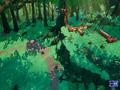
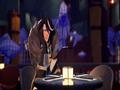

Beyond the game's dungeons, there aren't a lot of extra features, but it's enough to keep you busy. There are some minigames to gain additional items, including the aforementioned puzzle fights. There are also hidden "weird owls" (say it aloud if you don't get the joke) who will ask puzzles about the story and reward you with a rare collectible if you find and solve them all. There are multiple towns to explore, many of which have a couple of minor side-quests. The game will probably run you about 25-30 hours, depending on how quickly you burn through things, and there is a harder difficulty mode too.
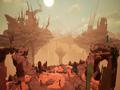
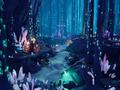
Visually, People of Note is a bit mixed. The character models are bright and colorful, and the environments are full of detail, but their animations are pretty weak, and they look a tad plasticky. The exception is the game's musical numbers, which are clearly prerendered videos. They're the standout and do a great job of capturing the feel of watching a music video, but it's clearly where most of the budget went. The gameplay is solid, but by comparison, the "game" part does feel a little bare-bones.
Obviously, the music and audio is the most important thing in the game, and this is an area where it's going to come down to taste. The battle and environmental music is great and conveys a diverse mix of different genres and tones, and I can't help but laugh at some of the musical touches, like a cowboy-themed enemy whose "Rain of Fire" attack begins with a familiar few notes. Likewise, the voice acting is excellent, and the characters do a great job with their roles. I'm more mixed on the musical numbers. When they are poppy or Broadway, they sound good, but when they go outside of those genres, they somehow still sound very poppy/Broadway, which goes against the concept of multiple genres.
Overall, People of Note is a fun and fluffy RPG. The plot isn't life-changing, but it's bolstered by a strong combat system, excellent music, and some surprisingly fun puzzles. The musical numbers may not work for everyone, but they gave it their best shot, and there's at least one song for everybody. People of Note isn't the first musical RPG, but it emphasizes that the two genres go together like peanut butter and jelly.
Score: 8.0/10
More articles about People Of Note