






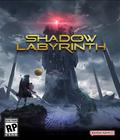
 Shadow Labyrinth is a 2D action platformer and a genre-twisting alternate take on the iconic Pac-Man.
 Like many successful mascots, Pac-Man is a character that has dabbled in many different genres. Many of the games in the series have been maze games, but the series has explored completely different genres, such as more traditional puzzle titles, competitive multiplayer, platforming in both the 2D and 3D realms, and a kart racer. The success rate has been varied, but no one can criticize Bandai Namco for trying to re-invent gaming's first mascot. The latest attempt to diversify the franchise is Shadow Labyrinth, a game that takes a complete left turn.
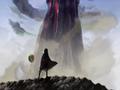
The story starts off with a battle in space, where a large robot is fending off enemy forces before another large robot forces it to crash-land on a nearby planet. Meanwhile, in an unknown city, someone is seen playing a portable game console on a public bench before suddenly disappearing. That person awakens in the body of a hooded being with no arms. They're met by a floating robot named Puck, who tasks the person with finding a sword and helping them complete a secret mission. With no other choice, you reluctantly take on the mission while discovering a slew of secrets along the way.
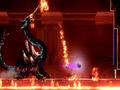

The story starts off strangely, and things don't get any better. The Pac-Man influences start with Puck being the old name for Pac-Man, and the robot looks like a three-dimensional version of Pac-Man. Some of the bosses you fight are the colored ghosts from the original game, but it's spelled out as G-HOSTs instead. However, the game actually breaks away from Pac-Man and becomes more involved with the United Galaxy Space Force, a timeline series meant to tie together some of Namco's older games into one connected universe. There are references to Galaxian and Bosconian and a few other classic Namco games that were set in space, and while these nods are interesting, they don't make for a very compelling narrative. The attempt is nice, but the chances are slim that anyone cares about the tale.
Just like the tonal shift from the series' jovial vibe to something darker, Shadow Labyrinth occupies the Metroidvania subgenre instead of a more traditional adventure. All of the expected mechanics of the genre are present. The worlds are full of areas where you'll be blocked off from exploring until you get the right tool or ability. There are save points scattered throughout that are both checkpoints and health refill stations. You have a map that you can check at any time, and it fills in as you explore. You can place a few markers of your own to note things of interest, similar to what you could do in Prince of Persia: The Lost Crown, minus the ability to add screenshots. You also have a shopkeeper that trades power-ups for all of the currency you pick up from fallen enemies.
When it comes to the combat system, it'll also feel pretty familiar if you've played titles like Hollow Knight. You can perform a three-slash sword combo, but you can also perform downward stabs and upward slashes alongside your horizontal ones. You can deliver a stun attack to temporarily immobilize your foe, and once you get the power to do so, you can deliver a slash wave to give yourself a limited projectile attack. On the defensive side, you can perform a dodge both on the ground and in the air, but it takes some stamina to do so. Draining that meter prevents you from doing anything until you fill it back up.

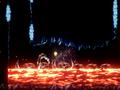
There are a number of distinct elements in the game to give this title its own identity. The first is the ability to directly control Puck on certain railed areas. You usually need to find a switch to activate these rails, but touching them will see you clinging to the rails and eating dots while also leaping from one rail to another. You can also briefly disengage from the rail to do an attack, but the gimmick becomes more enjoyable when there are trickier platforming segments.
After a boss fight or two, you can transform into the mech suit you see in the beginning of the game. This acts as limited invincibility for yourself, as you're practically immune to all dangers, whether it's enemy hits or spikes and other environmental hazards during your 30 seconds of time in the suit. Your attacks hit hard enough that you can get a boss down to almost half health when you're in this form. The fights are much easier if you save your transformations for those fights.
The only way to power-up the mech suit is to kill enemies, and this is where an interesting mechanic tied to Pac-Man pops up. Killing enemies alone does nothing except give you the ability to devour the bodies for a limited time. One button press is all it takes to eat a corpse and gain mech energy and elements for purchasing goods from the merchant. It's pretty gross considering that a robot is eating dead organic matter, but it is different and adds to the game's overall aesthetic.
The other mechanic that feels influenced by Pac-Man is the mazes you'll see early on but can't interact with until later in the adventure. What you're getting are levels that are directly inspired by the classic game and Pac-Man Championship Edition but with a more violent twist, such as saw blades in your path. The idea is neat and the fact that you can replay them immediately is helpful, since the stages have a strict time limit. You'll likely be spending that time trying to figure out what the objective is.
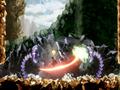

Those last two things do a very good job of making this game feel distinct, and that's good since there's not much else that stands out among other Metroidvania titles. The combat feels right, as it doesn't become a chore to attack and dodge most enemies. Boss fights are very enjoyable, especially since almost every boss can be stunned long enough to get in a good number of free hits. The platforming never feels floaty, and the stamina bar refills at a quick enough pace that you'll need to purposefully drain it to be in a completely vulnerable state.
However, there are a few elements that stand out as negatives. The game isn't consistent when it comes to attacking enemies through objects. Most of the time, you can try to attack someone through a wall or floor, and nothing happens, but every once in a while, an attack will connect. The same occurs when trying to eat corpses; you need to be on the same elevated level most of the time for the action to occur, but sometimes, the game lets you get away with breaking that rule. The environments change, but you'll see the same locale types quite often. The same applies to the bestiary, which features very little variety throughout the adventure.
The soundscape is interesting. The game has voices, and while they're spoken in an unknown language, you'll only get snippets rather than an approximation of what's being said. The voices also aren't very loud, so the game sounds eerily quiet when some speak. The soundtrack goes for a melancholy mood most of the time, but there are moments when the game goes for a "space opera" track or sad jazz when you least expect it. Like the game, the soundtrack initially seems ill-fitting, but you get used to it over time. More ill fitting is the fact that the maze levels go for high-energy tunes that are reminiscent of (if not lifted straight out of) the Pac-Man Championship Edition series. Again, you get used to it in time, but the shifts in soundtrack mood reinforce the notion that the whole game was an odd idea to begin with.
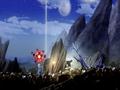
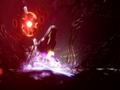
Graphically, Shadow Labyrinth is good but not necessarily extraordinary. The environments look fine, but the colors can look a bit muted at times, and while some of the distant backdrops look blurrier than expected. The characters look fine enough, but the marionette/papercraft-style animations of some of their movements can look odd. Luckily, the camera is pulled back far enough most of the time that you'll only notice these things during the in-game cut scenes. Unless you have a very weak machine, the frame rate holds steady almost all of the time. No specific visual effects are particularly taxing on the game.
On the Steam Deck, the title works just fine. There are no options to change the resolution, but the game does run at the device's native 1280x800. The frame rate holds steady at 60fps, with drops only occurring during scene transitions. The battery life fluctuates depending on the area you're in, but the average on a full charge hovers close to the four-hour mark, and the system fan never spins up high enough to be audible. Meanwhile, those running on Linux will also find no issues running the game with the default version of Proton, so no tweaking is necessary unless you run SteamOS or the deck image of Bazzite or something similar. That will require you to enter a command to make the game think it isn't running on the Deck, so you can get all of the full graphical resolution options.
Shadow Labyrinth is good if you set your expectations accordingly. The constant corpse eating makes the game feel darker than expected, while the mazes are a nice diversion. The overall mechanics don't stand out compared to other titles, but the basics are performed well enough that the game remains enjoyable. The presentation is good but not great, while the story and overall premise exists more as an exercise in head-scratching than something you're going to want to remember. Again, the game is better than expected but not extraordinary; Metroidvania fans will get some enjoyment out of this before moving on to stronger titles.
Score: 7.0/10
More articles about Shadow Labyrinth