







 Final Fantasy VII Remake Intergrade is a reimagining of the iconic original game that re-defined the RPG genre, diving deeper into the world and its characters than ever before.
It's odd to realize that it's been a very long time since a mainline Final Fantasy game has been released on a Nintendo system. In fact, Final Fantasy 12 is the last main Final Fantasy game that's playable on the Switch, with everything since either being an MMO or unreleased. (This is assuming you don't count Final Fantasy XV Pocket Edition.) That's why Final Fantasy VII: Remake Intergrade is a game that's been a long time coming, and it's a chance for Nintendo fans to finally play one of the legendary franchise's newest and best entries. Thankfully, the Switch 2 port is excellent and a great way to replay the game.
Remake Intergrade puts players into the shoes of elite ex-SOLDIER Cloud Strife. Once an elite super soldier, Cloud defected from the evil Shinra Corp and now works as a mercenary for hire. His childhood friend Tifa recruits him into Avalanche, an eco-terrorist organization that's determined to shut down Shinra's life-sucking reactors by any means necessary. A few chance encounters turn Cloud's simple mercenary job into something greater when Sephiroth reappears. Now Cloud and the rest of Avalanche must defeat Shinra while exploring the reappearance of Sephiroth.
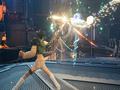
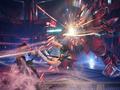


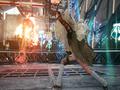


Remake Intergrade's plot is largely an expanded retelling of the Midgar section of the original FFVII. Due to that section being only about five hours long, Remake Intergrade spends quite a bit of time expanding on the characters, setting and events. This is mostly a positive because it turns characters like Wedge, Biggs and Jesse from disposable to some of the better characters in the franchise. The English script is excellent and captures the wild tone of the original game well, and it even smooths out some of the more awkward segments. The only part of the story that might be iffy is the new Whispers subplot, a meta-focused story beat that deals with ghosts that seem focused on preventing the plot from deviating too much from the original game.
Despite being only part one of three, Remake Intergrade does a good job of feeling like a worthwhile experience on its own. It's about 40 hours long and contains a solid mix of dungeons, minigames, downtime and side-quests. The plot doesn't really end in a satisfying way, but it's a solid ending to the first part of the story. The only downside I can think of is that Switch owners will have to wait a while for Rebirth to release and even longer for part three of the Remake trilogy, but there's still a lot of fun to be had.
The major difference from the original version of the game is that Remake Intergrade uses a hybrid action and turn-based combat system. Regular attacks, blocking and dodging is all done in real time, while special moves and abilities require you to fill up your ATB gauge. Once the gauge is full, you can spend it to cast spells or use character-specific special moves. Thus, combat becomes a game of balancing your defense and offense while building up ATB charges to deploy at the appropriate time.
You can swap between party members at will, and each has their own ATB meter. A major reason that Remake Intergrade works is each of the game's four characters have distinct play styles. Cloud is a solid all-around character who can deal massive damage, serve as a tank, or be an effective magic user. Aerith excels at magic and can learn to double-cast spells for ridiculous damage. Barret is a durable and efficient long-range fighter/tank. My favorite, Tifa, is an absurd rushdown character who can launch a dizzying flurry of blows and batter enemies into submission with nonstop combos.

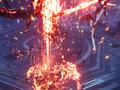


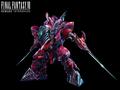
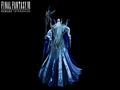
The result is that combat in Remake Intergrade is just fun. Everything from the boss fights to the regular fights feels engaging, exciting and fast-paced. There are some minor flaws, like the fact that engaging enemies in the air with melee attacks feels pretty awkward, but Rebirth fixes them later. The game is well designed enough that they're minor complaints, so Remake Intergrade still has some of the best action-RPG combat ever made.
Outside of combat, you'll explore a variety of locations, do side-quests where you hunt down powerful monsters, collect information for a scientist, and occasionally play absurd minigames ranging from darts to a squat challenge. Remake Intergrade is pretty well paced, and you'll never be in any one area too long. The game is constantly throwing new challenges and new events at you, including chapters where you have alternate paths to explore. It's still a largely linear game, especially compared to its sequel, but it is an example of linearity done well.
In addition to the main game, Remake Intergrade comes with all of the game's DLC. For the main game, this largely represents a series of somewhat useful early game items and access to a small number of bonus Summon creatures, like the Carbuncle or Cactuar. They're neat to have but not critical to your enjoyment of the game, so they can be entirely ignored if you don't want them. However, they're also not powerful enough that they can be considered cheat items, so they're fun to utilize to get early access to summons and a few bonus materia slots.
The more major inclusion is the Yuffie-focused side story that was originally packed in with Intergrade. This side story lets players take control of Yuffie in a parallel story to the main Remake Intergrade storyline. It's only a few chapters long but contains a number of intriguing boss battles, new minigames (including the debut of Fort Condor, which will later return in Rebirth), and a bonus support character named Sonon who fights alongside Yuffie. This DLC represents a glimpse into the kind of mechanics that Rebirth would later introduce, and it gives Yuffie some more character and history. It's also a lot of fun, since Yuffie is arguably the most powerful and well-designed character in the game and incredibly fun to play.
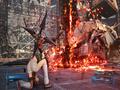
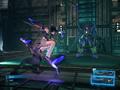
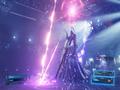
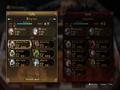


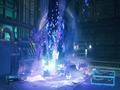
There are a handful of new features for the Switch 2 release of Remake Intergrade, but they aren't particularly noteworthy. A new Streamlined Progression feature has been added, separate from the "Head Start" feature previously added to the game. This is a series of toggles that you can activate to gain certain advantages. The advantages range from game-breaking, such as infinite HP or MP, to simply speeding up some grinding with x2 EXP and X3 ATB gain. None are necessary and simply make the game easier if a player is struggling. That said, if you're planning to go into Hard mode, I can see an advantage in being able to bring maxed-out materia with you instead of needing to grind it up.
More critically for the Switch 2 version is the ability to play the game in handheld mode. Thankfully, the game scales down very well. While the graphics do take a noticeable hit, it doesn't negatively impact the experience. The frame rate is largely smooth, and while I noticed a few hiccups during busier scenes, it wasn't anything out of the norm for playing on a handheld. Even with maximum brightness, it was sometimes difficult to see details on-screen, but it was pretty rare that it was a significant issue. The docked version ran notably better, but it seemed a tad rougher than the PS5 version of the game.
Final Fantasy VII: Remake Intergrade was an incredible game when it came out, and it has aged wonderfully well. There isn't much new material in Remake Intergrade for those who've already played it, but the handheld mechanics offer a nice way to casually replay the game. The core gameplay is as fun as ever, the characters are still tremendously likable, the music is phenomenal, and it's absolutely worth playing if you're remotely a fan of the franchise or RPGs in general.
Score: 9.0/10



More articles about Final Fantasy VII Remake Intergrade