







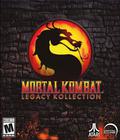
 Mortal Kombat: Legacy Kollection is the ultimate historical compilation of Mortal Kombat titles featuring multiple klassic games from the 90s and early 2000s, including arcade, console, and handheld versions.
Even if you have no love for the series, the Mortal Kombat franchise has had a large impact on various forms of entertainment. It was the first non-Japanese fighting game to achieve a great amount of success after Street Fighter II brought the fighting game genre to prominence. The movie adaptation became the first video game-based film to be financially successful, something only surpassed by the fact that the movie's title theme song remains memorable to this day. The series produced countless sequels, movies, toys and television series. It comes as no surprise that this was going to be the next subject of the Digital Eclipse interactive documentary series, and while parts of Mortal Kombat Legacy Kollection are done to near perfection, other elements could've clearly used some more work.
Like many of Digital Eclipse's compilations of this type, there's a split between the games and the interactive documentary portion, even though they intertwine throughout the timeline. The game covers plenty of ground with a decent amount of attention given to the main series creators John Tobias and Ed Boon, covering some of their work at Midway before Mortal Kombat came to be. There's loads of stuff detailing the making of the first game and how it was released in arcades. There's a ton of stuff shown about the home releases and the inevitable controversy that resulted. The explosion of the game's popularity gets covered, along with how all of the sequels were shaped. The whole thing strikes a balance between being praiseworthy and critical, but as a whole, the documentary comes off as a celebration of the series and the personalities that helped define it throughout the years.

The package is absolutely packed with new video interviews and related historical pictures and documents that clock in at over six hours, making this rival the amount of content for Atari 50. When you consider that this series has been covered in several documentaries before, it's fascinating that there's still loads of new information that hadn't seen the light of day prior to this. If there is one criticism, it is that this documentary leans very heavily toward the 2D games, so Mortal Kombat 4 doesn't get as much attention by comparison. From a historical perspective, this compilation's documentary side is still quite extensive.
As for the games, the team at Digital Eclipse has learned from other game collections. Versus mode is an automatic option, so you can go straight into that with a full character select per match, instead of dealing with arcade rules and staying with the same character if you win. All of the dip switch options are available for the arcade games, so you can activate all of the secret character fights, minigames, toggle the blood, toggle the fatality timers and one-button versions, and so on. The same is true for the console games, minus the ability to do one-button fatalities. The glyph codes for Mortal Kombat 3 and Ultimate Mortal Kombat 3 are selectable, so there's no need to look them up or worry about being fast enough to enter them correctly. The instruction manuals are all available and uncensored, so you aren't seeing plain black or gray areas where the Super Nintendo or Game Boy logos would be. The only thing that might disappoint people are the screen options. The borders for the home console versions are fine, but the arcade bezels are more generic rather than specific per game. The CRT and LCD options are going to be fine for most players, but purists will find some fault somewhere.
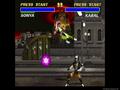
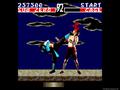
The first game on the list is, of course, the arcade version of the first Mortal Kombat, which sets the standard for the other titles' core gameplay. Each fighter has their own special moves, but they all share many basic moves, including simple punch combos, leg sweeps, and the devastating uppercut. This gives the game an easy-to-pick-up quality that most other fighting games of the time lacked, since everyone was pretty much identical until you learned their special moves. Fighting is quick mostly because each of the basic moves was impactful enough that you could whittle away at an opponent's health bar. All of this helps make the first game easy to pick up many years later, something that can't be said of some other fighting games of the era, where the gameplay mechanics haven't stood the test of time. All of this is forgotten by most players due to the infamous Fatalities, which are implemented as the last move you can perform on a dizzy opponent before a match ends. The brutal and gory spectacles may be old hat by now, but some of the classics, such as the spine rip from Sub-Zero and the decapitating uppercut by Johnny Cage, are still thrilling to see.
The home ports of the first game are available, and each is significant in their own way, warts and all. Starting with the portable versions, both the Game Boy and Game Gear versions feature a smaller roster, with only six out of the seven characters available. The animations are clunky, but it is impressive to see characters of that size appear on each respective console. The Game Gear version had blood, but without a way to emulate local multiplayer, there's little reason to play any of these versions. It should be noted that these are also somewhat inaccurate versions of the game, as you have the shoulder button on a modern controller for blocking, but those portables only had two action buttons.

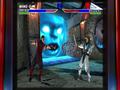
The Super NES version looks and sounds great but is also notorious for lacking blood and replacing the gorier Fatalities with much tamer ones. Some of them, like Sub-Zero's freezing of his opponent before shattering them into bits, is a nice alternative to the spine rip, but Kano's chest punch without a ripped-out heart looks lame. Even though the Genesis version isn't that impressive compared to the Super NES in the presentation department, the presence of blood and real Fatalities makes it the de facto version to play for home consoles. One thing to note for the Genesis versions of the games is that they use the six-button layout, so there's no need to do something different to throw out high punches and kicks compared to those who had the original three-button controller.
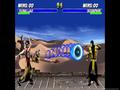
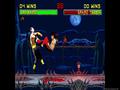
The arcade version of Mortal Kombat II is up next, and it is a huge improvement over the first game in almost every way. The character count has doubled, and so have the Fatalities; each fighter now has two at their disposal. As a counter to those decrying the game's violence, this game featured Friendships and Babalities, which play off as nice jokes in the universe. The game sports more colors despite the darker setting, and the characters are bigger and have more animations. The fighting is a tad faster, and the fighting feels tighter thanks to more special moves. Overall, it remains a perfect follow-up to the original title.
When it comes to the home ports of Mortal Kombat II, things aren't as fragmented. The Game Boy version got smoother animations than the first version but still remains clunky despite pushing the capabilities of Nintendo's old handheld. The Genesis version no longer needs a code to get the blood and real Fatalities visible, but the big change comes with the Super NES version, which now has the same level of gore as the Genesis version but with better graphics and sound. This makes the Super NES the best home console port of the game at the time. The compilation also has the Sega 32X version, which is on par with the Super NES port.
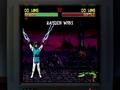
Mortal Kombat 3 is up next, and this is where you start to see some experimentation with the game's fighting mechanics. One of the big changes is the addition of a run button, so you can cover more ground when rushing toward your opponent instead of relying on jumps. This makes the game feel even faster than before. The other big change is the addition of proper combos, but this is also subject to some criticism. Combos are static rather than fluid, helping the system gain the dismissive term of "dial-a-combo." Some of the environments feature multiple levels, so hitting someone with an uppercut can make the game transition to a completely new stage. Animalities now join the ever-expanding roster of finishing moves, and while the roster number remains the same as Mortal Kombat II, the actual fighter lineup features a number of new characters. The game remains good but is easily outclassed by its more upgraded version, which would come out in relatively quick fashion. Meanwhile, the differences between the two home versions in Kollection boil down to sound and graphics, so the Super NES version would be technically better, but the Genesis version still holds some nostalgic weight for those console owners.

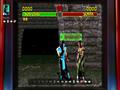

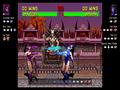
Ultimate Mortal Kombat 3 acts as something of a director's cut to the original Mortal Kombat 3. More fighters are available, including some returning fighters from older games and newer characters, but this is where the use of palette-swapped ninjas really exploded. New backgrounds are present, and every character got at least an extra move or two. There are no other additions, but it was enough to make this the definitive version of the third mainline game. While there's nothing surprising about the Super NES port, the inclusion of the fabled WaveNet version is a welcome surprise, since that particular version never got a ROM dump. While the networking feature of the WaveNet version is no longer necessary, there's still a reason to play this version offline, as it has Noob Saibot available in the roster from the start.
Mortal Kombat Trilogy serves as both a culmination of all of the mechanics and characters featured in all of the games, and it's also the first entry in the series to be developed exclusively for the home consoles. All of the characters that appeared in the previous titles, including the secret ones, are present, and all of them sport the mechanics seen in Ultimate Mortal Kombat 3. The game also features almost all of the backgrounds from all of the games featured up to this point, and that includes their stage-specific fatalities. There are two new mechanics thrown that make this feel a touch different from its predecessors. The first is the Aggressor meter, which gives the player a short burst of speed and attack power for a limited time once that bar is filled. The changes are slight but noticeable over time. The second addition is the Brutality, which lets you unleash an automatic combo that results in your opponent exploding into a multitude of limbs. Overall, the game is neat and the reduction in load times makes this title feel pretty good.
Then there's Mortal Kombat 4, the series' first attempt at a 3D fighting game. It keeps all of the hallmarks of the main fighting series, and the run from Mortal Kombat 3 is retained, so the game is easy to pick up and play. The ability to perform a 3D dodge deepens the gameplay if you know how to execute it in a timely manner, and while that addition is cool, the other tweaks to the game can be hit-and-miss. It's neat to be able to pick up objects like rocks and severed heads, but you'll rarely want to use weapons. Pulling out the weapon is so slow that you're inviting the opponent to take a free hit, and since you immediately drop your weapon if you're hit, the advantage of delivering increased damage from your weapons is rarely realized. The game remains enjoyable even if it can feel much faster than past games, but you'd have to wait for the series to fully leave the arcades before the 3D fighting starts to click.
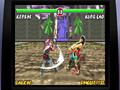
Rounding out the fighting games are the Game Boy Advance titles, which continue to show how the series has done some pretty impressive technical things on portable consoles. Player enjoyment is another matter. Mortal Kombat Advance is a portable port of Ultimate Mortal Kombat 3 that looks quite close to the arcade game, minus some background details. The controls were modified to compensate for the lower button count, but the timing for move execution feels off, and the game is missing a few audio cues, making this a version that few would ever want to play.

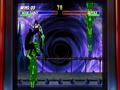
Mortal Kombat: Deadly Alliance is an inclusion that feels out of place since the home console version isn't present. From a technical standpoint, the game is impressive and does a good job of trying to emulate a 3D fighting game on a system that's not built for 3D play. The animations can be a tad clunky, and there's something odd going on where landing the final blow on an opponent doesn't knock them out until a few seconds later. The game overall is still ambitious enough to be enjoyable. The game only features a few fighters from the main game, and that's where Mortal Kombat: Tournament Edition comes in. It's essentially the same game as Mortal Kombat: Deadly Alliance but with the rest of the roster replacing those who appeared before.
While all of the fighting games vary in quality depending on the version you choose, one consistent thing that will irk you is the high degree of difficulty in each campaign. Even if you choose the Very Easy difficulty for every title, it feels like nothing has changed. You can easily get killed by the first opponent you meet. Things certainly don't get better the further you go, and it reaches the point where facing off against the final boss is similar to facing the final boss in any SNK fighting game. It feels like the game gives them every advantage available unless you play cheap and nail the timing with constant jump-kicks and sweeps, being sure to deprive the opponent of any opportunities to block them. These are very difficult fights, and it makes you grateful that the much later entries in the series ease up enough, so the lowest difficulty level lives up to its name.
Rounding out the collection are the series' single-player focused titles. Mortal Kombat Mythologies: Sub-Zero is the first, and it was supposed to kickstart a series of games where you'd go on adventures with and get some backstory on some of the series' major characters . As the title would suggest, this one focused on Sub-Zero before the events of the first tournament, but it also featured characters and plot points that would become important for the lore behind Mortal Kombat 4. The problem is that the gameplay feels very clunky. The controls used are the exact ones from the fighting games, which seems fine so fans of the series will immediately know how to do Sub-Zero's moves once you level up enough to acquire them. However, it doesn't feel right when you need to use a button to face opponents coming from both sides of the screen. It also doesn't help that the game does a poor job of guiding you where to go, so there's lots of trial and error if you aren't consulting a walkthrough about where to go. The presence of both a rewind feature and 1,000 lives in the beginning as optional cheat toggles eases the frustration a bit.
Mortal Kombat Mythologies: Sub-Zero had a marketing campaign behind it, so people were aware of the title before the reviews had dropped. The other adventure game, Mortal Kombat: Special Forces, didn't get such a luxury, but the game also felt like it was sent out to die. It was released with very little fanfare a few months before the PlayStation 2 was set to arrive in North America. The game has you playing as Jax, who's trying to hunt down Kano and his Black Dragon associates after they break out of a maximum-security prison with an ancient artifact in hand. The game employs a similar brawling system seen in Mythologies, but it's presented from a top-down perspective. That camera change doesn't make the game any better, as it still suffers from issues ranging from a camera that has a hard time following you around to a needlessly complicated fighting system. Both games aren't worth playing unless you're a die-hard Mortal Kombat fan with a large amount of patience. It's good to see the games' inclusion in the compilation as a matter of historical preservation.

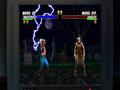
While there are plenty of versions of each game available, this is far from a comprehensive collection of the games covered. The lack of a Sega CD port of the original Mortal Kombat could be forgiven, since the big draw for that version was the availability of the arcade-perfect music tracks on a home format. Some tracks played in the wrong areas, so this requires some developer TLC. The Game Gear port of Mortal Kombat II is missing, as are the Game Gear and PlayStation ports of Mortal Kombat 3. The Sega Genesis and Sega Saturn versions of Ultimate Mortal Kombat 3 are gone. The Nintendo 64 versions of Mortal Kombat Mythologies: Sub-Zero, Mortal Kombat Trilogy and Mortal Kombat 4 aren't available, with that last game getting no home ports of other systems. It is a shame that all of these versions are missing, since they all feature something unique, whether it's a new fighting level or fully rendered CG endings for characters exclusive to that build. Considering that Digital Eclipse has taken the time to patch in new games to some of its compilations like Atari 50 and Tetris Forever, there is hope that this collection will also get that same treatment. The collection of games is still pretty massive and covers all of the bases by catering to those who have specific childhood memories tied to the console.
The inclusion of online play for all of the titles except for the handheld ones is awesome, and while the games claim to have rollback netcode implemented, there's no way to see how all of that holds up in the real world. That's because the game makes it difficult to find a match in any title. The only option you have is Quick Play, and that's segregated per game, with no option for cross-play. Fighting games have always been predominately more popular on consoles, so restricting the online play to PC-only players is limiting. Most of your online time is going to be spent hitting Quick Play on every title and hoping they're accessible. Rooms for each game are promised to be coming soon, but unless that gets implemented alongside cross-play support, your best bet is to find a way to arrange matches beforehand unless you want to forget that online play exists.
Steam Deck users have had good luck with all of Digital Eclipse's retro documentaries/compilations, and the situation doesn't change with this release. The whole thing still runs at 1280x720, but you'll only be able to tell when viewing the newly shot documentary videos. The game has no problem running at 60fps for the arcade games, and load times aren't an issue for the PlayStation titles. You'll get a battery life of around four-and-a-half hours when playing the heaviest title, Mortal Kombat 4 with a 3x graphical upscale, and that life increases when playing the less intensive games in the compilation.
Your assessment of Mortal Kombat Legacy Kollection is going to depend on what kind of player you are. If you're the ultra-competitive type who wants more than local fights, you'll be disappointed. The splintering of online play and lack of lobbies means that trying to find a game is needlessly painful, and with lobbies still in a beta state as of the time of this writing, it'll take longer than expected to get a PC-only community going for this compilation. If you're a more casual player or prefer local play, then the recent fixes to controller latency make this a very enjoyable experience all around. The solo campaign still feels grueling due to an unflinching difficulty level. The historical content and game library make this a great pick-up for those who love game history. If you just want to play the games offline, you'll greatly enjoy this experience.
Score: 7.5/10
More articles about Mortal Kombat: Legacy Kollection