

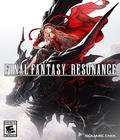





I'm a longtime fan of the Final Fantasy series, dating back to the SNES era. The franchise has evolved with each entry, but I've remained fond of it, and Final Fantasy Rebirth may be one of my favorite games ever. I still feel nostalgic for turn-based combat and charming sprite-based graphics, and Final Fantasy Resonance feels tailor-made for someone like me. A remake of the opening arc of the now-defunct mobile game Brave Exvius, it reimagines that story as a throwback to classic Final Fantasy.
Final Fantasy Resonance follows Rain, captain of the Grandshelt airship squadron, and his adoptive brother Lasswell as they protect their kingdom from danger. When they encounter an armored knight, their home is left in ruins, the Earth Crystal is shattered, and the airship squadron is destroyed. Joined by Fina, an amnesiac girl, Rain and Lasswell set out to find the man responsible and stop him from destroying the remaining Crystals that protect the world.


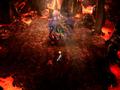




The plot feels like a mid-'90s JRPG, complete with brisk pacing, frequent drama, and short, straightforward cutscenes that rarely linger on details. Depending on your preferences, this approach may feel comfortably nostalgic or disappointingly brief. I generally enjoyed it. Resonance is a fun, fast-moving adventure that doesn't break new ground, though some plot developments, including the final boss's sudden appearance, feel abrupt. Even so, those flaws are in keeping with the era it's trying to emulate.
Resonance also makes significant changes to Brave Exvius's story. While most major plot beats remain intact, some details have been rewritten or expanded, and the narrative has been reshaped into a self-contained experience. Brave Exvius ended its first season on a cliffhanger leading into a second, whereas Resonance gives its story a proper resolution. That change works in the remake's favor, even if it might disappoint players hoping for a direct setup to a sequel. Without knowing its mobile-game origins, I probably wouldn't have guessed it began as a gacha game.
The romance subplots are less successful. The game gives them considerable weight despite their underdeveloped dynamics, particularly in Fina's storyline, where some relationships needed more explanation. The most uncomfortable example is Jake, a man in his mid-twenties who repeatedly flirts with Lid, a 16-year-old girl. Even though the game mostly plays their interactions for laughs, the dynamic feels deeply off-putting and may sour the experience for some players.
Resonance is an old-school JRPG through and through. You'll travel from town to dungeon, fight random encounters, hunt for treasure, and gradually unlock side quests and new areas. Most dungeons consist of just a handful of rooms and a boss fight, so you'll rarely spend too long in one place. The pacing is brisk without becoming monotonous, and the game does a good job of mixing up its activities.

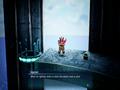
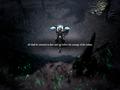




Random encounters are a potential sticking point. I don't mind them, but the game doesn't let you adjust the encounter rate until quite late. In fact, I had to defeat a level 95 enemy before unlocking the ability to disable random encounters entirely. The difficulty curve is also relatively forgiving for much of the game, so experienced RPG players may want to start on Hard mode.
Resonance's turn-based combat draws heavily from the classic Final Fantasy games. Characters and enemies act along a timeline, much like Final Fantasy X, although characters generally get only one action per turn. Familiar mechanics such as MP and limit breaks round out a system that feels comfortably traditional.
Its defining feature is the Stagger system, borrowed from more recent Final Fantasy games. Every enemy has a health bar and a stagger bar. Attacks deplete both, but certain moves are more effective against stagger, particularly those that exploit elemental weaknesses. Empty the stagger bar, and the enemy becomes broken, losing its next turn and taking increased damage.
Breaking an enemy also rewards the character who did it with a bonus action at the end of the turn. If multiple characters break enemies, each receives an extra action. Break every enemy on the field in the same turn, and you'll trigger a Sweeping Stagger, granting your entire party bonus actions before finishing with a powerful Resonance attack tied to a character's equipped Vision.
The result is a system that rewards careful planning and coordinated attacks. Building around enemy weaknesses and stagger damage can turn a difficult encounter into a satisfying chain of extra actions.



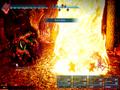
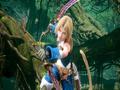


Resonance puts its own spin on the job system by assigning each main character one of six roles: Breaker, Commando, Medic, Saboteur, Sentinel, or Synergist. These will be familiar to anyone who played Final Fantasy XIII, although Breaker takes the place of Ravager. The roles fill similar niches: Commandos deal damage, Breakers specialize in staggering enemies, Medics heal, Saboteurs debuff, Sentinels defend, and Synergists provide buffs.
Most roles have one representative, while several characters are Commandos. That might sound limiting, but each character has distinct abilities, so sharing a role doesn't make them interchangeable.
Lid, for example, revolves around her robotic chocobo, Mechabo. Completing side quests upgrades the machine and unlocks new combat abilities. Jake uses a Luck meter that builds through certain actions, increasing his critical-hit rate and unlocking new moves. Those moves can then consume Luck in exchange for powerful buffs. Nicol, meanwhile, specializes in party-wide buffs, with skills that let him maintain multiple effects or apply several in a single turn.
Visions are Resonance's customizable jobs, represented by ghostly spirits that stand behind characters in battle. Seventeen are based on characters from previous Final Fantasy games, including the mainline protagonists, MMO favorites Y'shtola and Shantotto, and Sephiroth in a special cameo. The rest come from Resonance itself.
Each Vision belongs to one of the six combat roles, giving you a general idea of its strengths. Tidus specializes in water attacks and Haste, Noctis can grant himself bonus turns, and Zidane can steal. Their abilities make them more than cosmetic nods to the series' history.

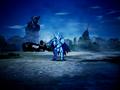




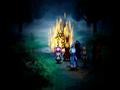
Visions have two distinct progression systems. The first upgrades their individual abilities. Each starts with a set of skills inspired by its character's original game: Cecil has light- and darkness-based attacks alongside Cover, while Terra specializes in powerful magic. Finding Magicite throughout the environment raises a Vision from rank 0 to rank 3, unlocking additional skills at each stage. These upgrades are permanent, even when you switch to another Vision, allowing you to develop a broad toolkit and adapt your party to different encounters.
The second system uses Mastery Points, which accumulate as a character uses an equipped Vision. Earn enough points, and you'll unlock a new active or passive ability or receive a permanent stat boost. Abilities learned through Mastery can be equipped even when using another Vision, while stat increases remain after switching away. However, skills still require AP to equip, so you'll need to choose which abilities best suit your build.
Fully mastering a Vision unlocks its Soul, which significantly reduces the AP cost of equipping all its skills at once. This opens the door to some remarkably powerful combinations. Shantotto's Dualcast, for instance, can be equipped on Terra to let her cast devastating spells like Ultima twice. Alternatively, Y'shtola's healing abilities can supplement a Commando's offensive toolkit, creating a character who can both deal damage and recover health.
There's plenty of room to experiment, and finding effective combinations is one of Resonance's greatest strengths. That said, some Visions are considerably more powerful than others, making certain builds much more appealing than their alternatives.
Resonance offers an absurd amount of optional content, including dozens of hidden bosses, bonus encounters, and challenges. Many are brutally difficult if you arrive unprepared. Enemies can counter your attacks, remove party members from battle, nullify specific damage types, or unleash attacks capable of wiping out your entire team in a single round.







These encounters demand careful preparation and the right abilities, but they're often the most rewarding fights in the game. I particularly enjoyed tackling some of them while underleveled. With the right build, I could take on level 99 enemies at level 60, which felt incredibly satisfying.
Resonance's combat also makes it easy to break the difficulty curve if you're willing to min-max. Its flexible job system allows for some outrageous combinations, from casting Flare Blade 16 times in a single turn to effectively nullifying every attack your party receives. Players who want a serious challenge should consider Expert mode and may even want to restrict themselves from using the most powerful builds. For those who enjoy tinkering with abilities and finding absurdly effective combinations, there's a lot to love.
At first glance, Resonance might look like a collection of recycled gacha assets, but there's considerably more care behind its presentation. While it reuses some sprites and animations from Brave Exvius, the game has otherwise been rebuilt as a traditional RPG, with art direction and presentation inspired by the SNES-era Final Fantasy games.







The result captures the nostalgic yet fresh aesthetic the game is aiming for. Resonance isn't a graphical powerhouse, nor does it need to be. Its old-fashioned presentation is part of the appeal, and it feels deliberate rather than dated. The music and voice acting are also excellent, with several performances standing out.
Final Fantasy Resonance delivers on its promise of an SNES-era RPG made in 2026. Its recycled assets do little to detract from an excellent combat system, deep character customization, and an atmosphere that captures the charm of classic Final Fantasy.
The story in Final Fantasy Resonance has a few baffling decisions, and its romance subplots occasionally stumble into uncomfortable territory. Still, those shortcomings don't outweigh the strengths of its combat, progression systems, and old-school design. If you can look past its narrative missteps, Resonance is exactly the kind of throwback longtime Final Fantasy fans have been waiting for.
Score: 9.0/10





More articles about Final Fantasy Resonance