





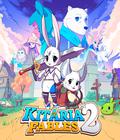


The first Kitaria Fables game released in 2021 was charming. The blending of an action-RPG with farming elements remains neat, since so few games have attempted this. The actual execution was done well enough, with the major complaints aimed at how grindy the game can be despite its cute anthropomorphic animal cast. The title seems to have done well enough to warrant a sequel, and while it's still a long way off, we got the chance to check out the upcoming demo before its public release.
The story is a break from the first game's hero and locations. You play the role of Alice, a newly christened Pathfinder from the Royal Academy. Your first assignment has you teaming up with Dusty, a guide hailing from the Arkadera Peninsula. With the empire looking to reconnect with their long-forgotten lands, your task is to set up an outpost in the peninsula and help the locals with all of their needs. The assignment would seem like an easy one for such a relatively peaceful region, but recent monster outbreaks prove otherwise.
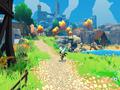
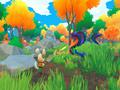
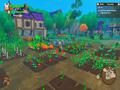
For the most part, the game's base mechanics will be familiar to those who have played the first game. This is an action-RPG where everything plays out in real time. You aren't bound by classes, so you can fight with bows and arrows alongside your sword, and you can dodge enemy attacks, which is useful since enemies still telegraph when they'll attack and in which direction. Beyond fighting, you'll spend your time getting quests and running errands for the townspeople. You'll also be busy with your own farm, as you raise crops that can be used to either craft things for yourself or as a source of income so you can buy better gear for future missions.
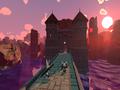
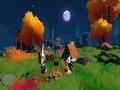
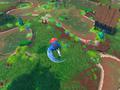
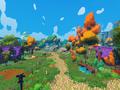
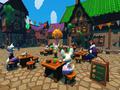
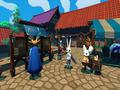
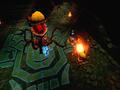
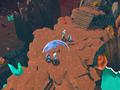
The gameplay changes in the sequel are pretty big, and the developer's main focus thus far is on co-op play. This isn't new, as the first game also had co-op, but this version has drop-in/drop-out play while also featuring online play, which unfortunately wasn't present in the demo. The characters also play a tad differently from one another, instead of being carbon copies. Alice specializes in broadswords, so she'll hit in wide arcs and deliver more damage while having a long reach to her attacks. Dusty uses dual daggers, and while his reach isn't as far or deliver much damage, he balances it out with attacks that are quicker to execute. This is the only part that breaks the idea of classless combat that the series promotes, but the change is worth it for making co-op play feel more distinct. That slight differentiation between characters also extends to their respective skill trees, as both Dusty and Alice have different abilities and different skill tree paths, but they can all use the same equipment.
The presence of this tweaked co-op has an interesting knock-on effect for the single-player experience. If you're playing solo, you actually have both heroes in your party. You can switch between them at any time, and having one get knocked out means that you automatically switch over to the new hero with their full health meter. It's a nice bonus that helps new players ease into the combat, which has enemies hitting harder than normally expected.
The other big change has to do with the progression system. The first game tied progression to your equipment, so the only way to get stronger was to improve your gear, which meant loads of grinding to find the material needed to make those improvements. This game does away with that and goes for a more traditional XP progression system where killing enemies and completing quests helps you reach the next level, complete with automatic stat upgrades. The good news is that XP is automatically earned for both heroes, so you don't have to constantly switch heroes to ensure no one is woefully underpowered. The interesting thing is that everything gives you XP, so picking up everything and breaking everything in your path is worthwhile if you want to get stronger faster.
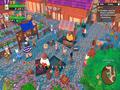
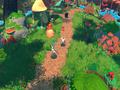
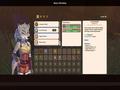
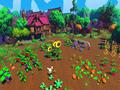
The presence of an XP leveling system doesn't mean that the crafting elements from the first game are gone. You're still going to hunt down various ingredients and recipes for potion-making and cooking. Materials are still needed if you want the blacksmith to craft any new weapons and armor for you. Farming various crops is also important for obtaining items, as most things from shopkeepers require a combination of goods and coins. The system is still present, but it isn't that integral to character progression anymore.
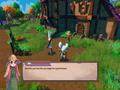
Despite the number of improvements, there are still some elements that might require players of the first game to temper their expectations. The quests can feel a touch grindy, since a number are dependent on certain villagers being present. Since everyone in the game has a set appearance schedule, there's going to be a good deal of waiting around if you need to talk to them to finish a quest. The same goes for some key elements, as there are moments when it takes dumb luck for the required element to be present. For example, one quest required you to kill a specific monster, but it took three trips to the designated area before it finally appeared. Also, when it comes to ingredient gathering, you'll have to depend on your observational skills to find what you need, as the game provides no hints about where to find certain items.
So far, Kitaria Fables 2 shows promise. The improvements to co-op work in the game's favor, especially since they provide an extra benefit to solo players. The move to a more traditional XP system already makes the game feel like progress is occurring at a faster pace, even if the quests still promote a more relaxed state of adventuring. Based on what we've seen so far, we're really looking forward to seeing how the final game turns out when Kitaria Fables 2 releases in 2027.
More articles about Kitaria Fables 2