



Metaphor: ReFantazio takes place in a fantasy world where people are divided into tribes based on their race, ranging from elf-like beings with pointed ears to batlike creatures and those who age rapidly. The land is rife with racism and discrimination, but it remains united under the authority of the king and his royal magic. Unfortunately, the king is assassinated at the beginning of the story, setting off a bizarre ritual in which the royal magic passes to whoever earns the support of the population. What follows is a dramatic contest between the kingdom's would-be rulers.
Players take on the role of a young man who's serving the royal heir, a prince believed to be dead but trapped in a coma. The only way to awaken him is to uncover the malady responsible for his eternal sleep. To do so, players must enter the contest themselves, both to prevent the prince from awakening under a new ruler and to uncover the conspiracy behind the king's murder.

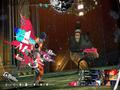


Metaphor has a surprisingly compelling story, despite its straightforward premise. It doesn't go out of its way to conceal its twists; in fact, the king's murderer is revealed in the opening cut scene. Rather than building toward a dramatic reveal, the story focuses on what it takes to earn the trust and affection of a divided, conflicted populace, each faction with its own reasons for wanting a loyal figure on the throne. By exploring society, its motivations and its power structures, Metaphor features a more compelling story than any major plot twist could introduce.
It helps that the game has easily the oldest cast in a recent Atlus title, with most of the cast members being grown adults. My favorite was Heismey, a man-bat knight who lost his son at a young age and struggles with survivor's guilt and the misery that comes with outliving his own child. It's not a mind-blowing story, but it's compelling, genuine and honest. This is still very much an Atlus title, and despite not being directly tied to the Shin Megami Tensei series, Metaphor has a lot in common with Persona.
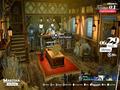
In terms of general structure, it has a lot in common with those games. Like the recent Persona titles, it uses a calendar system where you have a specific number of days between each major event, and you use your time between events to level social stats, befriend characters, or explore dungeons. Unlike in most of the Persona games, you travel across a kingdom in your mobile base, so you also have to factor in travel time when exploring.
The calendar system in ReFantazio is massively de-emphasized from the aforementioned games. You have far more time in the game than you could possibly need to do everything, and there's a lot of streamlining of mechanics. Followers (the game's version of Social Links) level up every time you talk to them, and resources are far more plentiful. It makes the game more relaxing to play, but it also means there's very little genuine tension in the choices you make. At most, it amounts to unlocking things a bit earlier.
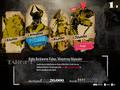
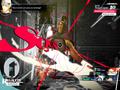
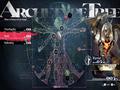
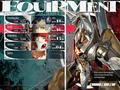
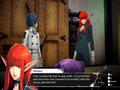
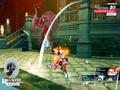
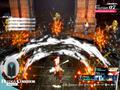
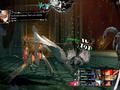
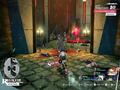
The combat system is where Metaphor changes the most from its counterpart. Borrowing a page from the Trails series, Metaphor has a mixed action and turn-based combat system. When exploring dungeons, you can attack enemies directly, and they'll attack you back, forcing you to avoid and dodge attacks. For weaker enemies, this means you can kill them through a by-the-numbers action-RPG combat system. For stronger enemies, damaging them will only stun them, and once an enemy is stunned, you can engage in turn-based combat.
Turn-based combat uses the Press Turn Combat System used in Shin Megami Tensei titles. This means that in combat, you have four "tokens" that represent the number of actions you can take. When a character acts in combat, it uses up one token. If you strike an enemy's weak point, you'll only use up half a token. Meanwhile, an attack that is blocked, evaded, or repelled will lose press turn icons. This rule applies to both friends and foes, and so proper team builds can earn multiple actions while denying enemies the turn to act.
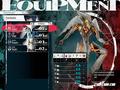
Metaphor is far more team-based than Persona or Shin Megami Tensei. Each character you recruit has an "archetype," a powerful spirit they can summon who empowers the characters with new abilities. These archetypes are more akin to classes in an old-school RPG, like knight or mage. Each archetype thrives on different gimmicks, and in turn, each character tends to specialize in specific archetypes, rewarding you for optimizing your characters. Early archetypes are fairly simple, while later ones can do things like summon spirits or swap between weaker versions of classes.
Metaphor's combat is a ton of fun and rewards optimization and character building. Figuring out how your characters excel and how to mix and match various class abilities really creates interesting and compelling character builds. The combat is fun enough to make it feel worthwhile, especially on the harder mode. There is a set of special late-game classes that eclipse everything else in the game, and each character has a set-specific one. In the endgame, you're either building characters in a specific way, or you're leaving a lot of power on the table.

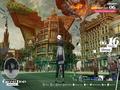



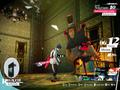
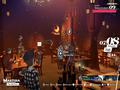
As with many Switch 2 ports, the biggest question about Metaphor is how well it runs. The answer is a mixed bag. The game offers three options: Graphics, Performance or Balanced, which can be customized for either handheld or docked. These roughly impact the steadiness of the frame rate in each area compared to the overall resolution, with Graphics having a very inconsistent frame rate and Performance being relatively steady but suffering from noticeable drops in some of the busiest areas. In comparison, the resolution and texture quality suffer the more you edge toward performance.
The result is a port that is perfectly playable but not exceptional. Since the game isn't exactly a hardcore action game and relies heavily on incredibly stylized visuals, it doesn't suffer that badly from the console limitations, but neither is it as polished as one might hope. Ultimately, it's a totally acceptable port of the game, but it's not necessarily one I'd select over another version, unless portability was a big factor. For what it's worth, portability is a wonderful feature that made the game a lot more fun to replay.
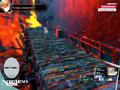
It helps that Metaphor is a surprisingly pretty game. While the animations can be a touch basic, the entire thing is given a distinct "painterly" aesthetic that helps make it pop from the crowd, right down to the bosses being ripped directly from Hieronymus Bosch paintings, making them some of the coolest-looking enemies in an RPG. The music is also top-notch, with the combat theme in particular being an earworm that lives in my head long after finishing the game.
Metaphor: ReFantazio is a well-crafted, engaging and genuinely fun take on the Persona formula. The changes to the combat and setting keep it feeling fresh, and it still retains enough of the classic feel that fans should find a lot to like. The Switch 2 port is acceptable, if not particularly fantastic, but the addition of a portable version is almost worth the price of admission on its own. If you haven't played the game before, it's well worth buying, flaws and all.
Score: 8.5/10



More articles about Metaphor: ReFantazio