

Stellar Blade was released around two years ago on the PS5, and it was generally well received. It wasn't a perfect experience, but it was solid enough as an exclusive experience that was different from a bulk of Sony's first-party input at the time. The game was released a year later on the PC as part of Sony's expansion into the platform. With Shift Up gaining the ability to self-publish its games, one of the first things on the roadmap was to publish Stellar Blade to more platforms, and the first platform for that is the Nintendo Switch 2 with Stellar Blade: Complete Edition.
Far into the future, aliens known as the Naytiba have invaded the Earth, and despite humanity's best efforts, the aliens have won. The aliens have taken over the world, and while a few humans have managed to survive the newly formed wasteland, most have escaped to space colonies to regroup under the leadership of an artificial intelligence known as Mother Sphere. Determined to win back Earth, the Mother Sphere has sent out squadrons of elite soldiers to take care of the Naytiba threat. You play the role of Eve, a member of the 7th Squad assigned to try and take back the Earth. The mission initially ends as a failure as you remain the sole survivor of the initial attack, but you press on in the hopes that you can make a difference and change the tide of the war.
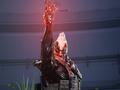
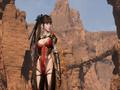
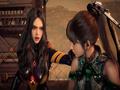
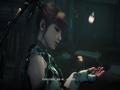
If you're hoping for a game with a compelling narrative, then prepare for some disappointment. If you've watched any adventure-based anime in the past few decades, you'll know to expect loads of twists in the story with plenty of double-crosses and surprising character revelations once you reach the back half of the game. It's predictable and can still be an effective storytelling device, but the problem is that you won't care enough about the characters to make those revelations worthwhile. There are moments when the game tries to inject some personality into the characters, but those all fall flat. As with many action titles, there's enough to keep things moving forward, but don't expect much beyond that.
Stellar Blade is a linear adventure title where you get fairly large areas to explore, and there are smaller areas that are worth exploring. The combat system works with the traditional light and heavy attacks, and you have a power meter that lets you unleash more powerful attacks with the energy that you've built up. The game rewards you with a good balance of gear and currency, but you should turn on the option to automatically pick up things because it's a real pain to manually pick up items after every fight, especially since those items are represented by tiny sparkles and they have a tendency to fly all over the place and hide in debris.
The game may look like it should be a fast action game, but the combat and some of the gameplay mechanics take on the mold of a Soulslike. Save points cause every previously defeated enemy, minus bosses, to respawn in the world. First-aid kits also get refilled whenever you reach a save point, and the act of healing requires you to get a bit of distance away from your enemy, since it takes some time between you hitting the heal button and the actual healing to take effect. Perfect parrying feels essential, since it causes enemies to stagger and gives you an opening for a counterattack; blocks and dodges still work in a pinch. Striking is also measured out, since you aren't dealing out attacks at a very fast speed.
If the idea of yet another Soulslike system feels disappointing, you can take some solace in knowing that the game doesn't fully embrace all of the traits of the genre. Enemies still hit hard, but not to the point where one hit immediately drives you into using a first-aid kit. There is no stamina, so you can dodge and attack to your heart's content, and the only penalty is you being open for an attack. You still have several skill trees to open up and equipment to wear, but you don't have to manage a traditional XP leveling system.
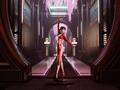
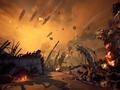


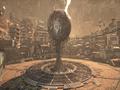
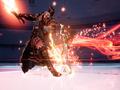
This reworking of the Soulslike formula works in the game's favor. There's the feeling that the game still wants to break out and become a fast action title while still working within the confines of its subgenre. The action feels faster than your typical Soulslike, and you still get moments when you're surrounded by foes but can still take them all out with minimal damage to yourself. Boss fights feel great without becoming a slog, but the feeling can start to creep in during the game's final few fights. It feels good to fight, and you'll look forward to more fights instead of running away at the sight of an enemy, but the shooting could use some work, as it slows down the pacing of the game.
Aside from the aforementioned default need to manually pick up things, the platforming can be annoying. You'll do a good amount of platforming, from swinging on poles to navigating narrow platforms and swimming. Eve doesn't exactly have precision with her movements. She'll sometimes overshoot her movements to where you need to tap in a few directions just to get a button prompt to appear. She has a tendency to move just enough to fall down somewhere, but never to the point where it means instant death. Big open areas are fine, but she sometimes struggles with precision movements. Other than that, there are places where invisible walls block off what looks like climbable surfaces, and there is such an abundance of yellow paint that it ends up doing a poor job of helping you navigate the environment.
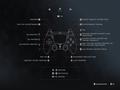
This version of the game contains no content that's exclusive to the Switch 2. The DLC that's included in the package consists of more costumes, so don't expect anything else in terms of new missions. Even the Bayonetta costumes that were highlighted in the Nintendo Direct are coming to other platforms the day this version gets released. The highlight for Switch 2 players is the different control methods and features. JoyCon 2 support is available, complete with mouse mode for better aiming. HD rumble support is available for those playing with a Switch 2-specific Pro Controller, and touch-screen support is available for those playing in handheld mode. Gyro control support is also an option for those using any control scheme that is great for people aiming projectile weapons. There's nothing that feels revolutionary enough for players to want to ditch a traditional gamepad setup, but it's always good to have more control options.


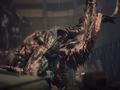


The graphics and related performance are interesting mostly because this is another situation where a PS5 game gets adopted to a lower-powered console. Like many of the other similar ports, the results are actually quite good if you take some of the limitations into account. The character models look very good, with the only signs of detail loss coming from the hair, which shows a tendency to fizzle once you look at individual strands. The environments also look quite nice, but you can see how far out the draw distance is set, as you'll see more detail pop-in compared to other platforms. You'll also notice a reduction in particle effects, but it doesn't make the scenes any less beautiful. The resolution falls in line with the original Switch in that you're looking at 1080p when docked and 720p in handheld mode, but people pay attention to the frame rate the most. The action itself hits 60fps pretty steadily, and the only drops to 30fps occur when you start seeing things from far away move around. You'll also see this in some cut scenes, but the sacrifice is worth it for the frame rate boost during gameplay.
The most interesting part of this aspect of the game is the fact that the developers have used two different technologies from rival companies. Nvidia's DLSS is used for upscaling in docked mode, which explains the game's softer look compared to the PC version, but the technology still does a great job at ensuring the system punches above its weight. The team also uses AMD's FSR frame generation technology to ensure that the game hits 60fps, and this has caused some concern when it was first announced, since frame generation works best when the game's base frame rate is high enough to mitigate any latency. The bad news is that latency is still present, but the good news is that it isn't as bad as expected. There's still an adjustment period for the player to get used to timing their parries, but it isn't bad enough that the game feels like button presses are badly lagging behind.


There's nothing different as far as the sound goes, and the original game was already pretty good in this department. The music is the real highlight, as the soundtrack is filled with tracks that stand out for their extensive use of vocals. You'd think that it would be detrimental to have lyrics for songs that would loop for a very long time, but it actually works to give the game an epic anime feel. The sound effects come through sharply while the voice work is good overall.
Stellar Blade: Complete Edition is a good port of a solid game. The story is fine and forgettable, and the characters work but not well enough for you to care about them beyond the fact that there are at least three different endings depending on a few choices throughout the adventure. The adventure itself will drive you to keep playing, as the fights are great when combined with a combat system that works, even though it doesn't seem like it would work on paper. The presentation is also excellent on the Switch 2, making it a good buy for Nintendo-only fans who enjoy solid ports of proven games.
Score: 8.0/10

More articles about Stellar Blade