

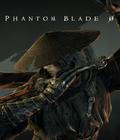



We've seen it before: A developer known for doing smaller games wants to tackle big games. The trailer comes out, and it looks amazing, but there's a healthy dose of skepticism of whether the final product will match the trailer. When the game finally hits, it defies expectations by being very good. That happened with No Man's Sky, but it took a few years after the game's launch to reach that point, and it also happened with Black Myth: Wukong. The latter is significant because China wasn't exactly known for producing big-budget games that came to North America. Phantom Blade Zero looks to replicate that playbook and result, and based on how the final game plays, S-Game has succeeded.
Phantom Blade Zero takes place in an alternate version of the Ming Dynasty, one that incorporates steampunk elements with some mysticism and martial arts. You play the role of Soul, an assassin for The Order, which is a group that is quite powerful in the otherwise lawless Jianghu. You have been framed for the murder The Order's patriarch, your former master. In a duel with your former childhood friend Zuo Shang, you fatally stab one another. You are brought back to life by the Flesh Merchant, but the heart you've been given is diseased, and you only have 66 days to live. In your remaining time, you seek to uncover the mystery behind your master's murder and try to find a cure for your diseased heart, all while trying to outrun Zuo Shang, who somehow survived and is attempting to find his own cure.


You might already be familiar with the Wuxia genre of Chinese fiction if you've ever watched the likes of Hero or Crouching Tiger, Hidden Dragon or played a game like Where Winds Meet. There are the mountainous but otherwise lawless lands of the Jianghu, and there's the notion of being a vigilante hero in a world where it's normal to jump very high and engage in fights that look like dances. Occasionally, there are supernatural elements like phantom goddesses that occupy a realm between life and death.
The setting still feels fresh, since the western world only recently started to get more stories set in the area, and that helps tremendously when it comes to compensating for some of the game's storytelling issues. The title already assumes that you have a base knowledge of the Wuxia genre, but it also assumes that you're fine with the fragmented way the story is told. The storytelling method is highly subject to personal preference. Some of the cut scenes reveal bits and pieces of the past out of order, while some of the game's major characters are cryptic when doling out important information about the central plot. That doesn't take into account the minor storylines that are uncovered via various letters found in the world. The only time you'll get a clearer picture of what's going on is toward the end of the game.
What isn't enjoyable is that most of the characters repeat themselves quite often. They have a tendency to explain almost everything when you meet them, but when you're given the chance to ask more questions, they repeat a good chunk of their speech word for word even though your intention was to get more information about a specific topic. This doesn't happen all of the time, but it does happen often enough that conversations become something you aren't looking forward to even if you are big on lore.
The game is classified as an action RPG, but the latter part doesn't follow genre norms. The RPG elements can be considered light, but they get the job done without being overwhelming. You actually never level up your character with XP, but you can level up all of your weapons and some of your gear with cash, and you can collect or buy some items during your journey. You have a skill tree that you can also upgrade with those same things, but it isn't gargantuan, so you actually have a shot at maxing out nearly everything. All of those upgradeable things can be re-specced with special items or for free, which is very generous since most games require a steep fee, if they do it at all.


On the other hand, the action part comes through in abundance with the kind of combat that Wuxia fiction is known for. Every attack has some kind of flourish, and the same thing applies to parries and blocks. Those things aren't governed by animations, so you can get into a flurry of strikes and immediately cancel into a block, further promoting the Wuxia idea of a simultaneous attack and defense for every move. The basic combat gives you the vibes of a fast action game, which is exactly what's expected.
What may puzzle some players is the inclusion of Souls-like elements into the fighting and other areas of gameplay. Just like Stellar Blade, those elements are trimmed down enough to elevate the fighting, rather than slow things down. You have a stamina meter, but the cost of performing moves isn't significant, and performing weak attacks drains nothing, giving the game a button-mashing feel. Blocking and parrying are given generous timing windows, and the tells for doing a perfect parry or dodge are clear enough to ease players into getting the required rhythm for the fight. Bells do full refills of health and consumables, but they don't respawn enemies, a move that might irk those who are used to enemy farming for resources. Boss fights do benefit from this, as you immediately reach the next part of a fight if you die after the first stage, so you don't have to deal with the encounter from the very beginning every time. These things all work well within the Wuxia style, since the speed and flashiness of the combat system isn't hampered by the need to actually read what the enemy is doing.
This is all wrapped up in a game world that feels quite good to play in. Each of the distinct lands is large, and there's a bit of a Metroidvania line of thinking, as several different weapons are needed to fully uncover all of the secrets, encouraging loads of backtracking for those who are eager to complete everything in the game. Fights with regular enemies are fun, since those same enemies will block a bevy of attacks, making the encounters feel like real duels and less like moments with cannon fodder. Getting attacked by multiple people can still be annoying, but your blocks seem to be multi-directional, so getting blindly hit isn't so common. Boss fights are also very enjoyable because the attacks aren't a mystery to read, and the bosses are diverse enough to make encounters feel distinct without artificially upping the difficulty with bugs or cheap tricks. In short, the game possesses that certain quality that makes it difficult to stop playing.


However, the world can feel a little constricted by one odd limitation: your jumping. That sounds like such a strange thing to complain about in a game where you'll run on walls and perform fancy maneuvers to go up vertical surfaces, but those only occur at certain spots that are denoted by sword scratches. At any other time, your jump has a very low height, which can become annoying when you see something you should be able to reach but can't because you can't jump high enough, and you can't latch onto a surface and pull yourself up. There's a bit of freedom that gets pulled away as a result, especially since there are plenty of places that appear to be easily traversable.
The experience is tough but fair, mostly thanks to the relaxed Souls-like elements. You won't run into a boss that'll take multiple tries and an hour to defeat until possibly the last few before the end of the game. That only applies if you're playing on the easiest or normal difficulty levels, which can be enough for some players, since this game easily reaches into a gameplay time that matches most JRPGs. Play the game at the highest difficulty level, and it instantly takes on the difficulty of something like Sekiro: Shadows Die Twice, where one mistake can be fatal. Couple that with another unlockable difficulty level that gives you exactly 66 lives before experiencing permadeath, and those who love the game's mechanics but have a masochistic streak will have a field day.
Graphically, Phantom Blade is gorgeous. The character models are wildly detailed, and some of the enemies you encounter range from normal-looking to outright disgusting, all while still looking quite picturesque. The environments also look excellent due to the abundance of vegetation and particle effects like billowing leaves and flying embers to give each locale a more epic look, even though you will pass loads of ruins and dilapidated smokestacks. Despite being on Unreal Engine, texture pop-in isn't very noticeable, but the game still has some traversal stutter that needs to be ironed out. The ray and path tracing help make the game look great with their forms of lighting, but the standard baked-in lighting also looks very good. Frame generation isn't recommended since this is a fast action game at heart, but you will want to turn on DLSS if you want everything at maximum settings at 4K. Even the mighty but prohibitively expensive RTX 5090 struggles with all of the effects.


The audio is also very good. The music is a real highlight, as the score occupies various known genres but gives them a twist with the incorporation of traditional Chinese instruments. Everything from metal to hip-hop to a more orchestral score are all represented and sound excellent in every given situation. The voice acting in English is quite good, as is the Chinese vocal track with the emotions coming through clearly. The sound effects are also well done, but it is neat to see that you can control the volume of things like sword clashes, which can be a boon since you hear that effect more often than anything else.
Linux players will need to use something like Proton-GE or Proton-Cachy to enjoy the game, since a good chunk of the movies won't play on the standard versions of Proton due to the codecs used. It also has to be the latest version, as anything older causes the game to think you haven't logged on to Steam, so you're barred from playing the game. On the Steam Deck, the game will run, but the experience is fairly rough. The game defaults to FSR Balanced with all of the settings at their lowest, while the frame rate cap for dynamic resolution is at 30. Turning off that option while leaving everything else alone produces a picture that is smeared and a frame rate that hovers around the 22fps mark. None of those things are ideal, but there doesn't seem to be a perceptible amount of lag, which is probably helped by the game having a tiny bit of leeway for parrying and dodging. Battery life can hover around two-and-a-half hours on a full charge for the LCD version of the Steam Deck, which is better than expected when you consider that the game is running on Unreal Engine.
Phantom Blade Zero is an awesome game all around. The story can be compelling enough if you can deal with the very fragmented and sometimes confusing way it is told. The action takes on two styles that would normally counter one another and creates a blend that feels perfect for both button-mashers and those seeking precision. The presentation is excellent, and the sense of exploration gives the world some tangible character. For anyone who's looking for their next action-adventure hit, Phantom Blade Zero fits the bill nicely.
Score: 8.5/10


More articles about Phantom Blade Zero