







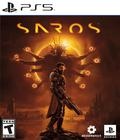
 Set on the planet Carcosa under the threat of an ominous eclipse, take on the role of Arjun Devraj, a powerful Soltari Enforcer searching for answers on a lost off-world colony.
Saros doesn't just expect you to die. It needs you to die.
Death — repeated, difficult, frustrating death — is baked into the design bones of this bullet-hell shooter from Housemarque, the studio that brought the incredible and punishing Returnal to the masses in 2021, breaking controllers and spirits everywhere as it caked hapless players in wave after wave of weird alien projectiles of unknown energy. It was beautiful, it was brilliant, and it was goddamn difficult.



However, it was also a mission statement from Housemarque on how it approaches death in the roguelike/soulslike space: Death is not an end, but a path to more. While the typical soulslike will kill you with a smile, take half or all of your stuff and then kick you in the ass to try again, Returnal offered up new scenery and opened up the greater parts of its narrative each time you perished and, well, returned. It gave you, as the player, something to look forward to when you went down for the 10th or 20th time in a row.
Saros has all these elements, but with a twist. In Returnal, there was an undercurrent of encouragement about death. In Saros, death is not only encouraging; it's empowering. A typical soulslike tells you, "Yep, you're not strong enough. Get better." Here, it's "You're not strong enough right now. Let's get you there."
"You" are Arjun Devraj, part of what could be considered a search-and-rescue group sent by Soltari, a monolithic, interstellar-scale supercorporation (think Weyland-Yutani from the Alien franchise) to check on what happened on the explorers and would-be colonists the company dispatched to the planet Carcosa years ago. It … doesn't look good. It turns out Carcosa is not a super great place to visit.
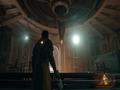
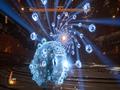
Arjun is what's known as an Enforcer, which means he's armed, armored and generally equipped to run out into the strange, beautiful and very hostile expanses of Carcosa and defend himself from whatever threats he finds en route to the answers he seeks. Oh, and there are threats. All the threats. Some are organic, others mechanized, still others a little bit of both (including fantastic multi-phase boss characters at each section), and all of them shoot at our guy Arjun in myriad ways — many of them overwhelming. Hence, my earlier soliloquy about death.


There's a reason one of the taglines for Saros is "come back stronger." Like in Returnal, each time the hero dies, they come back to life, and it kind of freaks them the f**k out. In the case of Arjun, he re-emerges out of this mysterious glowing pool and asks the first few times it happens some variant of, "What is happening? Why?" before eventually just rolling with it and starting another run toward near-certain death. Before he starts, he can literally "get stronger," and this is where I started to see some of fun intricacies of the Saros design.
Every death-and-resurrection cycle provides you the opportunity to check in with Primary, the AI-machine overlord for the team's mission (again, sort of like Mother or MU/TH/R from the Alien-verse). In addition to the occasional creepy conversation, Primary is the portal to the game's simple, thoughtful and expansive upgrade system. It's a tree in the truest sense in that it starts from the bottom and ascends, branching out, as you fill it with energy and elements that you gain from each run of combat. Every enemy you kill drops an energy source called lucenite, and the hope is that you gain as much as you can before you die, inevitably losing roughly half of it upon death. I dare not call it a "skill" tree because you don't pick up skills here — you just get stronger in three areas. You can improve how much and how quickly your shield can absorb energy to fuel "power" weapons (called "command"). You can upgrade how well you can take a hit (resilience). You can boost how much energy you can collect each time out, so you can upgrade just a bit more and a little faster (drive).
Also, in what feels like an olive branch from Housemarque in the midst of all the challenges this game will put you through, these upgrades are permanent. You will face Carcosa better than you were before. That added a touch of accessibility and opens up the experience. However, I did appreciate some of the guardrails. You can only go up the tree so far before you have to take out a boss to access the next section, the not-so-subtle message being: OK, by now, you should be strong enough to overcome this obstacle. If you can't, well, that might be a you problem.
Still, there's hope. The final pieces to this upgrade system are "Carcosan modifiers" that unlock at Primary only after you die a number of times (felt like a couple dozen, at least to me). It's a menu screen that allows you to collectively adjust the game's difficulty: how much damage you take each time you get hit, whether your shield drains when it's activated, whether your life/armor meter automatically refills when it's time to fight a boss.


There's a guardrail, too. There are also modifiers to boost the game's difficulty, and under default settings, you have to use a combination of modifiers to keep the world "balanced" as opposed under- or overpowered. You can, however, take off the limits and underpower the world to your heart's content if you just want to kick some ass and blow off some steam. The ability to do this, even a little bit, felt most welcoming and allows the player to lean into the joy of playing as opposed to the stress of surviving — which, to be fair, is plenty of fun in its own twisted, way-of-the-warrior sense and is an ethos that dates all the way back to the arcade shooters of old.
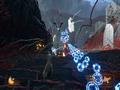
If you don't go nuts on the mods, Saros will whip your ass Sunday to Sunday in the most exquisite settings possible. It's beautiful and fluid, and the combat is intricate and chaotic. At the outset, Arjun already has most of the tool he needs to excel. The aforementioned shield can absorb energy projectiles (but not all of them) to feed power into a variety of extra-strong alien weaponry that he finds in the world, from energy missiles to a Ghostbusters-like energy stream. The weapon diversity was fascinating, from heavy-slug assault rifles to energy crossbows to disc throwers. A small gripe was that not all of the weapons felt particularly useful in some situations. Trying to fight a group of flying enemies that wanted to pick at me from a distance or the final boss with a short-range shotgun I ended up being stuck with are very much not-great experiences. The game gives you room to figure out your loadout tastes with each cycle.
I can't get too much into the story details, but in what's becoming vintage Housemarque style, you find things out as you go along instead of getting a full package of foundation knowledge at the start. Through text, audio logs and some excellently developed cut scenes, we learn that Arjun is not the most perfect protagonist. We also learn that the mission to Carcosa tackles a lot of things dealing with the human condition: wants and desires, guilt, love, duty, mystery, skeletons in the closest. It's intentionally mysterious, which entices one to keep playing and dying and playing again.
Saros has become one of my favorite shooters of the past few years, honestly since Returnal. I appreciate Housemarque for giving both the more hardcore and the less hardcore among us the chance to see the world it's crafted in its entirely. My hands hurt a little, and I'll probably need a new controller sometimes soon, but it's a cycle I'm willing to be stuck in for a bit longer.
Score: 9.1/10
More articles about Saros