



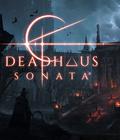
 Deadhaus Sonata is a third-person narrative-driven action RPG where you play as the undead battling the living, growing in power, and exploring an ocean of content.
There hadn't been a game in the Legacy of Kain series since the PS2 era. When that absence was finally fulfilled with Legacy of Kain: Ascendance a few months ago, most fans were disappointed by its quality to the point where they still thought of the series as in stasis rather than continuing . Seemingly in the spirit of prior indie games that were spiritual successors to long-dormant fan favorite franchises, Deadhaus Sonata looks to continue in the spirit of the original Legacy of Kain: Blood Omen with one of the original creators, Denis Dyak, alongside a 10-person development team. We got to check out an Early Access build of the game, and you can get an idea of what it's aiming for, even if there's still lots of work to be done.
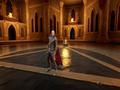
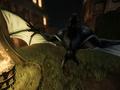
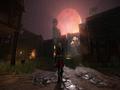
The game is set in the world of Malorum, where both the dead and undead are present, and war is a constant. You start off as a newly awakened vampire who goes from learning the ropes and catching up on vampire lore to going on missions to stop the humans from spreading their influence — all while ensuring the rise of the vampires. The general framework for a narrative is present, but that's expected for this stage of game development.
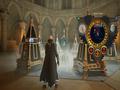
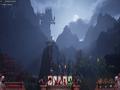
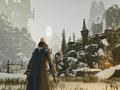
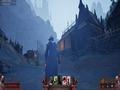
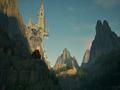
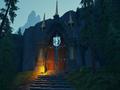
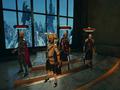
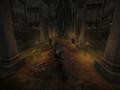
Even at this early stage, Deadhaus Sonata is absolutely dripping with lore. You can find missives on vampire clans and history all over the place. Your home base is full of references to some of the audio plays that have already been released prior to this version of the game. All of this is narrated by someone who seems very comfortable chewing up scenery with long stretches of dialogue that make simple things seem grander than expected. It can feel over the top, but it's fitting for something that is trying to be epic.
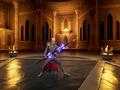
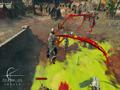
Your attack combos are basic, and you can dodge and lock onto enemies, but those moves don't feel so effective at the moment. You start with a sword and can pick up other weapons like a spear, which greatly changes the combos you perform and how long you can stay in said combo if you find yourself button-mashing. Eventually, you can feed on enemies to quickly regain your health, and you can also perform a super combo once you stagger an enemy. Most of the time, this combination can be a finishing move.
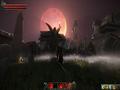
The core of the combat comes from tarot cards, which grant new abilities. The first ability lets you turn into mist to get across large distances almost instantaneously, but you'll eventually find others, like one that lets you refill health by biting someone or a card that lets you unleash a spinning attack. Other tarot cards allow you to augment those abilities with small boons, like shorter cooldown times or the ability to inflict more damage. The game heavily encourages you to fight, so you can grab more cards in the process.
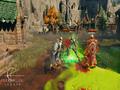
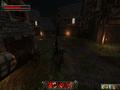
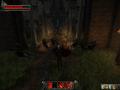
This feels like a good combat system to build things on, but you won't see that immediately because of the enemy AI. Some enemies have strategies that makes them tricky to fight, but most foes are content to rush you and whale away. The game tries to have enemies surround you and give you no room to move, so your only course of action is to button-mash until everyone is dead. Then more enemies spawn in, and you can repeat the process.
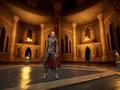
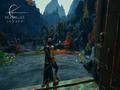
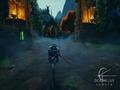
The enemy AI behavior needs some balancing, since it heavily impacts your performance in quests. Currently, the enemies constantly interrupt you. For example, there's a quest where you need to eliminate some priests before they corrupt a statue of a goddess, but you're constantly surrounded by swordsmen and it's difficult to free yourself from the pack. You'll almost always fail this mission because you're so busy dealing with everyone else that the priests can work relatively unscathed. Separately, the guide button that's supposed to lead you to quest locations is buggy, so you'll stumble around most of the time to find what you need.
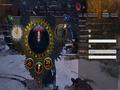
The calendar system doesn't seem fully realized yet. Early in the game, you're asked to look at a calendar to see which symbols are glowing before activating them in an area, so you can receive a card. However, the calendar seems to be static and filled with so many symbols that nothing glows, and there's no indicator in the tutorial to show what you're supposed to be looking at. You can still solve the puzzle with brute force by hitting everything until something happens. Later on, you get dates and weather conditions, but they don't feel important because they don't seem to affect your gameplay at that time.
The development team seems to be pretty good about addressing bugs in a timely manner. Prior issues included not being able to augment tarot cards with buffs because the interface wouldn't allow it, help glyphs failing to function, and button prompts to help you cross large bodies of water never showing up. Those were major things that got fixed in the week we had the Early Access build. A better tutorial was also added, and that does a better job of outlining what's going on and what's expected. Provided the developers keep up that kind of pace for bug fixing throughout the game's Early Access period, this could be an experience where gamers who jump in at this stage will see real progress being made without having to wait several months.
Deadhaus Sonata shows promise. The dedication to lore is perhaps the biggest thing that would be of interest to fans of the Legacy of Kain series. Everything else feels like it needs additional development work, including the combat system and readability of some basic functions. The game is scheduled to be in Early Access for around 18 months, and we're hoping that things smooth out for the title once it gets closer to that prized 1.0 release.
More articles about Deadhaus Sonata