







 Uncover one of history's greatest mysteries in Indiana Jones and the Great Circle, a first-person, single-player adventure set between the events of Raiders of the Lost Ark and The Last Crusade.
Indiana Jones and the Great Circle is an excellent game. It has some flaws if you really start to analyze it, but the title nails the experience of the films from beginning to end, and it does so in such a good-looking package that it can make a strong case for MachineGames and Bethesda to be the stewards of the video game version of the series for the foreseeable future. The game is finally hitting the Switch 2 due to a number of factors: Microsoft's current stance of publishing its titles on both Sony and Nintendo platforms, several iD Tech-powered titles (e.g., Doom and Wolfenstein) have made it to the original Switch in an altered but very playable state, and the presence of Indiana Jones games on various Nintendo platforms. The question is whether Nintendo's latest console can handle The Great Circle with no noticeable sacrifices.
The game starts off with a re-creation of the opening moments from Raiders of the Lost Ark. Everything from the opening shot of Indiana's back to the rolling boulder trap are all present and re-created nearly shot for shot. It's partially in-game cinematic and part playable tutorial, but it does a very good job of selling you on the idea that the team knows what it's doing.
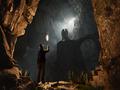
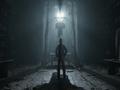

The real narrative begins after this moment, when it is revealed that this is a flashback and Indiana wakes up in his office after some late-night research on the lost Idol of Fertility. As he wanders the university grounds, he notices that it is a mess, and it doesn't take long before he finds that a literal giant has broken in and trashed the place. After a scuffle where he ends up on the losing side, Jones wakes up to find that the cat mummy statue he had recently uncovered was stolen — presumably by the messy giant who managed to leave behind an amulet that belongs to the Vatican. What starts off as a journey to Italy to find out what's going on quickly transforms into a worldwide adventure of world-saving proportions.
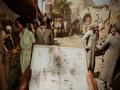
From the start, this really feels like a proper Indiana Jones adventure. Some of the more obvious signs are the various locations you'll visit for the globe-hopping adventure. There's also an old, yellowing world map that's complete with the period-appropriate names of regions, the active red dotted line denoting travel, and clips of various forms of transportation. The various side characters you meet along the way are all memorable thanks to their quirks, like the priest who loves American music or the old man in Thailand who can spin a good folk tale. You've got a spunky female sidekick, and the trademark Jones wit doesn't get overused to the point that the title becomes a comedy. More importantly, the game nails the pacing of a standard Indiana Jones film. There are moments of sadness and romance mixed in with the adventure, and it all naturally flows together. You can make an actual film adaptation of this game without changing too much.
The Great Circle is presented from a first-person viewpoint, which may initially seem odd, but it is in MachineGames' comfort zone, considering its portfolio. Keep in mind that prior to forming this company, the founders were part of Starbreeze, which is best known for The Chronicles of Riddick: Escape From Butcher Bay, another adventure game with a first-person viewpoint that wasn't a typical shooter. Those hoping to see lots of Indiana won't be disappointed, as the game uses plenty of cut scenes, all of which are done in-game.
The game is structured as a linear adventure with some openness. There are three major areas to explore; there are a few smaller areas, but the large areas share a similar structure. There are a few quest-givers, at least one shopkeeper to give you one essential item and a few optional items. You'll need keys to unlock a few areas, but most places are accessible from the get-go, and each of the major spaces contain a good deal of neutral and enemy-occupied territories to explore for weapons, health and items of interest. The areas are sizable enough, and the good news is that you can always revisit the areas even if you get warned that you should wrap things up and move on. Since it's impossible to complete every task in one run, this also acts as your post-game activity after the end credits roll.


The game has a pretty unusual leveling system. Completing side-quests and finding documents in the world garners the equivalent of XP. Instead of automatically being converted to a general level for your character along with the expected stat upgrades, the XP is used as a currency that's only spent when you read books that are either obtained in the field or purchased with coins from vendors. These books unlock or upgrade very specific things, such as increased health, a partial health refill, the ability to carry more food, or a second chance to continue if you get knocked out. The system isn't revolutionary, but it is neat to see something different from a typical leveling-up system.
The gameplay mechanics can be broken down into several different categories. Traversal is obvious but still worth mentioning because it does things that can still be considered atypical for the first-person viewpoint. While most of the game takes place on relatively flat land, you will clamber up and down ledges quite often; the back half of the game contains a few areas where you'll do a good deal of jumping. None of these actions feel "off," so you'll have to try to intentionally miss a leap. You can run a great distance before your stamina meter runs out, but the depletion rate is slow enough that it'll take a while before you need to slow down. Your trusty whip is also used often for traversal, so you'll either latch on to limbs to swing over chasms or use it as a makeshift rope to climb up walls.
The only knock is in how the game handles traversal in conjunction with weapons. Some weapons are small enough to be stashed away for a while in your inventory, but most of the things you find are too large to realistically do that. Should you have a weapon like that in your hand and need to grab a ledge, climb a ladder, or use a whip to climb a wall, you'll automatically drop that weapon instead of it being carried with you. There are plenty of items lying around in the world, so you'll rarely be without a weapon, but it can be annoying to have a sturdy sledgehammer and be forced to drop it when you need to move forward.

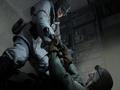

Just like in the movies, a decent chunk of the game's playtime is dedicated to solving puzzles. The game contains a good deal of tricky puzzles involving the correct placement of switches, but that all happens later on. The first half is filled with puzzles that are a tad challenging but otherwise pretty easy to figure out. You can ferret out hints for some of these puzzles by taking pictures in certain areas, and there are a few cases where the solution will be listed in your notebook if you take enough pictures to exhaust all of the hints. Don't expect something on the level of the classic point-and-click adventure games, but what's present feels good, especially since everyone will talk their way through their actions as you go through the steps of solving each puzzle.
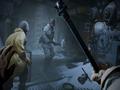
When it comes to combat, The Great Circle is both familiar and different. You can use guns and the shooting feels great, but ammo is limited, few guards actually carry firearms, and the flood of enemies that appear when you open fire makes the action risky. You can use the whip, but it mostly acts as a way to stun and disarm enemies instead of as a means to defeat them. You'll rely on melee attacks almost anytime you fight, whether that means throwing objects, bludgeoning people, or using your fists. The weapon variety is vast, and you'll see some typical stuff like hammers and bottles that you can pick up and use. You'll also see some more atypical stuff like guitars, brooms and cast-iron skillets that are funny but effective. Guns can also be used as melee weapons, so finding one dropped by a guard doesn't necessarily mean that you have to shoot to be effective.
Just like it demonstrated on The Chronicles of Riddick, the development team knows how to make first-person melee combat feel right, but there are some unexpected tweaks to keep players on their toes. All of the usable objects have durability pips, so everything will break — including guns, which will shatter if you smack people with them enough times. You also have a stamina meter, so you can't relentlessly spam the attack button unless you want to leave yourself open and unable to block or dodge. The system works quite well to make fights less of a button-mashing exercise, but you will hate encountering a bunch of guards because they won't wait for their turn to throw a punch.
The last big mechanic is stealth, which can feel basic in some areas but advanced in others. You can duck behind objects to reduce the amount of noise you make, but you can also don disguises to not attract attention. There's no cone of light replacement to indicate an enemy's visual range, but you get indicators to see how suspicious they are of you. You have no way of delivering silent attacks, but you can hide the bodies of anyone you've killed or knocked out, and you can push people off ledges without alerting others, no matter how loud they scream.
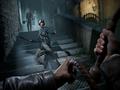


The presence of stealth is great, but its implementation is the weakest game mechanic. Guards will go on alert when seeing a knocked-out body, but it's a crapshoot whether that results in everyone knowing about the incident. Guards will also give up on searching for you pretty quickly if you aren't actively engaged in a fight. Being in a disguise helps, but the officers will sometimes recognize you from a good distance away, so the opportunity to go stealthy is sabotaged through no fault of your own. The game doesn't immediately end when stealth is compromised, and you'll rarely feel like the stealth mechanics block you from progressing, but this could've been done better when you consider the developer's previous output at Starbreeze.
There's not much when it comes to features exclusive to the Switch 2. You can turn on motion controls for better aiming, but that only applies if you're using the Joy-Con for controls instead of a Pro Controller. You can also opt to use the Joy-Con mouse function for aiming. Aside from featuring HD Rumble, that's about it. That's not bad at all, but it is a shame that this isn't being sold as a Gold edition of the game or something similar, as it means that you'll still have to buy the Land of Giants DLC separately instead of getting it as a consolation for waiting so long for a Switch 2 port.
The audio is absolutely fantastic. The voice acting is superb, with Troy Baker nailing the Harrison Ford impression; there are very few instances when you'll be able to discern that it isn't actually Ford's voice. The music hits all of the expected Indiana Jones themes but adds enough of its own flavor to feel distinct. It complements the original John Williams score well. The sound effects are also very good; the whip cracks and gunshots sound crisp, but it is funny that the impact of punches in the game also sound loud enough that they can be mistaken for gunshots.

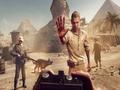

The graphics and related performance are what people will be curious about the most, and on this front, The Great Circle mostly delivers. The character models still look fantastic, and that is especially true of the faces both during the in-game cut scenes and when you're normally traversing the world. The models look great, and the environments still sport a lushness in heavily vegetated areas and loads of detail in other areas. Ports of other games like Cyberpunk 2077, Pragmata, and Assassin's Creed: Shadows have normalized the notion that the Switch 2 can showcase some high-fidelity, impressive visuals.
That said, the sacrifices to ensure that the game looks good on the platform will be familiar to those who have already played those big games on the console. Via eyeballing, the frame rate hovers around the 30fps range, and while it can go a little higher or lower depending on whether you're going to a new environment or moving indoors, it remains a smooth playing experience. A few of the textures come in at a low resolution, but that happens so infrequently that you really have to look for it. The level of detail pop-up is a bit closer than on other consoles, and this greatly affects shadows, since they tend to experience more flicker. Considering how the rest of the package turned out, these sacrifices are worth it.
Like many ports of current generation titles, Indiana Jones and the Great Circle is a solid iteration of an excellent title. The game absolutely nails the feeling of a classic Indiana Jones adventure with a great balance of puzzle-solving and action. The dialogue and humor are spot-on, the places you visit are as varied as can be, and the presentation is still incredible on such a seemingly underpowered device. It would've been nice if the DLC were included in the package, and there are still some gameplay elements that don't feel fully fleshed out, but this remains a title that is well worth playing — no matter where you're playing it.
Score: 8.5/10


More articles about Indiana Jones and The Great Circle