





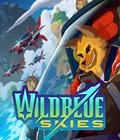
 Wild Blue Skies is an aerial combat adventure that reimagines the classic on-rails shooters of the '90s.
Some of the appeal of the indie game sector comes from a sense of renewal: taking a beloved game or franchise that hasn't seen a new entry in years and creating a spiritual successor that captures what made the original so well loved. We've seen this with cult hits like Jet Set Radio and in genres like Metroidvanias, with indie developers often stepping in to fill the void left by dormant franchises. Star Fox is a good example. While the original is available on the Switch 2, the lack of a new or remastered entry during the Switch era has led to games like Whisker Squadron: Survival and Fur Squadron. Wild Blue Skies is the latest game to carry that torch, and it's good, even if it hews a little too closely to its source material.
The scientist Grimclaw once worked for the army, but his desire for power ultimately brought the world to war. The military turned to the mercenary group known as the Blue Bombers to fight back, resulting in victory and Grimclaw's retreat to the northern volcanic lands. Years have passed, and Grimclaw has returned with a new fleet of robotic forces under his command. Once again, the Blue Bombers have been called into action, and a new generation of pilots has answered the call.
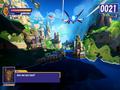
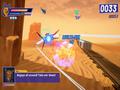
The setup is instantly reminiscent of Star Fox, particularly Star Fox 64. The game follows a similar cadence, with a reasonably lengthy introductory cinematic followed by short mission briefings. The fact that the Blue Bombers are a four-person team further strengthens the comparison, as does the presence of a rival group that also consists of four characters. The lack of a more detailed story makes it clear how closely the developers wanted to follow the Star Fox formula. The main differences are that everything takes place on a single planet rather than in space, and the characters represent different species while having distinct personalities. Chuck is nowhere near the elder fatherly figure that Peppy is, while Roe is far less combative than Falco. Thorne is more playful than Slippy, with a flicker of cockiness during one particular scene, leaving Bowie as the only character who closely matches Fox's straightlaced attitude.
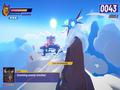
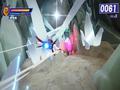
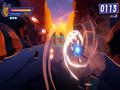
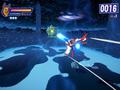
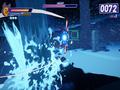
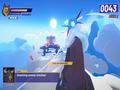
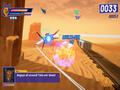
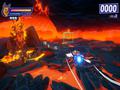
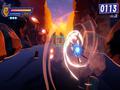
The similarities extend to the mechanics as well. This is an on-rails shooter where most levels automatically propel you forward from a third-person perspective behind the jet. You can use air brakes or a boost to slow down or speed up while still having some freedom to move your craft around the screen. You can fire your lasers normally or charge them for a more powerful shot, with both being upgradeable through power-up rings. Bombs can also be collected, although they deal damage within a splash radius rather than clearing the screen. Your teammates are present during missions, but while you can occasionally save them from enemy fire, you don't feel their impact on the battlefield very often.
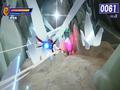
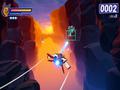
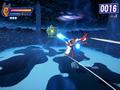
Certain boss fights provide the only major mechanical deviation, allowing you to fly around more freely within a confined area. The game automatically turns you around when you reach the boundaries of the fight. Missions are a decent length, with most containing no more than one checkpoint, while boss fights punctuate every level with opening quips and farewell messages. The levels are straightforward but contain plenty of secrets and branching paths that can lead to high-scoring bonuses. Finding those paths requires performing specific actions that aren't always immediately obvious.
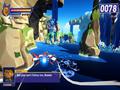
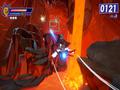
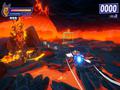
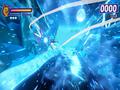
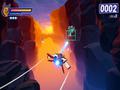
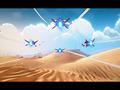
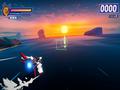
Perhaps the most notable element that none of the other modern Star Fox-inspired games has adopted is the lives system. You have three lives for your entire run, along with a health meter that only partially refills between levels. Losing all three lives means starting over from the first stage, but your high scores remain saved. This gives the game an old-school mentality where you need to improve through repetition rather than brute-force your way to the end. That's especially fitting given that a full run can be relatively short.
The game does make some changes to Nintendo's formula, although they're relatively minor compared with other Star Fox-inspired titles. There is no cockpit view, and you can only fly a spacecraft rather than transforming into a land vehicle. The charged shot is assigned to a different button than the regular laser, while the lasers can be set to rapid-fire mode by holding down the button. This is a welcome change that saves you from potentially suffering from carpal tunnel during a run. You also can't perform somersaults or U-turns during the free-flight sections, but those sections aren't particularly common.
The game's straightforward approach may catch some players off guard. Games inspired by older titles often try to put their own spin on the formula. Whisker Squadron: Survival turned Star Fox into a roguelike, while both Fur Squadron games added leveling and upgrade systems. Even the Switch 2 release of Star Fox adds plenty of cut scenes to freshen up an otherwise familiar experience. Wild Blue Skies does none of that, instead going straight into the action with only brief pauses between missions. That approach works well, making the game feel decidedly old school while helping it stand apart from its contemporaries.
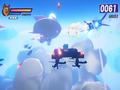
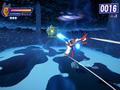
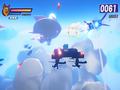
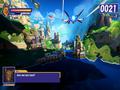
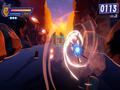
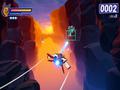
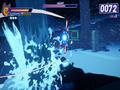
It helps that the core mechanics are absolutely solid. Flying feels great, with a responsive ship that can turn on a dime without requiring you to fight the controls. Shooting feels good as well, but it would've been nice to continue firing the lasers while charging a shot, since those actions use separate buttons now. The levels are well paced, and the difficulty never feels overwhelming. In short, Wild Blue Skies nails nearly everything you'd expect from the Nintendo 64 classic, making it easy to pick up and play. The only notable omission is multiplayer, but the secrets and branching paths provide enough replayability to make that a relatively small loss.
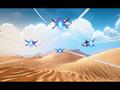
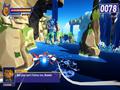
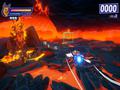
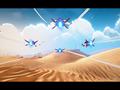
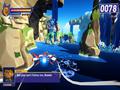
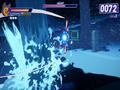
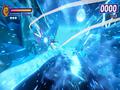
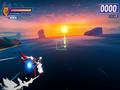
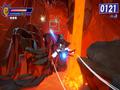
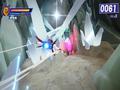
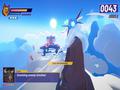
Graphically, the game benefits greatly from its cel-shaded art style. Colors are bright throughout, and everything remains highly readable. The cut scenes and character portraits also look fantastic, with plenty of detail, but more varied expressions would have been nice. The frame rate is solid, with little effort required to maintain 60fps. My only real complaint is the contrails behind your ship. They look cool, but removing them in favor of greater screen readability would've been preferable.
The sound is pretty good overall. The music captures the vibe of the Nintendo 64 classic remarkably well, with each level featuring an action-focused track that doesn't try to be overly cinematic. The sound effects are distinct, and the voice work is solid across the board. There is some repetition in the end-of-level status reports, but it never becomes particularly annoying.
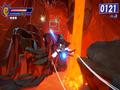
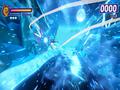
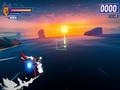
The game also runs nearly flawlessly on Linux. Whether you're using Bazzite with an Nvidia card or SteamOS with an AMD GPU, Wild Blue Skies runs without any issues. The Steam Deck version also performs well, but the graphical options are sparse compared with the desktop version. The frame rate is locked to 30fps, but it remains smooth, while battery life sits at around three hours on a full charge. Given the relatively short length of a run, the game feels particularly well suited to the device.
Wild Blue Skies works extremely well as a homage to Star Fox 64. Its old-school approach is refreshing at a time when so many other games are trying to put their own spin on the formula. The mechanics are excellent, the handling is responsive, and the level pacing works well with the game's replayability. For those looking for a nostalgic experience that gets the important things right, Wild Blue Skies is well worth checking out.
Score: 8.0/10
More articles about Wild Blue Skies