








 Well Dweller is a dark fairy-tale metroidvania, full of charming characters living in a wretched kingdom!
"Hey! I'm Kyle and I make Metroidvanias. My brother Eric makes the music for them. Hope you enjoy!"
The description on the Steam developer page for Kyle Thompson says almost everything you need to know about his games: You're guaranteed a Metroidvania starring a cute protagonist, adorable allies, grotesque antagonists, and, more often than not, a very good game. His previous releases have been both critical hits and player favorites, earning "Overwhelmingly Positive" ratings on Steam. That's an impressive track record, but it also creates pressure to keep the streak alive. Well Dweller, the latest game from Kyle and his brother Eric, feels familiar but upholds the standards the duo has established.
Well Dweller takes place in a dark fairytale world that feels more 19th-century than medieval. The kingdom's princess has always been cruel, unlike her kindly mother, but things take a turn after her mother's death. One of the new ruler's first orders is to hunt the kingdom's birds, so she can have a coat made from their feathers. Every surviving bird flees except for a small family living in a skull at the bottom of a well.
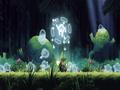
One day, a bird named Glimmer is tasked by his mother with taking his siblings to steal leftover berries from a nearby hunter. The mission succeeds, but the hunter discovers their skull home and captures every bird except Glimmer. Armed with only a matchstick, Glimmer sets off to rescue his family — and that may mean killing the new queen.
Well Dweller embraces its dark fairytale setting through its antagonists and environments, which maintain a sense of never-ending gloom without going fully grimdark. There are plenty of moments of levity, particularly involving Glimmer's siblings, who progress from oblivious to adorably annoying. Other minor characters similarly provide occasional laughs between fights and dreary events. It isn't a particularly deep story, but it's a good one that carries the game from beginning to end.
As expected, this is a traditional side-scrolling Metroidvania. You'll explore sprawling maps connected horizontally and vertically, backtrack after gaining new abilities, and fight plenty of bosses. However, the game does a few things differently. Several boss encounters involve running from, rather than fighting, an enemy, while another sequence plays like a stealth game. You also don't start with many abilities, so nearly every new one feels fresh. Don't expect a huge arsenal, though. Your matchstick, a slingshot that lets you use it like a bow and arrow, and a Molotov cocktail equivalent are essentially your entire arsenal.
The mechanics may be familiar, but several design choices make the experience feel polished. Platforming is a good example. Nearly every area introduces a new gimmick. One has you hitting bells to temporarily reveal platforms and walls, while another has you bouncing on bubbles while learning their unusual patterns, reminiscent of some Mega Man stages. These sections can be tricky but remain enjoyable, especially because hitting spikes doesn't immediately cause a game over; you'll simply return to the last safe point.
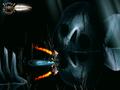
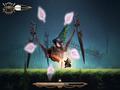
Even without those gimmicks, the platforming feels good. There's some leeway when landing jumps, and the game occasionally lets you safely stand surprisingly close to spikes. Later upgrades add even more possibilities, including wall climbing, triangle jumps, and the ability to create platforms by plunging your matchstick into walls — even walls covered in spikes. The game encourages experimentation, and that freedom makes traversal more enjoyable.
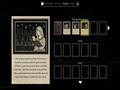
Well Dweller has two types of upgrades. Major upgrades are earned after significant milestones, such as surviving a boss encounter, and directly affect platforming. Trinkets, meanwhile, are scattered throughout the world, often hidden in difficult-to-reach areas or behind time trials.
Trinkets offer a variety of bonuses. Some increase the money dropped by enemies or boost your damage if you haven't attacked recently. Others create spikes when your health drops below a certain level or let your Molotov cocktail bounce before exploding. Later, you can power up your trinkets, and the right combinations can turn you into a formidable force. It's the kind of power trip that is one of the genre's biggest appeals. The system is balanced by limited trinket slots, which must either be found or purchased at a significant cost. You can also change your loadout whenever you're at your tent, encouraging experimentation without making your choices permanent.
Combat is similarly straightforward but has a few distinctive touches. Almost every enemy telegraphs attacks with a visible red circle, so getting caught off guard usually means you weren't paying attention. You can also slide to escape quickly and become immune to certain attacks while sliding. Neither feature radically changes the genre, but both give Well Dweller's combat some additional identity.
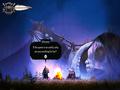

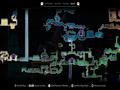
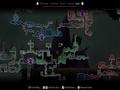
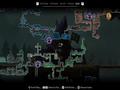
The game also makes several smart quality-of-life choices. You can toggle the minimap, while the main map offers two styles: a traditional block layout and a more detailed version with illustrations showing an area's significance. You can place your own markers, save anywhere, and, once unlocked, warp between tents at any time. You can even purchase hints for specific collectibles, but they're limited to areas you've already visited. These aren't revolutionary additions, but they eliminate several common Metroidvania frustrations. Combined with the game's mechanical refinements, they make the experience enjoyable largely because you're rarely fighting against the controls or poorly implemented systems.
A playthrough takes roughly 10-12 hours, depending on skill level. There's also a post-game quest that unlocks after your first completion and adds another hour or two. Completing it unlocks the best ending, although the differences from the original ending are relatively minor.
You'll have to nitpick to find many problems. If you're collecting trinkets and upgrades along the way, you'll likely have enough of the right ones by the final quarter to make the bosses quite easy if you have good reflexes. The store is also tedious because the game kicks you out of the purchase screen after every transaction.
The map system has a few quirks. Only the detailed map allows you to control the zoom, its scrolling is slow, and there's no option to increase the speed. There's also no way to reach 100% completion. There appear to be more upgrade tokens and trinket slots than necessary, so completing the counter can require unnecessary grinding even after you've unlocked every Achievement. None of these issues are major, but they're worth noting.
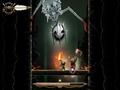
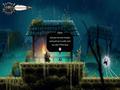
The overall presentation is fantastic. The visual effects are strong, but Eric Thompson's soundtrack is the real star of the audio. The tracks range from haunting to cautiously hopeful, and each fits its environment and mood beautifully. The game also looks gorgeous, with detailed environments and characters that range from adorable to grotesque. The animation has a papercraft-like quality that suits the art style, while the particle effects add polish without being particularly demanding on hardware.
Linux users should have no trouble running the game. It's also well suited to Steam Deck, although you'll need to change the resolution because the game's settings carry over through cloud saves. Once set to 1280x800, the game still looks great, with none of the usual small-screen problems, such as text scaling issues. It maintains a solid 60fps even during more intense scenes. On a four-year-old LCD Steam Deck, battery life averaged about four-and-a-half hours, which is an excellent result compared with many recent releases.
Well Dweller is an excellent Metroidvania. Its combat feels good thanks to enemy tells and defensive options, while the platforming is tight and consistently introduces new ideas. Exploration strikes a good balance without becoming overwhelming, and the abilities and trinkets provide meaningful ways to customize your approach. The adventure also hits a sweet spot in both difficulty and length.
Like the duo's previous games, Well Dweller is a polished take on the genre that understands what makes Metroidvanias enjoyable without overcomplicating the formula. Fans of the genre should find plenty to like, and the Thompson brothers have once again delivered a strong entry in their growing catalog.
Score: 9.0/10
More articles about Well Dweller