



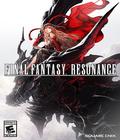





Final Fantasy Resonance is an interesting concept for Square Enix: Take a gacha mobile game and turn it into a single-player RPG. Octopath Traveler 0 showed that this could work, but Resonance has a harder task. Final Fantasy: Brave Exvius, the now-defunct mobile game on which it is based, wasn't really a traditional RPG. What makes Resonance so impressive is how it takes the bones of that game and seemingly crafts an entirely new, fascinating take on the franchise.
Resonance follows roughly the same story as the mobile game, but its script, cut scenes, and structure have been completely revised. Players take control of Rain, captain of the airship fleet of Grandshelt. His life is thrown into chaos when an invading force ravages the kingdom and destroys the Crystal of Earth that protects it. Seeking revenge, Rain gathers allies and travels to other lands to protect the remaining crystals. If they're destroyed, terrible ruin will befall the world.


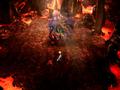




On the surface, Resonance looks like a classic Final Fantasy, built around turn-based party combat and all the expected trappings: magic, special attacks, character roles, and more. Its combat adds a modern twist by adapting the stagger-and-break system that has become a staple of recent entries.
Battles are turn-based, with characters and enemies taking turns attacking and using abilities. Each attack reduces an enemy's stagger gauge; emptying it staggers the enemy, preventing it from acting and increasing the damage it takes. The character who breaks an enemy also gets a free bonus turn at the end of the round. Break every enemy in a single round, and the entire party gets a bonus turn, along with access to a powerful Vision attack.
Each character has a defined role, mirroring the paradigms of Final Fantasy XIII: Commando, Medic, Saboteur, Sentinel, Synergist, and Breaker, which replaces Ravager. Rain, for example, is a Sentinel who learns abilities built around his natural toughness and ability to provoke enemies. Fina is a Medic specializing in healing and holy magic, while Lasswell is a Breaker who excels at reducing enemy stagger gauges. Characters have individual skill trees that expand as they level up, along with Limit Breaks for massive damage.


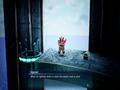
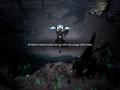



Visions add another layer to the system. They function as a job system, representing heroes from across the Final Fantasy universe whose thoughts and feelings manifest as guardian spirits. The roster includes original characters alongside familiar faces, with protagonists ranging from the Warrior of Light to Clive.
Equipping a Vision gives a character a second set of abilities. The Warrior of Light, for instance, is a Sentinel focused on defense and holy magic, while Trann the Black Mage is a Breaker who provides a broad selection of elemental spells and rewards successful breaks with bonuses such as MP recovery. Visions level up while equipped, unlocking new skills and abilities. Once a Vision is mastered, you can spend AP to retain some of its skills even after removing it, effectively allowing characters to combine two jobs. Vision skills can then be used against staggered enemies for additional damage.
That flexibility lets you build characters around whatever synergies you want. Equip the Warrior of Light to Rain, and you can turn an already sturdy Sentinel into an even stronger defensive wall. Give him Leah, the White Mage, and you instead get a durable healer who can take punishment while easing the burden on Fina. It's difficult to know how deep the system will become based on the demo, but the sheer number of Visions and skills suggests plenty of room for experimentation and some genuinely fun combinations.
You can also summon Espers, the classic Final Fantasy monsters such as Bahamut. Once summoned, they remain on the battlefield for several turns, adding their own abilities to the fight before unleashing powerful finishing moves. They're visually impressive and can turn the tide of a difficult battle.
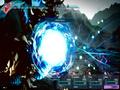



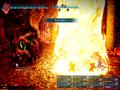


Outside combat, Resonance is similarly traditional. There are explorable dungeons with random encounters, a world map filled with treasures, and side-quests offering useful items and rewards. The demo even includes enemies that are recognizable as upgraded versions of monsters from Final Fantasy VI.
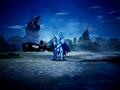
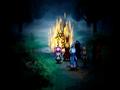
The game's presentation is perhaps its biggest surprise. Resonance looks like a high-definition interpretation of an SNES-era Final Fantasy, with simple, minimally animated sprites packed with detail. It leans into that aesthetic with elaborate camera work and effects. One early scene features a choreographed fight between two simple sprites, using flashy effects to make their clash feel far more dramatic than the underlying animation would suggest. It captures the kind of action those older games implied when two sprites collided and the screen flashed, while preserving their inherent charm.
Final Fantasy Resonance may have started as a mobile game, but the demo doesn't feel like one. It feels like a classic Final Fantasy that slipped through a gap in time, received a modern facelift, and emerged in 2026. How appealing that will be to players without nostalgia for the franchise's earlier years remains to be seen, but for longtime fans, it's a laser-guided shot of nostalgia. I can't wait to play more when Resonance launches Oct. 22, 2026, for current-generation consoles and PC.







More articles about Final Fantasy Resonance