








 Cthulhu: The Cosmic Abyss is a thrilling first-person psychological/investigative adventure inspired by Lovecraft's universe.
The Cthulhu mythos has been the subject of plenty of games. The works of H.P. Lovecraft have been used in different video game genres. Cthulhu: The Cosmic Abyss is the latest Lovecraftian title from Big Bad Wolf, a studio known for adventure games such as Vampire: The Masquerade - Swansong and The Council, which should give you an inkling about what kind of game to expect.
Unlike many other games revolving around Cthulhu, The Cosmic Abyss is set in the near future, where climate change has further affected the planet and dwindling resources have caused companies to head underwater to find essentials to keep running the modern world. Players take on the role of Noah, an investigator for the Ancile — an organization that handles occult affairs — is sent to check on a colleague who has gone silent. The search leads to a gate into another world, where the missing investigator has descended into madness before being killed. Noah escapes, but not without lasting physical and psychological scars. Eight months later, still haunted by what happened, Noah follows a new lead that brings him to Ocean-I, an abandoned underwater mining station that has uncovered the sunken city of R'lyeh. This ends up revealing something far greater, and far more dangerous, than anyone anticipated.
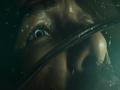

The game is presented from a first-person perspective, but the emphasis is on the investigation above all else. You'll enter an area, where you're presented with a basic problem, such as trying to find your way out of a maze or reaching a door and opening it. These are supported by a growing list of other mysteries that need to be solved before you can move on to the next area and start the process anew.
As an investigative adventure game set in the near future, The Cosmic Abyss provides you with tools that are facilitated by an onboard AI companion named KEY. The first tool is a mental corkboard that keeps track of all of the clues you find on the journey, whether that's computer logs, written documents, audio recordings, or item analyses. For the latter, that means being able to look at some objects in a 3D space to uncover little clues that aren't visible on one side, such as notes that aren't visible on one side of a piece of paper or markings on an ancient artifact. For everything, you can use the corkboard to log notes and connect objects to see relationships. Some clues lead to other questions that uncover important information, such as how you can get through a maze that seems to loop around itself.
The deduction process makes you feel smart about finding the solution — mostly because the game never gives you a definitive answer. You may link clues to successfully answer a question posed by KEY, but you have no idea if the solution is correct until you perform the action. This fits with the developer's intent for the game to not provide any hand-holding, which results in some good and bad results. On the one hand, the investigation process feels more realistic due to the trial-and-error process. On the other hand, it also means loads of backtracking to uncover the correct solution. This can make the title feel longer than expected, especially since the game also features no map to chart where you've already been and where you need to go next.
Another AI-provided tool in your investigation arsenal is your sonar, which feels multi-functional. You can let out a sonar ping to get a layout of the environment; it's handy when you're underwater and have low visibility. You can also use your sonar to dial into different frequencies to uncover the location of items. When you discover an item, you'll automatically tune into its frequency, and a ping emits to track where another similar item can be found or give you a bookmark for where a previously discovered item is located, so you can easily return to it later. The game also lets you combine filters to find specific items that contain all of the chosen element frequencies, but looking for individual signatures is more efficient.


The sonar becomes an invaluable tool, but you get the feeling that the game is overly reliant on the tool for progression. You'll swear that some items won't appear unless you use your radar to ping them, even if the items would otherwise be visible in plain sight. The first three chapters of the game have you activating the sonar practically every few steps, since you're either diving through murky waters, have a ton of items to uncover, or can easily get lost without the pings. The game eases up on this mechanic as you progress through the middle and back half, but you've used the mechanic so often by that point that its novelty would have worn off.
Everything is governed by corruption — the notion that you'll suffer a mental breakdown and succumb to madness. There's no way to stop the corruption, as you'll slowly amass it as you get further into the game, but there are things you can do to fill up the meter faster. Following the exact path used by the scientists to reach new areas of R'lyeh, for example, leads to you gaining more corruption, and the same occurs if you exert yourself trying to analyze objects if you don't have the energy to do so. You can take alternate paths to slow down the corruption, but there is no way to stop it or reverse its progression.
It doesn't take long before you realize that The Cosmic Abyss is trying to get you fully corrupt before you reach the final chapter. The corrupt path through a level is often easier to follow, and that's something most people will take, since the alternate route often takes much longer with more obtuse puzzles. The game also doesn't provide too many ways to gain energy, and refills are often small, so trying to investigate every single object in the game will require you to give in to the corruption. It almost feels like the title wants you to get the bad ending first and then use your knowledge to optimize the path to the end (like a speedrunner) to get the better endings.
The only way to mitigate any of this is through the three difficulty levels, which can be changed at any time. The changes provided by each difficulty relate to things like having KEY give you more hints to a question before ultimately giving you the solution. You can also toggle whether object analysis takes up any energy and how quickly your corruption levels can progress. Considering how tough the game is, these toggles are helpful for players who aren't in love with the investigation process and the accompanying penalties.
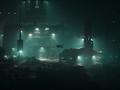
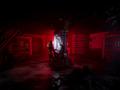
There is one missing element that's usually in most Lovecraftian titles: combat. You have no guns or melee weapons. You can't kick or punch creatures or people, either. You have encounters, but they're either relegated to cut scenes, or you simply avoid the hostile beings. The approach is interesting but also welcome, since it focuses on playing detective rather than slugging it out with creatures.
The general framework is solid enough, but aside from the aforementioned gameplay gripes, The Cosmic Abyss does have some other issues. Highlighting and selecting objects becomes a finicky affair, as they're very sensitive to your aiming reticle. You can hover over an object, but the game won't register anything until you hit the exact spot. Your inability to hold more than a few objects at a time is also annoying; you'll dump things in the environment if you're trying to solve an issue, and it creates some unnecessary back and forth in the process. At least your inventory of clues and items gets cleared when you start a new chapter in the game.
Perhaps the bigger issue is that the game lacks any sense of real horror or dread. Part of it is because the game doesn't actively go for any scares, cheap or otherwise. You won't get random objects dropping and loud noises for any jump-scares. You can die in the game, but each possible approach from a monster is well telegraphed, so you have ample time to prepare. The lack of fear is also due to this being well-trodden territory. We've already seen so many pieces of media involving the Cthulhu mythos, and while the settings may change, the details always remain the same. We know about madness and Elder Gods and Deep Ones, and there has been no variation in their motivations and actions. This makes each game feel faithful to the source material, but it also means that these creatures and locales no longer elicit any thrill or reaction for those who are familiar with anything Lovecraftian. Those completely new to this sort of thing will get a kick out of learning about some of the mythology, but that might be it.
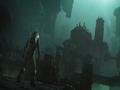
Graphically, The Cosmic Abyss looks pretty good. The environments share the curse of looking way too similar due to the abundance of rocks, but at least the textures don't look blurry or sport low resolutions. The character models are few and far between, and they look fine, but the mouth animations for speech look overly exaggerated. The use of lighting and shadow look fine, but it is funny to see that the game lacks any options for ray tracing at a time when a number of Unreal Engine 5 titles are flirting with the technology. One thing that will irk some players is that HDR is present but can't actually be used. You can turn on the option and fiddle with the luminosity, but the image never changes, and the option is never saved, so it's more of a tease than something you can actually use.

As for the audio, it isn't quite as polished as hoped. The music is the highlight, as the soundtrack provides the right amount of dread without feeling overwhelming or over the top. For a game that tries to deliver more of an unnatural atmosphere over actual scares, the music helps greatly. The sound effects are mostly fine, but there are several moments when sound effects either don't play or play at such a low volume that it nullifies the impact. The voice work has some issues but not consistently. The voices are fine and fit each character well, but the delivery feels off. There are moments when you'll hear the line performed with the wrong cadence, and there are other moments when the delivery doesn't feel right for the situation. These moments inadvertently add to the sense of madness taking over, but that doesn't mean the implementation is good.
If you're playing the game on the Steam Deck, expect the game to fluctuate in graphical quality and performance. By default, the game goes for the Epic graphical preset, which renders it unplayable on the device. Dropping the preset to Low gives you a frame rate that hovers around the 40-50fps mark, and there are a few moments when you can even hit 60fps if the scene isn't too intense. That's all without the use of FSR, but the higher frame rate comes at the sacrifice of picture quality. The few character models look fine, as does the environment, but both of those things crumble under harsh lighting and blocky shadows that transform the game's look in a bad way. The frame rate issue becomes dire when the game plays a full motion video. It's presumably loading things in the background and causing the frame rate to drop to the mid-single digits before things return to normal when gameplay begins. As for the battery life, you're looking at around 90 minutes on a full charge on the LCD version of the Deck. The system fan kicks in at full blast for most of that time, making this a game that needs headphones unless you want to set the volume at very high levels.
If you plan on playing the game on a Linux machine, you'll be in for some disappointment. When booting up the game, you'll get to the developer and publisher logos, but once those finish playing, you only get a black screen. The only way to exit is to get the Steam overlay up to quit the game or alt+tab over to the Steam client and quit. This occurred with both the latest versions of Bazzite and CachyOS using Nvidia as the video card. Since the game worked on the Steam Deck, I tried using command arguments to make the game think it's running on the Deck, but the results are the same. It is entirely possible that this issue will be solved shortly after the game's release, either with a different command line argument or a patch. For now, those who migrated away from Windows 11 are out of luck on this title.
In the end, Cthulhu: The Cosmic Abyss is fine. The lack of combat combined with a lack of guidance creates a challenging and refreshing experience for most — and frustrating for some. The overall presentation is fine, despite the game's use of an engine intended to deliver stunning visuals. The game will appeal to those who are fascinated with the Cthulhu universe more than those looking for thrills and scares. Players won't feel compelled to stick with this title for long sessions at a time.
Score: 6.5/10

More articles about Cthulhu: The Cosmic Abyss