








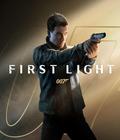
 007 First Light (previously known as Project 007) features a wholly original Bond story and will see players earn their 00 status in the very first James Bond origin story.
If a game revolves around James Bond, there's a good chance that there will be lots of shooting. Except for a few text adventure games in the 1980s, the 007 games of the early video game era adhered to the style of titles at the time, and they were all action-based affairs dealing with more shooting than spying. When GoldenEye for the Nintendo 64 became an instant classic, it solidified the idea that Bond needed to shoot often and at every possible moment. Every game that came out afterward followed this blueprint, with the only changes in the camera perspectives. The news that IO Interactive would be behind the latest title, 007 First Light, gives the impression that the popular British super spy would actually put in some real espionage work alongside the gunfire.
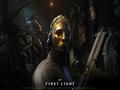
You get that sense in the game's very first level, which sees Bond as a newly recruited airman flying to a remote island in Iceland. After surviving an ambush that kills almost everyone else, you sneak onto a base before being recruited by MI6 to investigate what happened to a classified artifact. After doing so, you go against orders to rescue some kidnapped scientists before getting everyone picked up by British forces.
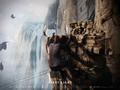
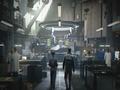
The first level shows you performing no shooting at all, a feat accomplished by the fact that all of the guns you find are biometrically locked. A bulk of your time is spent sneaking around the base, hiding in tall grasses, and trying to stay out of sight while also doing silent takedowns on unsuspecting guards. You can pull off some practical tricks, like messing with nearby machinery to distract guards or lower shutters to block the guards' vision. If you are spotted, you can fight your way out by punching enemies and knocking them out with the environment as an aid. Occasionally, you will find important clues for the mission in documents, and you will don a disguise to let you go through the base undetected. With the level clocking in at a decent length, it establishes the idea that the game is a more measured take on the art of spycraft that doesn't involve guns.
By the time you reach the first major field mission, you get a very good sense that the game emphasizes stealth and investigation. The actual act of sneaking around involves the usual bits of moving around behind objects and knocking out enemies. There's also social stealth: blending into the environment while listening in on a conversation to determine your next move, donning disguises that may be just as simple as grabbing a press pass, bluffing your way into unrestricted areas, and casually activating something to distract guards. If necessary, you can employ gadgets, like temporarily blinding people with a laser so you can walk by or using that same laser to destroy locks. Your watch can disrupt nearby electronics to change possible outcomes, you can make someone sick by shooting a dart filled with chemicals, or you knock them out with a tiny concussive missile or grenade.
For the most part, this is Hitman: World of Assassination with that game's Agent 47 wearing a James Bond skin. This isn't a bad thing, as many Hitman players have often wondered what a Bond game would look like with that particular gameplay. The combination works well. Having every leg of the journey take place in big, crowded areas makes every place feel alive. It also strengthens the idea of you being sneaky, since you're doing things in front of so many eyes and yet no one notices.


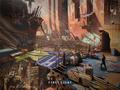
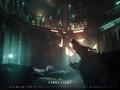
The approach is similar, so any experience with Hitman means that you can easily get into your groove once you get past the initial training sections of 007 First Light. This is a more simplified take on what you'd do in IO Interactive's big flagship series. For example, you can't hide bodies anywhere, but rarely will you have to worry about compromising a mission this way because the only way to fail a mission is to die. You can use your gadgets to create smoke bombs or knock out opponents, but you can't create booby traps unless the game calls for it, such as having a big radio tower get knocked down so you can plan a big escape.
The melee combat falters in a few areas. Fighting enemies one-on-one is fine and looks great when you start tossing them into objects or bashing them on nearby walls and cases. Being able to parry their attacks into a fluid combo of your own feels very satisfying, and the ability to initiate a fake surrender before attacking is a nice touch. However, it often takes one good combo from foes before you're one hit away from entering your kill state. The timing for parries is generous enough that you can parry most attacks with ease, but trying to parry a combo suddenly requires enough precise timing that you'll fail more often than you succeed. Fighting off multiple assailants at a time can be exciting, but the game sometimes has a bad habit of doing this in very confined spaces, where the camera sometimes hides the location of other enemies and their attacks because of the camera. The fighting can feel unnecessarily difficult when this occurs.
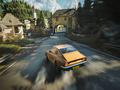
The emphasis on stealth and gadgets is welcome, but the game hasn't forgotten about the non-brawling action elements that people expect from a 007 title. The non-combat elements feel toned down. Driving is a good example. You have several sections where you're driving big-name British vehicles as you chase down enemy spies on twisting roads and take unconventional shortcuts to catch up to your target. There are sections where you'll shoot and drive at the same time, and the combat feels very good. There are a number of sections where you'll drive calmly down a road doing nothing of interest aside from taking in the views of the location. For a game where action isn't the main focus most of the time, these calmer driving moments just feel right.




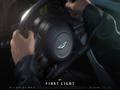
Shooting is another thing that people expect from Bond, but that comes across as being somewhat subdued. For starters, even if you have a mission where you're required to carry a pistol at all times, you can't fire at anyone unless they shoot at you first. There's enough ammo present so you don't need to scavenge for it, but once everyone in the area is gone, you'll immediately put away your firearms until they're necessary again.
That gives you the impression that all of your shooting is just as contained as the fist fights, but there are some things you can do that aren't available in other shooters. For one thing, you can disarm enemies by shooting at their hands or their gun, causing them to fling their weapon in the air and run toward you unarmed, ready for hand-to-hand combat rather than scrambling for another gun. You can shoot at their legs to disable them, giving you an opportunity to go for a pacifist run, as those enemies aren't technically dead. You can also throw empty guns at enemies; it's something you see in movies often but rarely in games. You can still shoot at the environment to trigger explosions or whittle down cover. Headshots are still a thing, but those aforementioned moves make shooting feel more cerebral than expected.
The surprising thing about the shooting is how it lacks some things, such as taking cover behind objects or walls. You can hide behind those things, but there are no dedicated mechanics for placing your back against a wall or object and then peeking out for a few shots. That feels like such an odd thing to complain about when the last few Bond games all came out during the era when cover shooting exploded. It is a good thing we're now out of that era, but if there's a character who feels like cover shooting would come naturally, it would be James Bond. This is especially true when the game often has you fighting against loads of enemies, and the act of manually ducking behind fragile boxes before moving to take aim feels clunky to perform in a heated firefight.
This comes together with an overall pacing that feels quite nice. First Light features a number of cut scenes and moments when you're just walking around, but these moments are filled with enough story and character progression that you're not going to feel the desire to skip them. The stealth sections feel like they fit at the perfect length, and the action sequences feel the same way, even though the amount of time spent shooting or driving is far less than the time you spend moving around and not raising suspicions. The only time where the pacing feels off is whenever you fail, as the load screens last much longer than expected from a modern game. Granted, you are talking about a title that loves throwing you into highly detailed environments with loads of NPCs doing their own thing, but the long loads are still an annoyance when you fail an action sequence multiple times in a row.
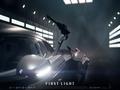




All of this is serviced by a story that feels exactly like what people would expect from a modern Bond film but with the structure of a TV show due to how neatly you can split the game into episodes. The hallmarks of a Bond adventure are all present, starting with an adventure that spans multiple different locations depicting both glamour and a gritty underbelly. The car chases with flashy sports cars are mixed in well with the cool gadgets, while the characters (both major and minor) all prove to be memorable, even if some of that can be attributed to a light layer of campiness. The characteristics of the iconic spy remain intact, from the effortless charm to the knack for keen observation thanks to Patrick Gibson's portrayal. The same holds true for the other supporting characters — such as Moneypenny, M, and Q — all of whom remain true to their established personalities. Big twists and revelations are all part of the story, and there's nothing that feels wildly out of place. Chronicling Bond's journey into MI6 and sending him on his first big assignment in modern times has been done before, but the journey remains fascinating even if we've seen Daniel Craig do this recently.
The campaign makes up the bulk of the game, but the tactical simulations give the game some longevity after the closing credits roll. This is a combination of training challenges and a means of replaying specific parts of the campaign. You can choose exactly what's in your arsenal rather than adhering to what the story dictates you should have. The level's open structure makes this perfect for trying different routes and approaches to the missions, while the scoring system and presence of XP unlocks gives you a reason to keep playing over and over again, even if the game design doesn't get you into as many wacky hijinks as Agent 47's assignments.
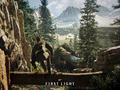
Graphically, 007 First Light looks excellent. The varied environments are packed with detail and a joy to look at, especially since you'll rarely get into a place that feels abandoned. The number of NPCs milling about is always impressive, especially since it takes a long time before you can find an NPC that is an exact clone of someone else. The level of detail and animations in each of those characters remains nice to see, especially since they have the same amount of detail as the main characters. The environmental lighting is impressive, but there are moments when you'll see a fizzling effect due to the software ray tracing not being stable from far distances. Those looking for the big GPU features will be pleased to know that the latest forms of DLSS are all supported, and so is frame generation, which is a nice-to-have feature since most of the game doesn't require fast reflexes that would be muddied by that technology. If you're sporting one of the later Nvidia cards, the lack of path tracing and DLSS ray reconstruction until the summer means that you'll have to wait to see if the performance drop versus image quality fight results in big differences in this proprietary engine.

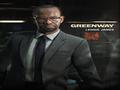

Like the graphics, the entire sound package is equally as brilliant. As mentioned before, the characters are excellent thanks to their vocal portrayals, which sound natural in their delivery. It helps that no one says anything inane enough to break you out of the immersion. The effects are very nice, with the standout one being the chatter in the various locales, as it emphasizes how alive these worlds are meant to feel. The music is also very good at conveying the mood of a good spy thriller with some flourishes, such as the nightclub track being a legitimate banger. The medley of modern local genres playing in the makeshift city of Aleph creates a pleasant diversion from the norm. Interestingly, while the game has a big opening song from Lana Del Rey and title sequence that evokes older Bond movies, it doesn't have the one big song playing at every opportunity. You get hints that make you think of the track, but no presence of the familiar horn section may be disappointing for some. It may be a welcome change for those who don't necessarily need the reminder that you're playing as James Bond.
On a Linux machine, the game initially seems a bit touch-and-go. On a Ryzen 5 2600 with a GeForce RTX 5060 Ti 16GB and 32GB of RAM using Proton Experimental, the game took about 20 minutes to do a pre-shader cache after stuttering with the opening logos and going out of sync with the audio. Things went fine until the opening cut scene, where the audio played while the video paused before experiencing a crash to desktop. Switching over to the latest CachyOS version of Proton, the game ran at a smooth frame rate where things fluctuated between the 30-40fps range, but no crashes or other errors were experienced. Moving on a CachyOS machine running on a Ryzen 7 9800X3D with 32GB of RAM and a Radeon RX 9070 XT, the game runs absolutely fine at 4K with a frame rate over the 60fps mark with the game running at high settings.
If you're on a Steam Deck, the experience is similar to that of the Bazzite machine in terms of waiting time for the pre-shader cache. Aside from that, the game defaults to Low graphical settings with FSR set to Performance mode. At a 1280x800 screen resolution, these settings help the game run between 40-50fps. The textures and lighting look quite good with only some small signs of fizzle, hinting that this may be the latest version of FSR at work. As usual with many big releases recently, all of this means that the LCD version of the Steam Deck can only hit about 90 minutes of game time max on a full charge.
007 First Light shows that the Hitman developers have a good handle on how to make a James Bond game work within their wheelhouse. The emphasis on less flashy espionage alongside multiple avenues to accomplish your given goal works to this game's favor in helping to differentiate it from past 007 games. There's still enough action to prevent the game from feeling like a complete tonal shift from common expectations. The quality of the stealth helps compensate for the combat, which is good but can feel lacking in areas. The adventure remains fun but familiar, while the presentation is top-notch. The game is another good example of how to do a licensed game well, and the hope is that we'll see IO Interactive do more in this universe, whether that's DLC or a full-on sequel.
Score: 8.5/10



More articles about 007 First Light