


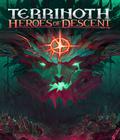
 Terrinoth: Heroes Of Descent is a high fantasy tactical RPG that brings the legendary Descent tabletop universe as a video game for the first time.
The board game dungeon-crawler Descent has been around since 2005, and it has been a hit for tabletop players looking for something a tad simpler but as involved as Dungeons & Dragons. That success didn't translate into a video game immediately, but it did produce a board game that was meant to be run with a digital app nearby. Terrinoth: Heroes of Descent marks the first time the board game has been made into a video game, and the result is imperfect but pretty solid overall.
The game acts as a prequel to the board game Descent: Legends of the Dark, so it doesn't expect players to know much about the world and setting beforehand. The story starts with four adventurers for hire, and they're tracking down a thief who has stolen a valuable and powerful stone from the party's dwarf wizard Aurta. While the group tracks down the leader of the thieves guild, they're suddenly ambushed by an undead squad and joined unexpectedly by an orc priestess. The thief and the stone escaped capture, but there are now bigger things to worry about, as the undead seem to have been created via unusual means. This discovery that leads to a bigger adventure for all involved.
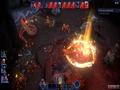
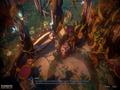
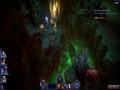
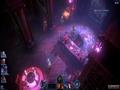
This is a dungeon-crawling RPG made for a party of four, whether they're controlled by the game or other humans. The approach is fairly similar to some other RPGs that have released recently that aren't JRPGs; the game features an isometric viewpoint with a slightly adjustable camera. The exploration phase has you roaming around the environment while interacting with chests and operating switches to open doors. One interesting twist is that some things can only be done when you're controlling certain party members. For example, the modified dragon knight Kharaz is one of the few characters who can break down weak walls to open new routes, while the archer Cedwin is the one you'll rely on to hit switches from afar. We've seen this sort of thing before, and some of these abilities are shared between several party members, so you'd have to go out of your way to get stuck in a stage. It is a reminder to keep the party varied, though. If you've been accustomed to RPGs that let you create your own characters, you'll be disappointed, since you only get to control characters who are established in the world.
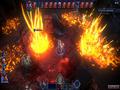
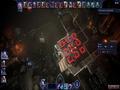
The combat takes on the look and mechanics of a strategy RPG but in a way that's easy to understand. Unless you're ambushed, you start off by placing all of your heroes in whatever spot you want, but you are restricted by not having your members be placed right next to an enemy. You only have a certain range, depending on which character you're controlling. Once you lock in your positions, you're given an order chart showing who goes next. Your turn always consists of three actions by default, and it doesn't matter in which order you take your actions. For example, you can attack, move, and attack, or you can move and hit two magic spells, or you can burn all of your actions on healing everyone. Compared to some other turn-based systems, there's a bit of freedom to this method, and it helps that every move and spell explicitly states how many actions it'll take, so you aren't surprised that you've run out of actions and the control goes to the next person on the list. Most of the battles ask that you kill every enemy in the battle area, but some ask for different objectives, such as ensuring that certain characters remain alive or that you activate specific items before eliminating enemies.
While this sounds fine, the real hook for Terrinoth is in its mission structure. The game is currently split up into four main chapters, with each chapter having five parts apiece. Each part is meant to be completed in around two to four hours, and while that's still a long game, it also manages to make each part feel like it can be completed with a group of friends in one sitting. The parts also play out like modern TV shows, so the episodes are connected but have their own stories with partial beginnings and endings. Should the pacing hold up, this is a novel approach, as most RPGs tend to go for very long chapters and narratives. The multipart approach seems to cater to those who want a big adventure but have a limited amount of time to enjoy it. Those same players don't want to try and recall what they were meant to be doing in a quest.
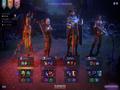
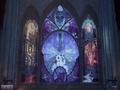
One thing to be aware of is that some of these parts require a specific hero to be actively in your party. The game is still beholden to its narrative, and since there isn't a branching system to let you eventually reach the intended story beats in your own way, you're forced to have whichever hero carries the story focus for that portion. The good news is that the game seems to reduce the need for grinding if you have to select a character you're not fond of, as the completion of a chapter part gives everyone at camp a good amount of XP. When they are called upon, they won't be woefully underpowered compared to the rest of the party.
For the most part, Terrinoth's approach to a simpler strategy RPG works in its favor. Provided you have a rudimentary understanding of the genre, this game is as close to "pick up and play" as possible. Movement is easy to understand, and once an action is chosen, the game does a fair job of automatically targeting the correct people nearby. Areas of combat are definitively drawn out, so you aren't surprised that you're in a fight and side-quests for lore aren't locked out based on actions from many missions ago. There's also a hint of replayability thanks to the game's mission structure. The shorter scope of the levels means there's more time to explore, and the game shows you exactly how many hidden treasures there are for those who are curious enough to deviate from the main mission path. The fact that you can replay any level greatly helps with this, as does the prospect of using older levels to level up your party, so the later missions can be easier to deal with.
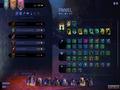
While this is all good, it doesn't mean that the developer's approach is ideal. There are a few things that can sour you on the experience. Battles are easy to understand, but unless you're in a boss fight, don't expect the enemies to try clever tactics. It doesn't help that most fights have reinforcements that pop up when you've almost defeated the enemies in an area. It makes the fights feel tedious instead of exciting, since the maneuver is used very often. Shopping is easy, since you can get items in batches, but you're buying buffs, not equipment. The act of leveling up is needlessly difficult, as there are two screens to do this, but it's only straightforward on the character select screen. Try doing this in the actual character details screen, and you're met with the need to confirm your actions at every step instead of confirming in bulk, like you would at the shop. Even then, there are moments when your leveling choices aren't saved despite the number of confirmations. Even then, those more experienced with other RPGs will be disappointed that leveling up only gives you a choice between one of two available buffs. Don't expect to tweak your characters beyond a superficial level.
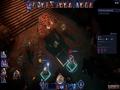
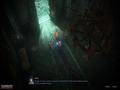
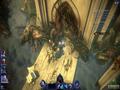
The presentation is mostly good. The music and sound effects are fine, but something feels off about the voices. The performances range from good to decent, but there are moments when the voices either don't fit the character or the script doesn't make the characters more compelling. Graphically, the game looks good but doesn't push any boundaries in character models or effects. One interesting thing that may be a bug is the fact that changing out graphical options doesn't seem to be working at the moment. You'll need to reboot the game for any of the changes to take effect, but good luck spotting any differences between the scant few options.
Terrinoth runs fine on the Linux operating system with no issues. That's starting to seem like a familiar refrain, but it still bears mentioning since there seems to be growing interest around that OS for gaming. For Steam Deck users, the game runs but taxes the system. The settings are saved in the cloud, so you'll need to tweak them constantly if you're switching machines while playing. The game runs at the device's native screen resolution, but the frame rate is just serviceable with the game almost hitting 30fps but constantly dipping below that figure. It's fine since this isn't a twitch-based game, but don't expect anything better on this handheld. Like many modern titles, the game really drains the device's battery, so you'll only get a little over an hour on the Steam Deck LCD version.
Terrinoth: Heroes of Descent succeeds by embracing simplicity. Its accessible combat system and short, self-contained missions make it an appealing choice for newcomers to the Descent universe and for players who don't have hours to dedicate to a single gaming session. While the experience can feel uneven at times, its strengths ultimately outweigh its flaws. Once players become familiar with its systems, they'll find a casual RPG that delivers enjoyable adventures without demanding a major time commitment. Even veterans of larger, more complex RPGs may appreciate Terrinoth's lighter, more relaxed approach.
Score: 7.5/10
More articles about Terrinoth: Heroes Of Descent