



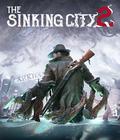
 Set in Lovecraftian 1920s United States, The Sinking City 2 is a survival-horror game with focus on combat and exploration.
The Sinking City 2's mere existence is a miracle. The original game was caught in an infamous dispute with its publisher that saw it pulled from storefronts and led to a protracted custody battle between Ukrainian developer Frogwares and the publisher. Russia's ongoing war in Ukraine meant Frogwares had to develop the sequel under constant threat, including the enlistment of some of its developers; it's a reality that the game acknowledges in a message at the beginning of the game. Creating any game under those conditions is an incredible struggle, so it's darn impressive that The Sinking City 2 ends up as a strong horror game, even if it still has its share of flaws.
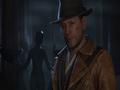
Set in the 1920s, The Sinking City 2 takes place in the flooded city of Arkham. Players control Calvin Rafferty, one of the few foolish people who remain behind after most of the city's survivors have evacuated. Calvin's lover, Faye, was involved in a ritual with him that left her in a coma, her face covered by a bizarre silver mask called the Night Shade. Refusing to leave her behind, Calvin searches for a way to save Faye using the eldritch resources that can only be found in Arkham. His quest is made considerably more difficult by a worm-like monster called the Slither, which is reanimating corpses throughout the city and will stop at nothing to prevent Calvin from succeeding.
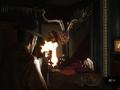
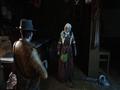
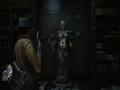
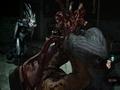
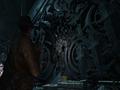
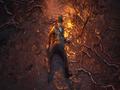
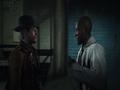
The Sinking City 2 is a well-crafted piece of eldritch horror, following Calvin as he wanders from one spooky location to another and encounters the corrupt individuals who remain in the ruined city. I like the story, particularly because Calvin and Faye's romance is handled well and gives him a compelling reason to throw himself into danger. My only real complaint is that the game can sometimes get a little too comedic for its own good. Quippy puns and one-liners occasionally undercut the horror. It's clearly following in the footsteps of Resident Evil, but I have an easier time accepting a Leon S. Kennedy one-liner while he's fighting a bioweapon than I do one from someone facing an unholy eldritch abomination that wants to devour his soul.
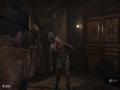
The bigger change is that The Sinking City 2 is a significant departure from its predecessor. Rather than being primarily an investigative game, it has become a survival-horror third-person shooter very much in the vein of the modern Resident Evil remakes. You'll move through a series of horrific locations, shooting monsters, solving puzzles, managing resources, and trying to survive the dangerous, slithering evil haunting the flooded remains of Arkham. Combat follows a similarly familiar survival-horror formula, landing somewhere between Silent Hill 2 and Dead Space. Calvin has several weapons he can use against enemies, along with melee attacks, stomps, and a simple dodge. The dodge is useful for avoiding long-range attacks and enemy charges, but you don't want to rely on it when enemies get too close. An enemy that's already in Calvin's face can easily slap him if you try to abuse the dodge's invincibility frames. Calvin isn't Leon Kennedy or James Sunderland, and he definitely doesn't want things getting up close and personal.
Like the recent Resident Evil remakes, The Sinking City 2 uses a "focus" style of aiming, where standing still and aiming gradually reduces the sway of your crosshair and increases accuracy. The Sinking City 2 makes focus a central part of its combat and weapon upgrades. Accuracy is essential, and many upgrades are specifically designed around rewarding you for reaching maximum focus. For example, the pistol can slow enemies when you shoot them while fully focused, while another upgrade provides a brief damage boost if you fire the moment focus reaches maximum accuracy. When you reach maximum focus, the rifle gains the ability to briefly slow time.
This emphasis on accuracy ties directly into the game's enemy design, as most enemies have "weak points" that are by far the most effective places to shoot. For example, standard Slither enemies develop glowing pustules on their limbs, bodies, or heads. Shooting anywhere else is largely a waste of ammunition, while accurately hitting the pustules can take down enemies much more efficiently. Likewise, stronger enemies have specific weak points that you want to target for maximum damage. Melee attacks are important, since accurate shots can stun weaker enemies, giving you an opportunity to smack them with your gun and potentially save a precious bullet or two.
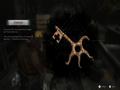
That's important because The Sinking City 2 places a heavy emphasis on resource management. Ammunition is incredibly scarce, especially early in the game. While you can find crafting materials to make more ammo, doing so is expensive, and those same materials can also be used to craft health items. As a result, the game often rewards you for simply avoiding enemies whenever possible. If a room contains more than two or three enemies and isn't somewhere you'll need to pass through regularly, you're usually better off running past them, rather than wasting resources trying to kill them.
Unfortunately, this emphasis on accuracy creates some problems with the weapon balance. Because single-shot precision is so important, weapons that don't benefit from the focus mechanic can feel almost worthless. The submachine gun has upgrades that increase its damage and stopping power the more shots you fire consecutively. Since ammunition is so scarce, it felt like a huge waste to burn through resources with rapid-fire attacks when I could simply use the pistol. I eventually found myself considering anything other than pistol ammo a waste of crafting materials, and I only used other weapons when their ammunition was already made.
There's also some strange balancing in how weapons and upgrades are introduced. The aforementioned rifle upgrade that slows time comes so late in the game that you'll barely have an opportunity to use it before the final boss. The grenade launcher arrives slightly earlier, but its expensive ammunition and limited supply made me shelve it almost immediately, since running away from groups of enemies was usually more worthwhile. The shotgun can be useful, but one of its upgrades actually makes it worse by replacing its post-shot melee attack with an "ax swing" that has such a poor hitbox that using it became borderline suicidal. Ultimately, I found the pistol to be vastly superior in both power and ammo conservation, to the point where using the other weapons often felt pointless, especially since they also take up significantly more inventory space.
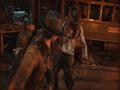
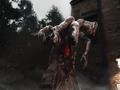
There's also not much enemy variety. Almost every enemy in the game is one of the basic Slither foes, and they all fight in roughly the same way. They do have an evolved form vaguely reminiscent of a Plagas bursting from a Ganado, but it's notably less dangerous, to the point that I could barely tell when I was fighting one instead of the other. Beyond that, there's a small handful of more serious abominations, but there are probably only 10-12 of those across the entire game. It's very much in the vein of old-school Resident Evil, where zombies made up the bulk of what you fought with relatively little variation.
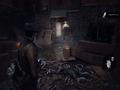
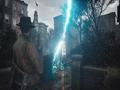
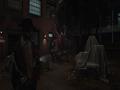
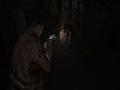
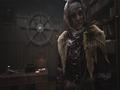
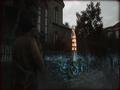
The end result is that combat is merely OK. It's not terrible, but it lacks the thrilling excitement of many modern survival-horror games. More often than not, I skipped any fight that seemed skippable because there rarely felt like a good reason to engage. Since health and ammunition draw from the same limited pool of resources, taking a hit or two while escaping a fight was often still a net gain compared to spending twice as many resources killing the enemies. Games like Resident Evil avoid this problem by giving you separate resources for health and ammunition, but in The Sinking City 2, the shared economy makes combat feel wasteful rather than like a rewarding exercise in resource management.
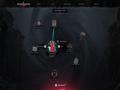
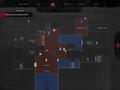
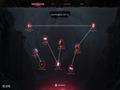
Thankfully, exploration is much more enjoyable. The environments are layered and detailed, and there's plenty of reason to poke around every corner. You'll find resources, lore snippets, and clues scattered throughout the world. The clues are particularly interesting and serve as a nod to the earlier game in the series. Rather than simply being random documents, certain clues count toward an Investigative Board. Successfully connecting relevant clues unlocks Talent Points, which can be spent on minor passive abilities like dealing more damage with your flashlight off or swapping weapons faster. You can choose a difficulty that highlights important words and marks clues with glyphs to make connections easier, or you can play with no assistance and figure out which clues fit together by reading the evidence yourself.
These clues also feed into the game's puzzles, which come in both mandatory and optional varieties. The mandatory puzzles are generally simple and straightforward, very much in line with the occasional head-scratcher found in a Resident Evil game. The optional puzzles are more involved, asking you to unravel some rather convoluted mysteries in exchange for gun upgrades, additional Talent Points, or large caches of resources. These were the highlight of the game for me and showed off Frogwares' history with this style of game. For all that The Sinking City 2 was designed to appeal to a wider audience, it shines brightest when it returns to the investigative gameplay that made its predecessor distinctive.
The Sinking City 2 is also a fairly brief adventure. I finished my first playthrough in about nine hours, including all of the side puzzles. Completing the game unlocks New Game Plus, allowing you to carry over your items and gear, while harder difficulty modes and bonus achievements provide additional reasons to replay it. These achievements reward points that can be spent on extras like new costumes and unlimited ammunition. Once again, it's very much in line with the current Resident Evil remakes, and you know exactly what you're getting.
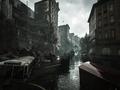
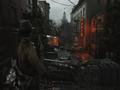
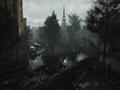
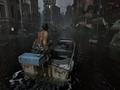
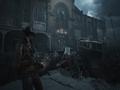
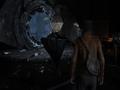
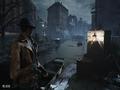
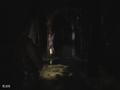
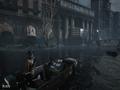
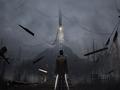
Visually, The Sinking City 2 looks quite good. Arkham is dripping with eldritch detail, and its varied environments are well crafted, with each area feeling distinct. The enemies are effectively creepy, while the gore effects (particularly those involving explosions) may not quite match Resident Evil, but still have a satisfying sense of grotesquery. The voice acting is largely strong as well. There are a few voices that veer a little too far into goofiness, but for the most part, the cast delivers exactly what the material requires.
The Sinking City 2 is an impressive game, especially when you consider the conditions under which it was made. It tries very hard to emulate the modern Resident Evil remakes, and for the most part, it succeeds at being a fun survival-horror game. Unfortunately, its flaws are more apparent. The somewhat weak combat is bolstered by strong exploration, while the story has a compelling concept that occasionally gets a little too comedic for its own good. If you're looking for something appropriately horrific for the Halloween season, The Sinking City 2 has you covered.
Score: 8.0/10


More articles about The Sinking City 2