








 Star Wars Zero Company is a single-player turn-based tactics game where you command an elite squad through a gritty and authentic story set during the twilight of the Clone Wars.
Prior to getting some hands-on time with Star Wars: Zero Company, I attended a presentation of the game during which Game Director Greg Foertsch said something that stuck with me throughout my time playing it. He remarked that the game he wanted to make to advance the turn-based tactics genre was an idea that existed before Star Wars became part of the equation. Drawing from his time at Firaxis and working on the modern XCOM games, he wanted to make something more cinematic and story driven. Throughout my experience with the otherwise full-featured preview build, my thoughts kept returning to one thing: Zero Company isn't just shaping up to be a great game in the Star Wars franchise; it showcases another level of what the genre can be.
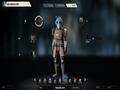
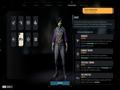
At face value, Zero Company is exactly what you'd expect from a turn-based tactics game set within the franchise. There are blasters and droids, scoundrels, and Republic troopers. You play as Hawks, a fully customizable character who was once a commander in the Republic army before being disgraced after an operation went poorly and they were the only survivor. Hawks's appearance and specialization (class) are up to you, in a system that felt a lot more like Mass Effect than XCOM. Hawks is featured prominently in many of the game's story-centric cut scenes and is also one of your units on the battlefield.

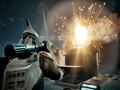

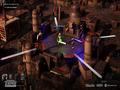
Dig just a little deeper, and you get the feeling that this isn't simply someone emptying a toybox full of Star Wars figurines onto the genre. The game is set during the Clone Wars, with a plot centered on the cult-like Infinite Coil, which the Separatists use to help soften up planets before deploying their droid armies. There's barely a lightsaber to be seen, and though Anakin is featured in the game's trailer, the game is far more focused on blasters and cover fire than laser swords and space wizards. It isn't plagued by movie characters making cameo appearances every five minutes; instead, it's a love letter to the less-trodden corners of the Star Wars universe.
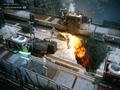
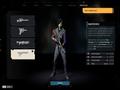
If you've played the modern XCOM games, you already have most of what you need to know to get started with Zero Company. Units can use three action points (AP) per round, in any combination and order you choose. Units can use one of four weapon types — blaster pistol, blaster rifle, longarm blaster, and repeater — with each consuming AP in different ways. For example, the blaster pistol always consumes one AP per shot but does the lowest damage, while the blaster rifle consumes one AP for the first shot in a turn and two for a second shot. Cover can be used by both you and your enemies to shield units, and if a shot misses, some weapons can destroy the cover instead of the intended target behind it.
Units also have special abilities that cost advantage points to use, which are gained and spent by the squad as a whole. These abilities are powerful, but there are enough ways to gain advantage points that you can feel free to use them rather than saving them for that one perfect moment. At the end of the day, sometimes you just want to lob a rocket across the battlefield at that group of clankers.

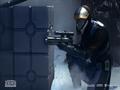
One interesting change is that there is no fog of war, with all enemy units always visible. This avoids the "move it a little, then overwatch" approach that worked in the XCOM games but could also slow down combat. In Zero Company, combat plays out more like a tactical puzzle, where you can always see all of the pieces on the board. Overwatch becomes more of a tool for dumping extra action points or focusing fire on an area.
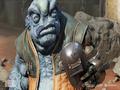
You start with a few operators within Zero Company, including Hawks, "Kabb" Uppercut (a veteran crook and retired boxer), and Trick (a retired Republic soldier). You can recruit additional operators to fill out your roster and give wounded ones time to heal. Each operator belongs to one of eight specializations and has a unique talent. More interestingly, your operators can form bonds with one another, changing both how they interact and their stats. Operators bond when covering or healing each other, running missions together, and through other actions. Once a bond levels up, you can choose one of three options to improve both units, such as granting more health, accuracy, or focus points. Focus points are different for each operator and can be spent to improve that operator's abilities, such as allowing Kabb's Uppercut ability to deal more damage or giving Trick's rocket launcher a larger area of effect.
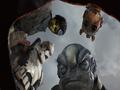
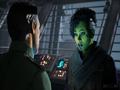
Zero Company's cinematic ambitions extend beyond its story missions. Cut scenes advance the plot both between missions and during conversations in The Den, your base of operations, with thoughtful camera angles and lighting even in otherwise minor scenes. Operators also have their own backstories and motivations, making them more interesting and making their loss even more painful if you enable the optional permadeath mode.

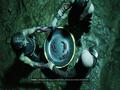
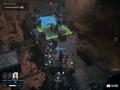
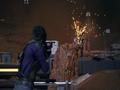
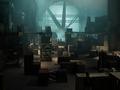
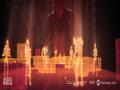
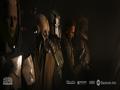
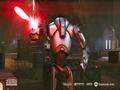
The game is downright gorgeous, especially for a genre that usually places gameplay first and graphics further down the list. That attention to detail isn't limited to cut scenes or close-ups, either. Blaster fire illuminates objects and characters as it travels toward its target, and even lowly battle droids are lovingly detailed. A lot of care has gone into the environments you'll fight in, and even though combat largely distills down to a grid-based system, it's nice that the game doesn't rely on the same chest-high objects in every mission.
There's a lot of the game that I didn't get to see, but my time with Star Wars: Zero Company left me with a clear impression. I can comfortably say that this game is shaping up to be a love letter to both the genre and the franchise, in a way that allows the two to amplify each other. It's rare for a preview build to leave me this excited for the full game, and if Zero Company can build on what I experienced in the preview, we could be weeks away from something truly special.
Previewed on: AMD Ryzen 7 7800X3D, 32 GB RAM, NVidia RTX 4070 Ti

More articles about Star Wars Zero Company