






 Control Resonant is a thrilling action/adventure RPG where you explore a warped Manhattan on the brink of paranatural annihilation.
Remedy isn't afraid to mess with what works. Even when sticking mostly to the cinematic third-person shooter genre, the developer has experimented with long TV-style cinematics in Quantum Break and surreal sequences such as the dance number in Alan Wake II. More recently, the company has used Control as a testbed for moving beyond that formula. FBC: Firebreak was its attempt at an online-only multiplayer squad shooter, while Control Resonant takes things in a different direction. For the most part, it works.
You play as Dylan Faden, the brother Jesse was searching for in the first game. The ending of that game saw Dylan freed from The Hiss's influence but left in a coma while Jesse and the FBC fought The Hiss and placed The Oldest House under lockdown. Seven years have passed, and you've awakened to a worst-case scenario. The Hiss has escaped containment and occupied all of Manhattan, while a new force threatens the city and may hold the key to defeating it. Meanwhile, Jesse has gone missing, and your past actions have left you untrusted. Your task is to make things right and help reclaim the city.

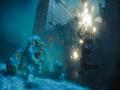

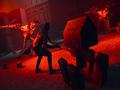
Despite the series' history as a third-person shooter, Resonant takes a different approach. Remedy describes it as an action-adventure RPG viewed from a third-person, behind-the-back perspective rather than the isometric view often associated with the genre. The camera sits farther back than in a typical third-person adventure, giving you a wider view of the action. The open world covers Manhattan, and areas are divided into distinct zones, each with its own time of day and weather. As with The Oldest House, the game world is considerably larger than its real-world counterpart, leaving plenty of room to explore.
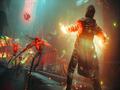
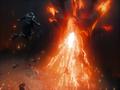
The action is where Resonant makes its biggest departure. This is a melee-focused game in which firearms aren't available. You can use telekinetic powers to throw rocks, but otherwise your attacks are up close. Your primary weapon is essentially a metal pole that, much like the Service Weapon in the first game, can transform into several forms, including a scythe and dual quick swords. Strong attacks vary as well, ranging from wide sweeping strikes to uppercuts. Later upgrades add new properties and abilities, such as temporarily setting enemies on fire.
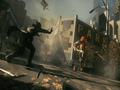
Combat emphasizes mobility, letting you dart between enemies somewhat automatically like in a Batman: Arkham game while adding aerial movement reminiscent of Devil May Cry. There's a lot of button-mashing, and the sheer number of enemies can make combat feel like a workout, but it also succeeds at making you feel powerful. The combination of melee attacks, telekinetic abilities, and movement gives Resonant some of the same power-fantasy appeal as a less malicious version of Prototype.
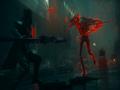
You get to put those abilities to use against a varied bestiary. Basic enemies can slash or throw projectiles, while tougher foes use attacks such as prolonged energy beams and powerful melee strikes. Encounters are often packed with enemies, taking advantage of Manhattan's lack of civilians to fill areas with threats. Boss fights feature varied attacks and can include distinct phases where you deal with minions before returning your attention to the boss. Boss encounters offer other opportunities to regain health, so victories don't always require playing flawlessly.
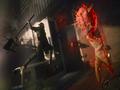
Platforming complements the combat and plays a larger role thanks to the open-world structure. You'll travel through Manhattan's streets and leap between rooftops using high jumps, air dashes, and limited flight to cross large gaps. Other abilities, such as shifting gravity, add even more verticality. These mechanics extend indoors as well, where you'll navigate building interiors that can feel much more claustrophobic despite using the same movement abilities.
The RPG elements are relatively light. Enemies don't necessarily provide XP or traditional levels, but they drop materials used for crafting and upgrades. You can craft items that provide buffs or invest materials in a skill tree for permanent bonuses. These upgrades can initially feel modest, particularly until you progress further down the tree or find stronger late-game items. Weapon upgrades have a more immediate impact, unlocking new weapon choices and combos. The system encourages experimentation since you can re-spec relatively cheaply to refine your preferred play style or adapt to a particular situation.
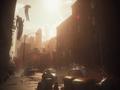
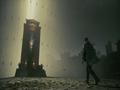
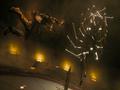
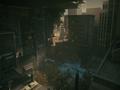
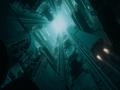
All of this takes place in a world that embraces the first game's quirkiness, even if its outward structure resembles that of a conventional open-world game. The walls surrounding different areas have an oppressive appearance, while abandoned cars convey the chaos without relying on the usual piles of concrete and burning debris. The stranger elements are even more striking. M.C. Escher-style spaces feature bending buildings and roads, objects floating through the air, and portions of reality warping in and out of existence. Chasms stretch the world's textures into bizarre shapes, creating a setting that feels authentically connected to the first game despite moving away from its heavy Brutalist architecture.
The open world is packed with activities that fit naturally into this strange setting. Main and side-quests provide useful rewards, while side areas and puzzles offer additional materials for upgrades. Shops provide items used to unlock artifacts, while possessed vending machines lead to secret quests. What makes these activities memorable is how Remedy places familiar open-world concepts in a modern environment. A laundromat puzzle, for example, uses a number puzzle posted on a bulletin board beside a customer complaint about how the puzzles are pointless because most of the machines don't work. Shops operate out of food trucks, while time trials take place in arcades that temporarily turn the real world into voxel-based challenges. The recognizable sound effects and other small touches reinforce the sense that, strange as everything is, this is exactly the kind of world Control should inhabit.

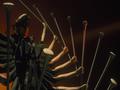
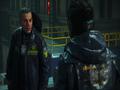
The characters reinforce that feeling. Several returning characters now react differently to Dylan because of what happened in the first game. Some are willing to work with him under strict conditions and with countermeasures in place, while others openly despise him but have been ordered not to kill him. Others treat him as though nothing happened. The major characters all have their own quirks and mannerisms, making them memorable without losing the series' sense of strangeness. Even the nameless FBC members contribute to the atmosphere, with some amazed that Dylan is allowed to roam freely, others disgusted by his presence, and a few willing to insult him outright. These interactions help keep the world feeling alive despite the absence of civilians.
The new setting and approach fit the series well, but two issues hold the game back. The first is enemy readability. The camera's distance and the sheer amount happening on-screen make it difficult to track incoming attacks. Some are obvious, but others are subtle enough that you'll take damage without realizing what hit you. Even after learning to read the battlefield, you'll often find yourself dodging based on instinct rather than clearly recognizing an incoming attack.
That problem feeds directly into the game's difficulty. Even basic encounters can involve several waves of major and minor enemies, with stronger foes appearing as previous groups are defeated. Some fights let you retreat rather than forcing you into a confined arena, but combat remains frequent, and dying after clearing only part of an encounter means repeating those waves. Completely clearing an area before moving on is often the safest way to prevent enemies from respawning after death.
The combination of lengthy encounters, relatively low damage against many enemies, and relentless attacks from both on- and off-screen foes can make the normal difficulty feel punishing. At times, it recalls the NES version of Ninja Gaiden III: The Dark Sword of Chaos, where normal difficulty feels closer to what you'd expect from a much harder setting.
Fortunately, Resonant includes an assist mode that gives you considerable control over the experience. It resembles a combination of a cheat menu and developer options, letting you adjust individual game parameters. You can enable effects such as one-hit kills or invincibility, but the most useful options are sliders for damage dealt and received. Adjusting these independently lets you preserve the challenge while reducing the frustration. The flexibility of the system does a lot to offset the combat's difficulty and gives you a reason to keep playing when the default settings become overwhelming.
The audio is similarly effective without being bombastic. Soft, foreboding music accompanies exploration, while the familiar industrial rock returns during combat. The mix works well with the action, but the licensed songs played through your communication device are particularly memorable. They fit your handler's personality and add extra energy to major victories. Sound effects play an unusually important role, especially with The Board's voice consisting largely of reverberating bass and effects. Your subwoofer will get a workout. The voice acting remains excellent, while the constant chatter from FBC members provides plenty of entertaining dialogue, even when that dialogue is directed negatively toward Dylan.
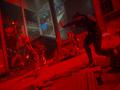
Graphically, Resonant looks excellent, particularly in its environments. Lighting does much of the heavy lifting, creating an eerie atmosphere even during the day, with sunlight filtered through overcast skies and nighttime areas drenched in red. Ray tracing and path tracing further accentuate the game's art style. The creatures are appropriately grotesque while moving fluidly, and effects such as the prismatic smoke remain impressive.



The human characters are less consistent. Their faces generally look good, but there are moments when they appear slightly less convincing than those in the first game. Bodies can also look unusually stocky, with heads that don't always seem naturally connected to their bodies. The mismatch between faces and character models isn't constant, but it's noticeable when it appears during in-game cut scenes.
Those graphical features come with significant hardware demands. At native 4K with full ray tracing, ray reconstruction at its highest setting, the Ultra preset, and DLAA on a system with 32GB of RAM, an RTX 5090, and a Ryzen 7 9800X3D, Resonant doesn't maintain 60fps. Performance sits around 30fps except in simpler scenes. Switching to the latest version of DLSS with a 4K output and 1440p internal resolution while keeping the other settings unchanged gets you comfortably around 60fps, with occasional drops, particularly when moving in and out of The Gap. DLSS 5 doesn't appear to be available by default, while frame generation is an option. At these settings, however, the game already feels responsive enough that frame generation isn't necessary.

Linux users should have little trouble running the game, but Nvidia users may encounter unusual shadowing with ray tracing enabled, including large square artifacts. Resonant is also playable on Steam Deck, with a dedicated handheld preset that drops everything to its lowest settings, disables ray tracing, and uses TSR upscaling at roughly 540p. As expected, image quality can become noisy, particularly when prismatic smoke appears during dashes. Battery life is similarly limited, averaging around 90 minutes on a full charge on the LCD model. Performance is the bigger issue, with the game hovering around 19-25fps for large portions of the experience. It's technically playable, but the low frame rate and resulting loss of responsiveness make the assist mode particularly useful if you're attempting to play this way.
Overall, Control Resonant is good. Its compelling characters and modern take on supernatural weirdness give its open world plenty of personality, while the light RPG systems complement combat without getting in the way. The melee-focused action is exhilarating, particularly when combined with telekinetic powers and supernatural movement, and the lengthy adventure fills its world with enough activities to make exploration feel worthwhile rather than padded.
The biggest obstacle is the combat's difficulty, particularly when enemies attack from outside your view or provide unclear tells. You can either adapt to the game's demanding combat or use the extensive assist options to tailor the experience to your preferences. Either way, Resonant successfully expands what a Control game can be while retaining the strange atmosphere that made the original stand out.
Score: 8.0/10


More articles about Control Resonant