

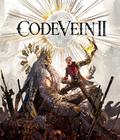






The original Code Vein was released when Souls-like games were starting to get hot, and its main hook was in its anime-like aesthetic and storytelling, which had players running around in a ruined world that was ruled by vampires. It didn't do anything out of the ordinary, but it did just enough so players were invested in completing the game. Code Vein II comes out at a time when the genre has become inundated with more titles, some of which have some interesting ideas and features of their own. The sequel is welcome, but it fails to capture the intrigue of the first title.
Despite being labeled as a sequel, the story has nothing to do with the original game except for a world that's dominated by vampires, and humans are trying to eke out a living. Long ago, a great calamity known as the Resurgence nearly wiped out humanity, leaving behind vampires called revenants. Those revenants were also in danger of going extinct, forcing some of their great heroes to go into stasis. However, the magic that controls the statis is waning, and with the apocalypse drawing closer, the revenants have come up with a plan. After being resurrected by a revenant who has given you half of her heart, you're sent back to the past to interfere in key events to prevent the end of the world.
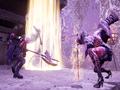


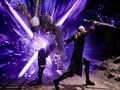
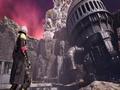
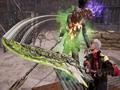
The idea of using time travel to save the world is fine, and it has proven to be a solid plot device for countless sci-fi tales. The notion that you need to travel to the past to find these great heroes before they go into stasis only to return to the present to kill them is far-fetched, but it somehow makes some sense in the game world. The main story has some pacing issues where you'll get a flurry of lore thrown at you, and then there are long moments of nothing before another lore dump comes along. The verbose exposition doesn't make the story appealing, and your character is a typical silent protagonist, so the story feels like it's happening around you instead of you being directly involved in its outcome. It doesn't help that the time travel mechanic feels underbaked, as you'll struggle to see big changes between environments, and it takes a long time before anything significant happens in the present from your past actions. Each of the heroes' backstories is quite compelling, but they're also held back by the fact that they're told with still shots instead of full video.
The core gameplay follows the blueprint of a Souls-like game quite closely. Stamina governs your dodge and attack abilities. Weapons dramatically change your attack style. Save points restore your health, but they skip the enemy resurrection at points. Enemies can take off a good chunk of health with one blow, and bosses can take an age to fall. Dying requires you to return to the place you died to recover everything you lost. It's all present and accounted for, but it will take genre fans some time to get used to the HUD, since it feels scattered. Important meters and gauges appear in unexpected places.
The gameplay has a few standout elements. The first has to do with the character creation system. Games in this genre don't feature much in this area, but Code Vein II features a great deal of options for things like face shape and structure, going as far as letting you dial in the perfect shade for your makeup. The clothing options are also as numerous as the hairstyles, and the options are plentiful enough that even the presets feel generous. The whole thing is deep enough that you can spend quite some time messing around with it before you even start the adventure.
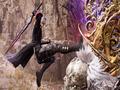


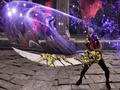
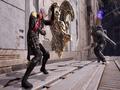

By contrast, the upgrading of characters doesn't feel so overwhelming. That starts with you equipping Blood Codes, which gives you a preset stat setting. Alongside your weapon choice, Blood Codes determine your character build. Those Blood Codes all level up only when you equip them, so getting a new one acts like a double-edged sword; you can look at it as a re-spec, but it also means loads of grinding coming your way. The system works well enough, but it would've been nice if you were allowed to customize the individual stats instead of solely relying on the Blood Codes.
The next major change comes from the move into a more open-world environment. Areas are still sectioned off into distinct biomes, but now there's the ability to traverse between them at will. The game does its best to keep you on the main path by only highlighting the major quests, but that won't stop you from partaking in the number of side-quests that pop up along the way.
The move to a more open environment would be fine if it felt like the game took advantage of it. The levels can feel somewhat empty, since there are few enemy groups hanging around, and a lot of time is spent traveling between fights. You'd figure there would be loads of secrets hiding in a great big world, but those are sparse, and you'll only discover that when you uncover a map of the area. The inclusion of a motorcycle with wings is pretty neat, but it loses its luster when you discover that traversal to new areas requires you to go to specific spots. Some wide-open spaces are blocked off by invisible walls, and controlling the motorcycle is rather clumsy. It feels like the desire for big spaces was there, but what's missing is the understanding of how to make open spaces appealing.
Then there's the matter of your AI companions. Unlike many other games, your companions are more than capable fighters to the point where you can leave them alone, and they'll take care of a bunch of enemies for you. They're also invincible, so you won't have to worry about reviving them if they fall. They can die, but since they come back after a short time, their absence is only felt during those brief moments when you're trying to recover before returning to the fight.


You can choose to fuse with your companion character to gain some new moves and stat boosts, but this creates an interesting scenario that persists for the whole game's run. Unless you want to artificially make things difficult for yourself, there's no desire to fuse with your companions, since the benefits of having a constant co-op partner outweigh the benefits of character fusion. Their presence and abilities don't suddenly make the game easy; you'll still have to put in some work to get anywhere, but it skews the game into becoming less difficult when compared to its contemporaries — provided you don't play recklessly.
One thing missing compared to the first game is online co-op. Although the game almost always has you running around with a companion, they're always AI-controlled, and you have no opportunity to get a real person to go alongside you on the adventure. On the one hand, it's a shame to lose a gameplay feature that the original game had. On the other hand, the online co-op wasn't a defining feature of the first game, so it can be perceived as a minor loss.
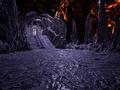
The graphics are fine for the most part. The characters look good, with the named characters sporting overly elaborate attire that contrasts with body parts that look slightly elongated and animations that put those oddities at full display. There is an option to use either the original or classic character modeling, but you'll be hard-pressed to find any differences between them at first glance. The environments are mostly the drab grays and browns of ruined cities and abandoned military bases, but there are hints of color when you go to lush forests and the like. However, those environments start to lose their luster when you see objects clearly pop in from view or textures change every time they come into the camera's view, an issue that hasn't been resolved since launch. The game also inexplicably lowers the frame rate and turns on upscaling during cut scenes, which is jarring when you go into the game and see everything running with upscaling off and a frame rate that goes higher than 60fps if you let it. The disconnect doesn't seem necessary and becomes more distracting.


The graphics still have some issues after the game's numerous patches, but the audio fares much better. The voice acting is very good in both Japanese and English, with inflections that don't sound off in any given situation. The music is also good; the soundtrack goes for something a bit more haunting, while still providing the necessary beat that fits an action title.
Code Vein II runs on Linux without issue. For Steam Deck users, the game will run, but it really is on you to determine if it is playable. By default, the game uses TSR at 60% for its upscaling with the graphical settings at the high preset. That seems like it'll make the system struggle, but the game runs fairly well and hovers around the 25fps mark, which isn't ideal for the genre. The picture looks a bit grainy this way with plenty of ghosting, but the picture looks worse if you decide to set everything to the lowest preset. Battery life hovers around 90 minutes, which feels like the new normal for big titles on the aging device.
Code Vein II is a competent but unremarkable sequel. Its combat is solid, even if the cluttered interface makes key meters initially difficult to find, and its AI partners add welcome co-op elements while making encounters unintentionally easier. The open levels offer enough to explore but still feel restrictive, while the story starts with an intriguing premise before stumbling over its pacing. Ultimately, the game lacks the appeal to captivate either genre fans or players of the original. It's a decent effort, but it fails to capture the interest that made the first game stand out.
Score: 6.5/10


More articles about Code Vein II