





 Mina The Hollower is a bone-chilling, action-adventure featuring classic gameplay with an 8-bit aesthetic in the style of the Game Boy Color but refined for the modern era.
Mina the Hollower follows the titular Mina, a combination adventurer and scientist. Her creation of Spark Towers allowed the gloomy Tenebrous Isle to thrive and shine. Unfortunately, the Spark Towers are malfunctioning, and the island has been overrun with bizarre creatures and abnormal beasts. To make things worse, Thorne, the man who asked for her help, has turned against the people and seeks to destroy the towers. Mina sets out on an adventure to fix the towers, solve the mysteries, and save the people of the Isle. It's easier said than done.
Mina the Hollower is at once adorable and rather melancholy and sad. Don't let the cute graphics fool you; there's a surprising amount of darkness and grimness to be found, including some truly horrific situations. It's never inappropriate for kids — no more than a Zelda game, anyway — but it captures that same sense of PG-rated abnormality that I associate with stuff like Majora's Mask. It's frequently adorable and funny, but it captures that dark sense of oddity that I associate with older NES games. An apt comparison would be something like Bloodborne, but with less blood.
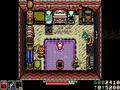

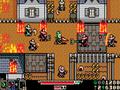
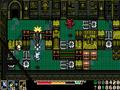
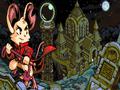
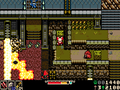
Mina the Hollower's most obvious inspiration is the old-school Zelda games, and on the surface, it plays a whole lot like that. You're thrust into the world and are free to explore, and you need to find and fix each island's generators. The core gameplay is so similar to Link's Awakening that it can be a tad surreal at times. The gameplay and atmosphere perfectly capture the feel of a Game Boy Color Zelda title. It doesn't feel dated, though; it's clearly a modernized take on the formula, and it works wonderfully.
Mina's biggest ability is her power to burrow, which is the source of her "hollower" title. At any time, you can hold down the jump button to transition from a jump into a burrow. This allows you to temporarily dive beneath the ground, rendering you immune to most attacks and allowing you to dive under obstacles. It also allows you to spring up from the ground to gain some additional distance on jumps.
This is a really interesting gimmick, as it's quite different from a standard dodge. You need to jump before you can burrow, which means you need to think in advance of when and where you use it. At the same time, it's essential for traversing the game and makes some of the tougher fights more manageable, since it offers you an incredibly powerful tool for getting past enemy defenses or avoiding their attacks. It takes some getting used to, but once you do, the burrowing feels as natural as breathing.
There are five main weapons in Mina the Hollower: hammer, shield, twin daggers, whip, and a combination mace and laser blaster. Each has their own distinct mechanics. The shield is a parry-based weapon that can unlock bonus damage when parrying attacks or allow you to throw your shield and then hop onto it like a temporary platform, so you can circumvent obstacles when exploring. The whip is obviously inspired by Castelvania and starts as a solid, all-around weapon with a good range, but it can be upgraded to have a "sweet spot" on its tip that allows for bonus damage. You can also flail it around in true Belmont fashion.
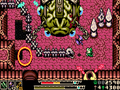
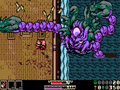
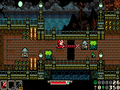
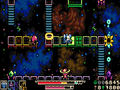
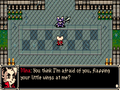
The weapons in Mina are a delight, and I was constantly swapping between them. The battery blaster (the aforementioned mace and laser) was my favorite weapon, but each weapon has strengths and weaknesses. I might swap to the daggers for a slow-moving boss, so I can take advantage of their incredible attack speed. Then I'd change to the shield while exploring a new area, so I can play around with its incredible mobility. Since you can swap at any underden, there's no reason to stick to a single weapon. Weapon upgrades are also new features rather than pure stat upgrades, so you never feel punished for swapping weapons.
In addition to the main weapons, Mina also has access to sidearms. Also borrowing a bit from Castlevania, sidearms function a lot like subweapons in that game. By smashing objects in the environment, you'll find sidearms, which are temporary special weapons that require joules. You can gather joules by whipping candles and beating up enemies. You can only carry one sidearm (later two) at a time, and they get swapped out as you find new ones, so it's important to find and carry the correct sidearm for each situation.
Sidearms come in a wide variety of flavors. You have throwing daggers and an ax that arcs into the air, as you might expect, but a lot of items are more complex and useful for exploration in addition to combat. For example, one lets you put a portal on the ground that you can warp back to with an explosive flourish. This is great for dealing damage and avoiding attacks, but it can also be used in puzzle exploration. A powerful shield lets you do a potent air dash, which can make it easier to traverse long pits.
The other big twist in the formula is the plasma vials. Most modern gamers will recognize these as estus flasks, which are healing items that replenish every time you reach one of the checkpoints. The interesting twist with vials is that they're not free healing. To replenish health, you need to not only have a vial, but you also need to have plasma, which is gained by attacking enemies and lost if you take damage. This means that if you've taken a bunch of damage, not only do you need to make space to heal but you need to build up plasma by attacking enemies, forcing you to balance going for additional plasma gain versus taking a "safe" but lesser heal.
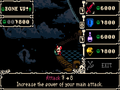

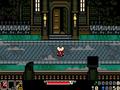
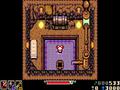


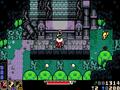
When you die, you lose a "spark," which can be recovered by returning to where you were defeated, but if you lose all your sparks, you'll lose any stored bones (the game's currency). This also ties into special locks in the game, which require you to have and spend a specific number of sparks or vials to get in. This usually goes alongside a challenging boss encounter or fight, which means you need to be extra cautious before encountering these fights.
I really like the plasma vial system, arguably more than the estus flasks. It encourages and emphasizes aggression in a way that feels more similar to Bloodborne's rally system. It prevents the cycle of constantly healing by encouraging you to pay attention to enemy mechanics and vulnerable periods. With that said, there are trinkets and items you can find that make it easier or less punishing. If you really need the help, bones also can be used to upgrade Mina's attack, defense and sidearm stats.
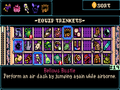
Trinkets are a very cool factor in the game. You don't get new items the way you do in Zelda games, but you get a massive amount of equippable trinkets that alter how Mina functions. Some of these are buffs, such as letting you carry more plasma vials. Others completely change how the game functions, such as giving you an Earthbound-style rolling health bar that drains slowly instead of all at once, or gives you iframes on jump to make it a pseudo-dash. My favorite was the bridge weaver trinket, which allows you to create two temporary platforms on any gap; it makes some platforming challenges far easier and allows you to jump previously inaccessible gaps.
Trinkets are how you define how your Mina plays. Do you want to damage race enemies? Go for the trinkets that prevent you from losing plasma on hit, so your health decreases more slowly. Do you like high risk, high reward? There's a bracelet that doubles the damage you deal and the damage you take. You can find items that let you burrow into walls instead of the floor, jump higher and farther, or turn into a stone statue. There are dozens of trinkets, and you can equip up to six at once.




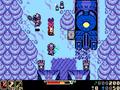
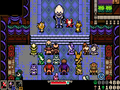
A major part of what makes Mina the Hollower so fun is that there are constantly new things to find. Almost every screen has some kind of fun secret or cool trick. You might find a weird puppet shopkeeper with a dark secret or a valuable trinket that changes how the game plays or a strange little dude with a distinct personality. I spent a good chunk of my game time exploring and finding what I could find, and that was made all the more fun by the fact that the nonlinear nature of the game meant I rarely felt locked into anything. It's a fully featured game that evokes memories of Link to the Past and Link's Awakening, where the density of weird cool stuff was enough to make it feel like a genuine exploration.
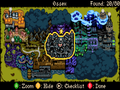
The only thing I can see being a potential issue is the relatively limited map system. The only map in the game is more of a general overview of the island, rather than something more specific, and even that is an optional upgrade. The game expects you to remember previously visited locations and how to reach them; this is made a little easier with generous shortcuts. I adored this because I felt the level design was strong enough that each screen was memorable, but I can see someone getting frustrated as they try to remember the location of an objective they saw several hours before. I don't necessarily consider this a flaw, but it's something that players should keep in mind.
Overall, Mina the Hollower's world is the most fun I've had exploring an old-school Zelda-style game in some time, even eclipsing the recent Echoes of Wisdom. The game hits the right balance of challenging without being overly punishing, and there are so many different bosses and secrets that I never got bored, even when backtracking to dig up trinkets and items that I'd missed before. I don't want to spoil any of the fun twists because they're best experienced on their own.


There's a significant amount of customization available. The game has a massive number of modifiers, some of which are only unlocked upon finishing the game once, and those modifiers can substantially change the gameplay. Some make it easier, some make it tougher, some make it different, and some make it weirder. For example, modifiers can buff specific items, unlock a fast-travel warp, make all dialogue properly Victorian, or shuffle the location of every item in the game. This is all optional, but it's genuinely delightful, and I would pop on modifiers and go back for a second playthrough as soon as I finished the first.
Visually, Mina the Hollower sticks to its cute Game Boy Color aesthetic. It captures the tone and feel of that game style perfectly, and it does so without losing any flavor of charm. Clever use of cut scenes and cut-ins make certain moments feel bigger and more epic, and despite the graphics being "simple," they're masterfully crafted. Nothing compares to the top-notch soundtrack. Pretty much every song in the game is a delight, and I was eager to reach new areas not just to advance the plot but also to hear the next song in the fantastic soundtrack.
Mina the Hollower does for Zelda what Shovel Knight did for Mega Man. It's a revival of a classic franchise in spirit while having enough of its own flavor and style to avoid coming across as a simple clone or copy. It's clever, creative, and an absolute delight to play from start to finish, while having enough bonus content and modifiers to keep the game exciting even after you complete its roughly 20-hour playtime. In a year that's already filled with amazing games, Mina still shines.
Score: 9.0/10


More articles about Mina The Hollower