


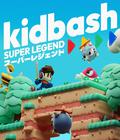
 Kidbash: Super Legend is a nostalgic roguelike action-platformer where you awaken in a world of forgotten game characters as a hero with no memory of his past.
To be clear, this is a new Acclaim publishing company. The original Acclaim, which was responsible for bringing home many of Midway 's arcade games and was a big backer of the Nintendo 64, went out of business in 2004. The revived Acclaim has focused on indie game publishing, and its early track record has been strong, with all of its released titles earning "Very Positive" user reviews on Steam. While the publisher has a slate of promising projects in development, Kidbash: Super Legend stands out as one of its most exciting upcoming releases. We got an early look at the game ahead of its appearance at the Tribeca Festival and came away highly impressed.
You play as Kidbash, an amnesiac who only knows two things: his name and the desire to become a hero. After awakening in a strange land, he is guided by a seemingly benevolent spirit and quickly proves himself by rescuing a local villager. When Kidbash falls in battle, the spirit abandons him. Upon recovering, Kidbash wakes up in a village that 's in ruins. His only lead lies within a tower teeming with enemies, and he hopes to uncover answers about his past. As the story unfolds, Kidbash learns that he is a hero of a long-forgotten video game, trapped in a world populated by characters just like him. While we weren't shown many additional details, the premise is packed with potential for both humor and charm.
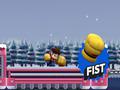
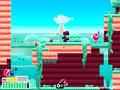
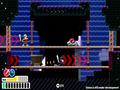
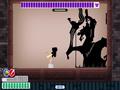
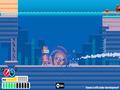
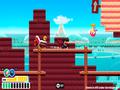
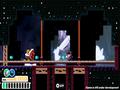
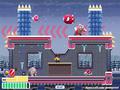
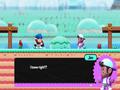
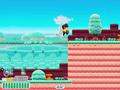
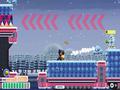
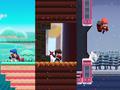
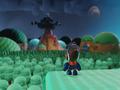
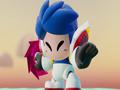
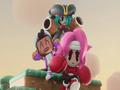
The first thing players will notice about Kidbash is its striking visual style. Nearly everything in the game, from its characters to its environments, appears to be handcrafted from clay. The effect is enhanced by stop-motion animation, which gives movement a deliberate, tactile quality. Animations are smooth overall, but they retain the subtle imperfections and stutters that are characteristic of the medium, making the world feel even more authentic.
The result is stunning, evoking memories of Kirby and the Rainbow Curse while delivering a far more detailed, high-definition presentation than a decade ago on the Wii U. The art style is overflowing with charm, especially during close-up shots that reveal characters seemingly crafted from a variety of materials, including felt and fabric. It's an immediately memorable aesthetic that serves as a fantastic hook, leaving a strong first impression on anyone seeing the game for the first time.
Like its story, Kidbash begins with gameplay that feels immediately familiar. At its core, it's a side- scrolling action platformer, though it incorporates enough verticality to keep exploration engaging. From the outset, Kidbash is equipped with both a sword and a gun, and switching between them is seamless since each weapon is assigned to its own button.
Movement is equally versatile, with dashing through enemies and hazards, dropping through platforms, wall-jumping to reach higher areas, and sliding down walls for controlled descents. It all feels intuitive from the start, giving players a solid foundation before the game introduces its own twists.
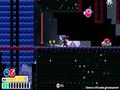
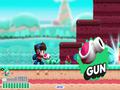
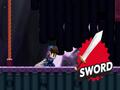
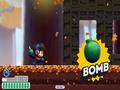
The fundamentals are fairly straightforward, but Kidbash quickly introduces thoughtful quality-of-life improvements. For example, wall-jumping doesn't require alternating between two surfaces; you can repeatedly jump up a single wall, making vertical movement smoother and faster. Combat is also more forgiving than in many platformers. Touching most enemies doesn't deal damage unless you're hitting hazards like spikes or moving mine carts, with bosses being the main exception. The gun adds welcome flexibility, letting you fire in multiple directions, including diagonally. This extra freedom makes combat more dynamic, evoking Mega Man while giving you greater control over encounters.
Others may point to 20XX or 30XX as closer comparisons, since Kidbash also incorporates roguelike elements. Familiar hallmarks are present, including light level randomization and shifting enemy placements that help keep each run feeling fresh.
During a run, you'll encounter combat arenas that reward you with temporary upgrades for defeating waves of enemies. These buffs can enhance weapons or add passive effects, such as generating a leaf shield when attacking or igniting enemies when you dash. You'll also choose between branching paths, each clearly showing the rewards for that route.
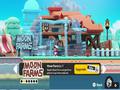
Like most roguelikes, death sends you back to the beginning and returns you to the hub town. However, some of the resources collected during a run can be exchanged for permanent upgrades, allowing you to strengthen Kidbash and improve your chances in future attempts. The structure should feel familiar to genre fans while complementing the game's platforming-focused gameplay.
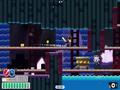
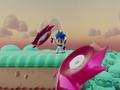
The biggest twist is the weapon combination system. As you defeat enemies, you build a meter that lets you temporarily fuse your current weapons into a new one, with results depending on your loadout. For example, combining a sword and gun creates a boomerang-like buzzsaw, while pairing a gun with a bomb produces a different weapon entirely. These fused weapons also inherit any effects you've applied during a run, so a shock upgrade can turn that buzzsaw into an electrified projectile. The system encourages experimentation and helps make each run feel distinct based on the combinations you discover.
So far, everything comes together remarkably well. Movement feels fluid and responsive, and it never forces you to fight the controls. Combat is equally satisfying, with weapons and upgrades creating a wide range of scenarios, from empowering runs to more challenging ones that demand careful play. Despite their randomized elements, the levels still feel thoughtfully designed, with enough structure to guide progression and enough exploration to reward curiosity. The result is a roguelike platformer that feels polished and enjoyable from the outset.
One feature we didn't get to experience firsthand was the hub town rebuilding system, which was showcased in the trailer. It appears that repairing buildings will unlock new features and services, and there may even be some light customization options during the reconstruction process. Unfortunately, our limited time with the preview build (and a few crashes along the way) meant we couldn't explore this aspect in depth. It's an intriguing addition, but one we'll have to revisit when the game is further along in development.
Kidbash: Super Legend isn't expected to release until sometime in 2027, but even from our time with an early build, it already shows strong potential. The presentation is striking, and the story hints at a depth that hasn't yet been fully explored. Combat and platforming are solid foundations, and the temporary weapon combination system adds a standout twist that feels genuinely fun to experiment with. The wait will be long, but this is definitely one to keep on your radar.
More articles about Kidbash: Super Legend