








 Avatar Legends: The Fighting Game is a fast-paced 1v1 fighter where you battle as your favorite characters from the Avatar franchise!
When I was growing up, it felt like every popular kids' series eventually got its own licensed fighting game. Everything from Teenage Mutant Ninja Turtles to Sailor Moon had one, and somehow, turning a beloved cartoon into a Street Fighter-style brawler just made a weird kind of sense. Beyond the occasional DC or Marvel release, that trend gradually faded away. Even so, the martial arts action of Avatar: The Last Airbender and its sequel series, The Legend of Korra, has always felt like a natural fit for the genre. Avatar Legends: The Fighting Game is pretty much exactly what it says, but it doesn't come across as another throwaway licensed game. Instead, it shows a surprising amount of potential.
On the surface, Avatar Legends is a traditional 2D one-on-one fighter. Featuring a roster drawn from the original Avatar: The Last Airbender animated series, The Legend of Korra, and the Avatar Kyoshi novels, it lets players battle as fan-favorite characters from across the franchise. Anyone who's previously played a 2D fighter will feel at home with the straightforward controls. It uses a standard Light, Medium, and Heavy attack layout, includes simple auto-combos for players who prefer a bit of button-mashing, and relies primarily on classic directional inputs for special moves. In almost every respect, it feels like a throwback to old-school 2D fighting games.

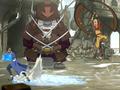
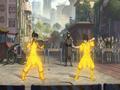

Instead of a traditional Super Meter, Avatar Legends uses an Energy Bar. Made up of five pips, this gauge fills as you perform special moves, throws, and through various other actions during a match. That energy can be spent on enhanced EX special moves or your character's powerful Super techniques. If you lose a round, your maximum Energy Bar increases from five pips to seven, giving you greater flexibility while also unlocking access to an even stronger Final technique. Some moves can also cost pips, creating an interesting risk-and-reward balance between gaining and spending energy.
The biggest mechanic that's unique to Avatar Legends is its "Flow" system. Alongside the standard A-B-C attack buttons, every character also has a dedicated Flow button. Holding it gradually drains your Flow meter, but if you're struck by a normal attack during that time, you'll automatically evade it and gain the ability to cancel into other moves. However, throws bypass Flow entirely and even reward the attacker with bonus Energy. Flow isn't just defensive, either. It can also be used to cancel attacks, and every character has distinct Flow abilities. Korra can propel herself forward with a burst of fire, while Sokka can slide between an opponent's legs or kick up dirt to temporarily blind them. Every use consumes Flow, and if the meter runs dry, you'll become Unbalanced. In this state, you lose access to Flow abilities, take increased damage, and if you're hit by an opponent's Final Technique you'll be defeated instantly, regardless of how much health you have remaining.
Character individuality is a major part of Avatar Legends, with every fighter built around mechanics and abilities that are unique to them. For example, Korra has an "Avatar Cycle" system where each of her special moves is tied to a different element. Successfully using every element in sequence empowers her next move, and she can also enter the Avatar State to further increase her strength. By contrast, Azula has two distinct stances: Focused and Firelord. Focused emphasizes zoning and controlling space, while Firelord is built around aggressive rushdown, with Azula switching between the two under certain conditions.





Every character also has Critical Hit conditions. Meeting these requirements during a match rewards you with an energy pip and often provides additional benefits. For Azula, setting a fire trap and then throwing an opponent into it triggers a Critical Hit. Korra's Critical Hits, meanwhile, reward relentless aggression, including landing special moves cleanly rather than as part of a combo.
Each character also has access to three different Supporters based on their relationships from the series. Chosen before a match begins, these Supporters alter how a character's special moves function and encourage different play styles. For example, pairing Zuko with Mai strengthens his long-range projectile attacks, while choosing June makes his divekicks more effective and easier to cancel. Zaheer's Supporters, by comparison, each represent a different member of the Red Lotus, with each one enhancing the effectiveness of that specific summon.
Overall, Avatar Legends' gameplay shows an impressive amount of care and effort for what could have easily been a disposable licensed fighting game. Every character feels mechanically distinct, with a surprising amount of depth in both their design and combat abilities. More importantly, each fighter successfully captures the personality and fighting style of their source material, making the entire roster feel unique despite being relatively small by modern fighting game standards. My personal favorite is Avatar Kyoshi, an absolute giant of a woman who glides across clouds of dust and boasts some of the most brutal and visceral gameplay I've experienced in the genre.
There are a few disappointments, however. The Legend of Korra feels oddly underrepresented, with only Korra, an enhanced "Nightmare" version of Korra, and the third-season villain Zaheer included in the base roster. As a result, the game sometimes feels more like a The Last Airbender fighter with Korra making a guest appearance than a true crossover. Some character interpretations also feel unusual. For instance, Aang is limited almost entirely to Airbending outside of his unlockable Avatar State. Even so, these are relatively minor complaints, and the developers did an excellent job with the roster overall.
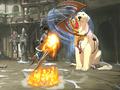
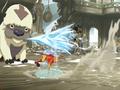
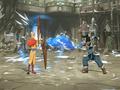
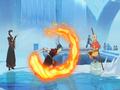

The main draw of Avatar Legends as a single-player experience is its story mode, a "canon" adventure written by members of the team behind the original shows. It centers on a mysterious Harmonic Rift that transcends space and time, pulling characters into a twisted alternate reality where everything is fundamentally wrong. Multiple Avatars exist at once, Zuko is Ozai's favored child, Toph has become a ruthless conqueror opposed by Avatar Kyoshi, and Korra and Azula are inexplicably best friends. When Aang is drawn into this distorted world, it's up to him to restore the proper timeline and free both old friends and new allies from its strange illusion.
Unfortunately, the story mode is something of a letdown. It's built around a fun premise and lands a few amusing jokes, but it rarely makes the most of its ideas. Seeing the cast thrown into bizarre "what if?" scenarios is entertaining in theory, but the game shows little interest in exploring the possibilities. Azula and Korra are best friends despite their families' disapproval, but the concept is largely glossed over instead of being used for meaningful or humorous interactions. Most major plot developments are resolved in only a line or two of dialogue, and many of the crossover moments feel perfunctory. It's far from terrible, and there are some entertaining scenes throughout, but the story will likely appeal to fans who simply enjoy seeing unlikely character pairings, like Sokka mentoring Avatar Kyoshi.
The gameplay doesn't fare much better. It follows the now-familiar fighting game formula of a linear campaign that regularly switches between playable characters, but the progression system feels poorly balanced. Characters gain levels and must unlock their Supporters, so they're initially handicapped until they've been upgraded. Leveling happens quickly enough, but the system still feels unnecessary, especially when you're constantly changing characters, and some receive far more playtime than others.
The fights themselves also feature special conditions, such as increased throw damage, health regeneration, or free Flow uses, along with optional objectives like landing specific moves a certain number of times. These additions provide some extra variety to matches, but they remain limited and are optional, mainly rewarding you with additional coins to spend in the in-game shop. The shop is primarily used for upgrading characters in story mode and unlocking concept art, so it isn't strictly necessary, but it still adds a fun incentive to complete these challenges.

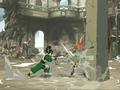

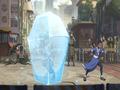
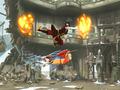
Outside of the story mode, the game offers a variety of additional content, including an Arcade Mode for each character, online and local multiplayer, and a surprisingly in-depth training mode. The training mode provides detailed information on move sets and abilities, along with useful character-specific Trial challenges. These trials guide players through mechanics and techniques, breaking down different moves and strategies in slow, detailed steps.
As with any fighting game, the amount of time you'll get out of Avatar Legends depends heavily on how much you're willing to engage with its competitive aspects. The single-player content provides enough value to keep the game from feeling empty for those who prefer playing alone, but even dedicated Avatar fans will likely get the most out of it if they're willing to at least try the multiplayer. At its core, this is a fighting game first and foremost, and the experience is bare-bones outside of that focus.
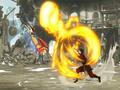
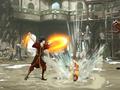
Fortunately, Avatar Legends looks fantastic. The game uses beautifully smooth 2D animation to capture the style and feel of the television shows, and for the most part, it succeeds. The animations are full of personality, the visuals are packed with charming details, and everything remains clear and easy to follow during gameplay. There are a few rough edges, but overall, it looks significantly better than many other niche fighting games. The voice acting is also generally strong, but I did notice that some characters were recast for the game. Hearing different voices than expected could occasionally be distracting, especially when they didn't quite match the performances from the original shows.
Avatar Legends: The Fighting Game is a very solid fighting game wrapped in a somewhat underwhelming package. For players looking for a fighter with distinct characters, creative mechanics, and plenty of depth to explore, there's a lot to enjoy. However, for more casual fans of the franchise or anyone looking for substantial content outside of competitive play, the experience can feel bare-bones, and the included story mode often feels half-baked. This is ultimately a game made for fighting game fans who also love Avatar, and those who fall into that category should find plenty to appreciate.
Score: 8.0/10
More articles about Avatar Legends: The Fighting Game