





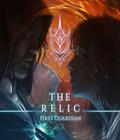
 The Relic: First Guardian is an action RPG where you embark on a heroic adventure to save the world in the dark as the last guardian.
The Souls-like genre isn't as prolific as it once was, but it continues to receive a steady stream of new releases. Whether it's ports like Lies of P: Complete Edition for the Nintendo Switch 2, sequels such as Mortal Shell II, or original titles like Beast of Reincarnation, the genre remains in good health. The Relic: First Guardian is the latest addition, and it stands out thanks to several ambitious changes to the established Souls-like formula. Unfortunately, not all of those ideas pay off, resulting in a game that's tougher to appreciate than it should be.
The game takes place in the world of Arsilthus, a land devastated by a great calamity. A powerful seal known as The Relic has been shattered, unleashing an evil force called The Void across the world. Those who come into possession of the Relic's fragments become consumed by its power and transform into Brutals, monstrous beings driven by an insatiable thirst for killing. You play as the First Guardian, a nameless warrior resurrected by a woman who may be a goddess. Your mission is to defeat the Brutals, reclaim the Relic's shards, and restore the seal to return peace to the ravaged land.


Genre fans have seen variations on the main story countless times before, and the game doesn't do much to make it more engaging. Key plot points are mentioned only in passing, and you don't receive any meaningful explanation for what's happening until after defeating the first boss. Fortunately, the real narrative strength lies in the optional stories scattered throughout the world. These tales are discovered through collectible notes, all of which are fully voiced. Their subjects include a rumor about a magical golden ax inspiring lumberjacks to throw their own axes into a pond, a family trapped inside a burning house after refusing shelter to bandits, and an elderly couple desperately hiding their son after he's transformed into a ravenous beast. Every story is relentlessly bleak, reinforcing the oppressive atmosphere that Souls-like fans have come to expect. The only drawback is that the game automatically recaps each completed story the moment you collect its final piece. It's a helpful feature if you find the entries hours apart, but it feels unnecessary when you collect them in quick succession.
As expected from a Souls-like, many of the core mechanics will feel immediately familiar. Combat revolves around blocking, parrying, and dodging, all of which consume stamina that regenerates at a respectable pace when you're not performing defensive actions. You'll fight using several weapon types, each with its own skill tree that unlocks new attacks, such as overhead smashes and charged lunges. Special stones serve as save points and places to refill your health, while magical abilities gradually expand your offensive options.
While those fundamentals remain intact, The Relic: First Guardian introduces several major changes that distinguish it from its peers. The biggest difference is that weapon attacks consume no stamina, regardless of which weapon you're using. That means you never have to balance offense against keeping enough stamina in reserve for a dodge or block. Magic also breaks from convention by eliminating the traditional mana meter. Instead, every spell is governed by its own cooldown timer, allowing repeated use over the course of a fight without worrying about resource management.

Attacking without stamina costs immediately makes combat feel different, but it doesn't encourage mindless button-mashing. You're still committed to attack animations, and enemy attacks hit noticeably harder than in many other Souls-like games, so careless aggression is heavily punished. At the same time, the lack of heavy attacks limits your offensive options, leaving you with standard attacks and your primary combo string. The stamina-free offense is further balanced by the lengthy cooldowns on spells. Since every spell can only be cast once before its timer expires, using magic carries significant risk unless you're confident you can create an opening or reserve it for the start of a boss battle. Some special attacks are even harder to justify, requiring more complex button inputs while offering relatively little damage in return. Unless you can execute them safely, standard attacks are usually the more reliable choice.
Death is another area where the game softens the traditional Souls-like formula. Dying doesn't cause you to lose your accumulated resources, eliminating the stressful run back to recover your dropped currency or experience. When you respawn, everything is still in your inventory. Consumable items are the lone exception. If you use one before dying, it's gone for good. As with spells and special attacks, this makes consumables something you'll hesitate to use, since a single mistake can force you to return to merchants just to restock.
The final major change involves the save stones. In most Souls-like games, resting at a checkpoint revives every defeated enemy except bosses, creating a constant trade-off between safety and repopulating the world. The Relic: First Guardian removes that mechanic entirely. Once regular enemies are defeated, they stay dead no matter how often you rest. On the one hand, this eliminates one of the genre's more frustrating aspects, as you no longer have to repeatedly fight the same enemies or sprint through dangerous gauntlets just to reach the next challenge. On the other hand, players who enjoy grinding enemies for experience lose a reliable way to level up early in the adventure.

Another major departure from the formula is the complete removal of traditional character leveling. While you can still unlock new weapon skills by finding crystal energy deposits, there's no XP system or character level to increase. Instead, progression comes through the relic shards you discover throughout the world. Equipping these shards grants passive bonuses ranging from simple health increases to more specialized effects, such as restoring health after every kill. It's an interesting alternative to the standard leveling system, but it also means defeating enemies serves little purpose beyond earning gold for consumables. More importantly, players who struggle with reading attack patterns or reacting quickly have no way to out-level difficult encounters. Without the option to brute-force bosses through improved stats, progression can come to a halt much more easily.
These mechanical differences make The Relic: First Guardian an interesting take on the Souls-like formula, but the game's biggest shortcomings become painfully obvious during its boss fights, arguably the genre's greatest selling point. Most encounters take place in cramped arenas cluttered with hazards and environmental obstacles. You may find yourself dodging into patches of fire or getting caught on debris that's difficult to see. The camera only makes matters worse, with walls frequently blocking your view or trapping you in corners where escape becomes impossible. These situations often result in unavoidable damage and deaths that feel frustrating rather than deserved.
Environmental objects are also inconsistent. For example, one mercenary boss arena contains explosive and poison barrels that never respawn after being destroyed, so later attempts can become noticeably easier or harder, depending on how the first fight played out. Combat mechanics don't help either. Dodge rolls cover too much ground, while successful blocks and parries rarely leave enough of an opening for meaningful counterattacks. Some boss animations are difficult to read, and certain projectiles even appear to adjust their trajectory after being fired, despite you clearly moving out of their path. The result is a level of difficulty that feels more unfair than challenging. With an average runtime of around 30 hours and over 70 bosses to defeat, it's easy to see why some players may give up long before reaching the end.
PC players will quickly notice another weakness: the game's remarkably limited graphics settings. Resolution, display mode, V-Sync, frame rate caps, and your choice between DLSS and XeSS are essentially all you can adjust. There are no options for texture quality, shadow quality, camera shake, or many of the settings that PC players expect. The absence of FSR is disappointing enough, but the bigger issue is that upscaling is mandatory. There's no way to disable it or even adjust its quality level. For a modern PC release, the lack of customization feels surprisingly bare-bones and will frustrate anyone who enjoys fine-tuning performance.
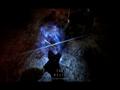
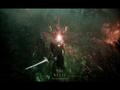
Those willing to overlook the limited settings will find visuals that are just as inconsistent. Your character model looks impressive, particularly the starting armor, whose flowing cloak adds a welcome sense of movement. The Brutals are also effectively grotesque, giving the monsters a memorable appearance. Human characters, however, are another story. Many suffer from awkward animation, with some body parts barely moving while others gesture so dramatically that emotional scenes become unintentionally comical. Characters deliver solemn dialogue while constantly wave their arms around, thereby undermining the seriousness of the moment. Facial animation is equally uneven. It's not uncommon to see a character's jaw moving while their beard remains perfectly still, creating an unsettling effect that's almost as disturbing as the monsters themselves. The environments fare better, featuring dense vegetation and attractive scenery, but the world is drenched in muted grays and reds that make it resemble games from several console generations ago. Performance is generally solid on mid-range hardware, but the mandatory upscaling introduces noticeable image artifacts such as halos around characters, even if that's preferable to the ghosting seen during movement.
The audio presentation follows a similar pattern of highs and lows. The soundtrack is consistently moody and complements the game's bleak atmosphere well, but it rarely gives players a break from its somber tone. Sound effects are perfectly serviceable, but the voice acting varies considerably. Some performances are convincing, while others deliver entirely the wrong emotion for the scene. The overly verbose script doesn't help matters, often stretching dialogue into melodrama when tighter editing would have made conversations far more effective. Thankfully, none of the performances sound artificially generated. The issues stem from inconsistent direction rather than the actors themselves.
Linux compatibility also proves inconsistent depending on your hardware. On Bazzite using an Nvidia GPU and the CachyOS version of Proton, the game was unstable, crashing anywhere from the initial loading screen to reloading after death. Running the same Proton version on SteamOS with an AMD graphics card produced dramatically better results, with no crashes and only a single severe frame rate drop into the single digits. However, the Steam Deck struggles significantly. The opening cinematic stutters constantly, causing dialogue to repeat as performance drops into the teens. Gameplay fares little better, averaging around 18 frames per second, while even opening the graphics menu can turn the image into a blurry mess accompanied by noticeable pauses. Combined with the lack of cloud saves, this is clearly a game best reserved for more powerful hardware despite its mandatory upscaling.
The Relic: First Guardian is ultimately a game full of promising ideas that rarely reaches its potential. Its departures from the traditional Souls-like formula initially make it stand out, even if its relentlessly bleak atmosphere won't appeal to everyone. Unfortunately, those innovations are undermined by frustrating boss encounters that highlight weaknesses in the core combat. Throw in inconsistent presentation, sparse PC options, and missing quality-of-life features like key rebinding, and the result is a game that's difficult to recommend in its current state. With enough patches and thoughtful refinements, it could eventually carve out its own place alongside the genre's best, but for now, it remains an ambitious experiment that falls short of its goals.
Score: 5.5/10
More articles about The Relic: First Guardian