





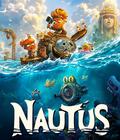




 Step into the world of D-topia, a gentle-paced puzzle adventure where life is curated by artificial intelligence to maximize happiness.
Most games set in the future revolve around apocalyptic disasters, massive wars, alien invasions, or some other global conflict. A futuristic setting without any of those elements feels like something better suited to a visual novel than most other genres, but that's exactly the direction D-topia takes by pairing its optimistic vision of the future with a puzzle-focused experience. We previewed the game a while back and came away impressed, and now it's time to see whether the full release lives up to the promise of that earlier demo.
D-topia is set in the future, where AI has become a trusted technology in humanity's pursuit of utopia. To achieve this vision, several experimental cities have been established, and according to the latest data, D-topia is the closest to realizing that goal. You are the city's newest resident and have been assigned the role of Facilitator. Your daily responsibility is to keep the city's machines operating at peak performance while ensuring its residents remain happy, allowing the technology that supports their well-being to function without interruption.


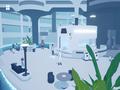
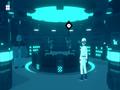
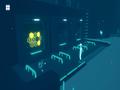

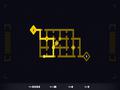
The game takes place over seven days, and the given gameplay loop for each day is somewhat rigid. In the morning, you are in your apartment getting ready for the day. Before you leave, you're asked to do a health check that requires you to link your starting node with an icon in a hexagonal line maze. Over time, the section asks you to link more icons, but there is no time limit, and the puzzles are easy enough that you'll be able to leave your apartment.
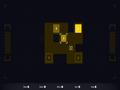
Leaving the apartment gives you the chance to check in with the city's residents and robots, but you're always funneled through a limited section of the city that serves as your assigned work area. While your primary role is a Facilitator, you're still expected to perform the same daily work as everyone else. In D-topia, that work takes the form of a variety of mathematical puzzle types. You begin with Sokoban-style puzzles, where numbered blocks must be pushed onto their matching numbered spaces. New mechanics gradually expand on that idea, introducing multipliers and requiring you to combine numbered blocks to reach a target value. Later puzzle types shift the formula, asking you to draw a path through numbers and multipliers to reach a goal or use warp holes to create the correct numerical sequence. Every puzzle revolves around math, but nothing requires more than basic arithmetic.
One thing you'll quickly notice is that the puzzles rarely put much pressure on the player. You can skip any puzzle you encounter, but only a small handful are difficult enough to make that option tempting, and most of those are found in optional "overtime" sections. While each workday is governed by a timer that determines both your pay and when your shift ends, it ticks down so slowly that you'd have to deliberately solve puzzles at a sluggish pace to earn anything less than the maximum wage. You'll always be able to afford everything required for progression, as the only expensive items sold in shops and vending machines are optional. The game trailers emphasize its relaxed pacing, and that design philosophy consistently comes through in practice.
By lunch, your workday is over, and your work as a Facilitator begins. You can roam around the city, but you are limited in terms of where you can visit according to the story, which frames those limitations as you not achieving a specific citizenry level yet. You can do some shopping in the areas that you can visit, and you'll often come across specific named characters that will either add more to the world's lore or present you with some problems that need solving. Fixing those problems often requires you to solve a puzzle, making the work earlier in the day serve as a tutorial for how the day's main puzzle functions. Getting to that part requires you to activate a terminal to see the other side of the world, where you can see the city's inner workings, reveal different dialogue options for the robots you talk to, and encounter creatures and other things you don't get to see otherwise. By the end, you'll have to make a decision on how to solve the day's problem and then act to put that solution into action.

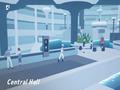
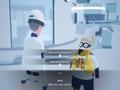

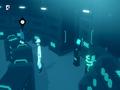

By lunchtime, your regular workday is over, and your duties as a Facilitator begin. You're free to explore the city, but story progression limits which areas you can access, explaining those restrictions as a matter of not yet reaching the required citizenry level. You can shop in the available districts, and you'll regularly meet named characters who either expand the world's lore or present problems that need solving. Resolving those issues usually involves a puzzle, with the work you completed earlier in the day effectively serving as a tutorial for that puzzle's mechanics. To reach the solution, you'll activate a terminal that reveals the city's hidden inner workings, unlocking new dialogue options with robots while exposing creatures and other secrets that normally remain unseen. By the end of each day, you'll choose how to resolve the situation before carrying out your decision.
The evening is a simpler affair, as everything is closed and your only option is to go home. You can replay some of the previous puzzles and work on ones that were only offered up in overtime, if you had initially skipped that part. You can also use a virtual space to converse with some of the city's specific citizens, if you've already raised your affinity level with them to a high enough level. As you would during the day, talking with people can raise your friendship level with them if you make the right choices, but don't expect things to get deeper than that. Of course, you can also go straight to bed to end the day and restart the process.
If you're looking at D-topia purely from a puzzle perspective, your opinion of the title will be dependent on your skill level with puzzles. As mentioned before, a majority of the puzzles for work are simple enough that you'll easily figure out their solutions. The puzzles you encounter in the afternoon don't increase the challenge and can actually be seen as trivial since you aren't facing as many puzzles as you would in the morning. While the difficulty does increase as you progress further, the increase is slight to the point where you'll actually be surprised when you find a puzzle whose solution doesn't come to you immediately. For those looking to be constantly challenged, this is a disappointment.


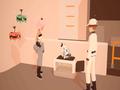




If you're tackling the puzzles to uncover more of the narrative, you'll find an engaging story. The premise of a utopian future built on countless imperfections isn't new, nor is the unsettling realization that some technological advances become disturbing when viewed through a modern lens. Examples include computer chips that regulate emotions, the laboratory creation of people and genetically modified pets, and the persistence of a social ranking system. The city's ever-present distortion field, which projects an illusion of perfection, adds to that unease. Despite these ominous elements, the story avoids many of the directions its premise seems to promise. There's no overarching evil mastermind or grand conspiracy to destroy the city. While it's implied that other cities house those deemed unfit to live in D-topia, there's no suggestion that these people simply disappear or are killed. Instead, the narrative remains surprisingly low-key throughout, giving it a pleasant, easygoing quality despite its darker ideas.
Aside from the daily conflicts that drive the tale, the characters are the main reason you'll want to press on through with the title. You get the usual quirky set of people, from a kid who loves intellectual pursuits to an introverted woman hiding behind a virtual mask to another Facilitator who relates more to robots than other people. Each of them sports some depth in their personalities and ground the game with issues that range from being pretty typical for the situation to one experienced late in the game that feels quite monumental, even if it isn't related to the grand finale.
There are a few things that D-topia could have done better. There's not much you can explore, as the environments and areas seem closed off without any visual clues about why you can't move to those areas. The pacing of the game is very good, but it feels like character development goes by very quickly, especially when you realize that you only get a week before the story reaches its conclusion. There also aren't as many interactive things in the world as you'd expect. You can get a record player, but it's only for decoration, so you can't actually play anything. Finally, while the game has multiple endings, you have to work very hard to specifically get a bad or neutral ending. Most people will naturally get to the game's best ending without thinking about it.




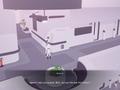

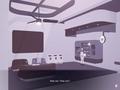
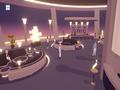
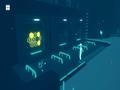
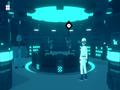
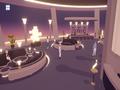
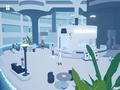
Graphically, D-topia looks great even if its environment is meant to be sterile. The overall look adopts a cel-shaded style, but it lacks the black lines expected from that style. The colors are distinct but a bit muted, giving the game a soft tone that complements the overall vibe. The character models are done in a way that makes everyone look inviting, and the same can be said of the omnipresent robotic helpers. There aren't many graphical options to mess around with, but the performance is solid using the game's defaults, and this is the kind of game where high frame rates aren't necessary for an enjoyable experience.
Parts of the soundscape are limited, but it's overall very nice. There's nothing special about the effects, and voices are completely absent except for the rare meowing of a cat. It falls on the soundtrack to carry the game in this category, and the job is commendable. Each song pairs up well with the mood of the moment, whether it's the frantic nature of an emergency or the melancholy tone of a big, late-game decision.
Linux PCs don't need any tweaking to run this game, as the default version of Proton works just fine. Steam Deck users will find that the game also runs without a hitch on that device. The device's native resolution coupled with the game's art style makes the title look great, while the game holds on to a 60fps frame rate at all times. The battery life can average around four hours on a full charge with the Steam Deck LCD version, but that fluctuates depending on what you're doing. Go to the city, and you can see the battery life drop in the more open spaces, while the battery life shoots back up when you're just doing puzzles.
D-topia's narrative is intriguing. It's uncommon to see a futuristic story with an optimistic outlook, and while the plot is relatively short, its memorable cast of varied characters leaves a lasting impression. The puzzles add welcome variety, even if only a small handful provide a meaningful challenge for casual puzzle fans. Combined with a polished presentation, D-topia is a strong experience that will especially resonate with players who value storytelling above all else.
Score: 8.0/10









More articles about D-topia