










 In EA Sports College Football 27, fans can dive into authentic gameplay across 136 FBS schools and experience the unrivaled passion of college football.
EA Sports College Football 27 signals the end of the honeymoon stage. Simply existing as a college football game is no longer enough, and for the most part, this latest edition of the series appears to understand that.
EA's' return to the CFB world about two summers ago felt like a world-changing event — Football Stranding, if you will. We all got swept up in it. The follow-up felt like reinforcement of the gameplay bones established the previous year, but there was already a bubbling sentiment of, "OK, is that it?"
The challenge before College Football 27 is the question: Can this franchise continue to evolve?
Its answer: That depends on how fast you expected that evolution to be.







We don't get a dramatic reinvention of the series. Instead, we get an earnest, concentrated effort on improving the areas that mattered the most: on-field gameplay, presentation and the overall sense that you're actually running a college football program, warts and all.
There are still areas that need considerably more attention — particularly the single-player campaign called Road to Glory — and of course, there's the looming cloud of EA's blending in of microtransactions.
Let's start with the good stuff. When you're actually playing football, College Football 27 still maintains and even improves upon the addictive, unique aura of college football. It's easily the game's foundation.
Much of the joy of college football is how loose, fun and occasionally chaotic it can be compared to its more regimented, controlled professional counterpart (NFL/Madden). Games between rivals can feel like dueling religions. Explosive plays, wild momentum and swings occur more frequently due to the dynamic talent gaps among programs and players on the same field.
This is most apparent in the speed of the game. A tailback with some wheels can turn a seemingly ordinary handoff into a house call, while an elite quarterback nukes an aggressive defense with a deep ball. If you're playing with a smaller school, you have to compensate for deficiencies and get creative when you're going up against monoliths like Georgia or Ohio State.







Perhaps my favorite improvement was seen in the trenches, witnessing the offensive line move. Blockers generally — finally! — know their assignments and find people to hit instead of just posing or floating in space. Within the playcalling subculture of the running game, inside runs, outside zone concepts and screens finally had their own personality. This added a little more excitement to playcalling and planning during the game, instead of simply spamming a handful of stuff that worked.
I also appreciated some of the refinements to the air attack. Quarterbacks from team to team felt more distinct, so arm strength, accuracy and mobility had a more noticeable on-field impact. Example: If your QB1 has a huge arm and lots of tools (like Oregon's Dante Moore, who's expected to be a real-life top pick in next year's NFL draft), he can attack areas of the field that are inaccessible to the more mortal QBs from perhaps less-powerful schools.
Defensively, coverage feels more physical and aware. Receivers and defensive backs have more convincing battles at the catch point, due to a new timing-based catch feature where you as the player have to press the catch button the moment the ball arrives to secure the grab. As in real life, trying to master this feature (and struggling) leads to the occasional bad wide-open drop, but it also leads to a taste of the craft that comes with being a receiver and "winning" the ball.
There are still occasional moments when the AI just gets weird, particularly when it comes to open-field tackling and deep coverage, but these instances felt less frequent than in past editions. The result is that each game feels like an actual college football contest, unpredictability and all.
Beyond the field, there's the main reason many people get this game in the first place: Dynasty Mode. For those new to the series, it lets you oversee and build a program, or, in some cases, try to maintain its excellence. Right away, I could tell that much of the design team's energies leaned into turning this mode into one of the game's cornerstones, if not the cornerstone.





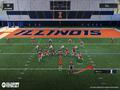

The biggest improvements made the mode feel like you're dealing with the modern world of college football as a coach/administrator. You'll start to see why so many coaches talk about how hard it is to run a program because of things like the transfer portal and the emergence of three letters: NIL.
Recruiting is no longer simply about finding talented high-school players and convincing them to attend your school. The transfer portal, NIL, program resources, coaching development and expectations all contribute to the larger ecosystem. Taking over an established powerhouse is fundamentally different from accepting a job at a smaller or struggling program. Big schools, like USC or Alabama, are expected to win. At a smaller program, you have to develop players, identify undervalued recruits and gradually build enough infrastructure to compete — like what Indiana, the reigning national champs, did over the past few seasons. It can be done. There's a reason Indiana coach Curt Cignetti's face is everywhere.
The Dynasty Blueprint system adds another layer of strategic decision-making, allowing Dynasty Points to be invested into areas such as recruiting, facilities, NIL and staff development. I found it clever. It's a way to make the progression of your program feel tangible.
The Athletic Director system of expectations is another fun wrinkle because it adds a layer of believability to your coaching life beyond the win-loss record. A 7-5 season might be a disaster at one school (Bama) and an extraordinary accomplishment at another (Kent State).
One thing I'd have to warn you about regarding Dynasty Mode is that ... it's a lot. Like, a LOT.


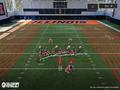




Casual players might get overwhelmed with the avalanche of systems, menus and decisions, and handling all of them probably means you're spending nearly as much time managing your program as actually coaching it. Some people — many people, actually — might really be into that. As for me, I have to be in the mood for that kind of investment. I've gotten there a few times, and it's likely you will too.
Speaking of the occasionally byzantine aspects of college football, recruiting deserves its own discussion.
Recruiting in college football has its own lore and atmosphere. It's not just signing the highest-rated players every year. It's about finding players who fit your system and figuring out how to convince them that your program is the right destination.
Building relationships, managing resources and competing against other programs makes recruiting feel like an actual battle. Losing a player you've spent weeks pursuing can be frustrating. It also gives victories, like landing that four- or five-star player, more meaning.
The transfer portal allows you patch holes in your roster more quickly (which is what lots of programs are doing to great effect), but relying heavily on transfers can also become a shortcut that diminishes the satisfaction of developing your own players. It's the balance real-life coaches struggle with every day, and now you get to taste that.

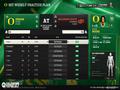


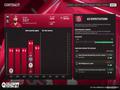

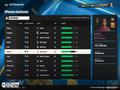
Now, when we zoom back in from the 360-degree view of a whole program to just one player, we get the familiar single-player Road to Glory mode. From what I experienced, whatever extra energy was dedicated to Dynasty was not present when re-assessing the offerings in this mode.
The concept remains my favorite in all sports games: create a high-school prospect, earn a scholarship, compete for playing time and eventually attempt to become a star.
Sure, there's additional customization, NIL opportunities, a way to track your draft stock and metrics that determine your "legacy score," which grows the longer and better you play, and if you rack up accolades and hit career milestones. That's fine; those additions make the mode more connected to the modern college football landscape.





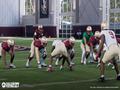

The problem is that the actual career experience still feels the same: almost tedious. There aren't enough meaningful decisions away from the field. Your relationship with coaches, teammates and rivals is still monitored the same way and still doesn't seem to have a significant impact on your career, unless you're trying to become a starter. There are the same goofy minigames, which I kind of hate. Transfers are mere menu options. Injuries, academic issues, depth-chart battles and off-field pressure are all engaging narratives for those who don't want to play online all the time or spend half their day trying to recruit some fictional kid.
Instead, we get a to-do list, like we did the past couple of seasons. You get the sense that a lot of meat was left on the bone.
That said, College Football 27 doesn't feel revolutionary, but that's perhaps it doesn't need to be yet. Refinements to the game's chief aspects was the plan, and those added up enough to make this another worthwhile playing experience. The gameplay is excellent. Dynasty Mode is deep, and the presentation remains as good as it gets. I think EA would be wise to understand that, once again, the honeymoon is over. You've bought your house and have settled into it. What happens next?
Score: 7.4/10










More articles about EA Sports College Football 27