

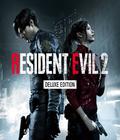


Almost all of the Resident Evil games have been very good experiences, but there are a few exceptional entries in the series. One of them is Resident Evil 2, which was an instant hit with both players and critics alike, and its 2019 remake did all the right things by upgrading the presentation and changing some of the scenarios while keeping the game's spirit intact. That remake made it to the Switch in cloud form only, which isn't ideal for a portable hybrid console like the Switch. With the Switch 2, just like Resident Evil Biohazard and Resident Evil Village before it, Capcom's previous cloud-only games are getting ports to Nintendo's latest console, and that starts again with Resident Evil 2: Deluxe Edition.
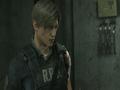
It is September 1998, two months after the events that occurred in the mansion located on the outskirts of Raccoon City in the Arklay Mountains. The T-Virus had spread beyond the mansion, and it wasn't long before all of Raccoon City had become infected and overrun by zombies and other monsters. In the midst of this chaos are two complete strangers: Leon Kennedy is a rookie cop on his first day on the job, and Claire Redfield is looking for her brother Chris. After being split up by a tanker truck explosion, the two of them vow to find their way out of the chaos alive.
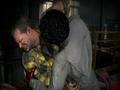
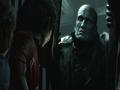

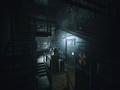
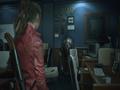
From the get-go, the story is quite different from the way you remember it in the original. Almost all of the major story beats are there, and the characters who play some significance in the story are present, but a good number of details have changed. For example, the meeting between Leon and Claire happens at the gas station on the border of town instead of when the both of them are in the city. The police chief is sitting in the middle of the station instead of in a locked room. Ada and Sherry still meet up with their respective partners in their campaigns, but the meeting times differ a bit from when they took place in the original. Those changes and more don't change the overall story in a significant way, but they make the tale different enough that even longtime fans will be engrossed in something that is otherwise very familiar.
Compared to the PlayStation original, the biggest change is in the camera angle, which skips the fixed camera angles of its predecessor and embraces the behind-the-back view from Resident Evil 4 onward. Aside from showing off the game models, the change also means that zombie attacks are more visceral, since you can see biting actions much close-up than before. The only unfortunate side effect from this change is the typical camera issues that stem from the behind-the-back viewpoint. Back yourself into a wall or go near an object, and the camera will zoom in closer before snapping back to the normal distance once you clear the object. The snapping isn't abrupt, but it is worth noting.
The camera angle change has a transformative effect on gameplay. Aiming has become more important, since you can't point in the general direction of a zombie and shoot. Conventional third-person shooting mechanics are at play, so different guns have different aiming reticles. Moving while aiming means less accuracy, and you can also perform manual reloads, which the original never had. The new camera angle also means that the controls are more in line with recent series entries as opposed to reverting to the original tank controls. As a result, movement is much smoother and more intuitive.
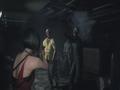
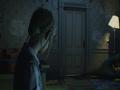
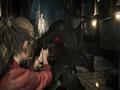
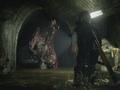
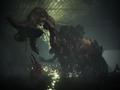
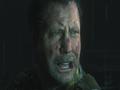
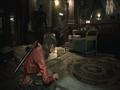
While the camera angle change is the most likely to affect gameplay, there are others that make a huge difference when taken collectively. For example, doors are opened by pushing them, so you don't have to manually push the button to open a door unless it's locked. You don't have to go through a small load screen when you go from one room to another. This also gives you the advantage of simply peeking through a door by pushing against it and backing out in case you don't want to commit to the move. Saving is also much easier because you don't need ink ribbons, so you don't take up precious storage space. You're also getting infinite saves.
The maps for each location are color-coded, so you'll know at a glance whether you've gotten everything. As long as you've seen an item and haven't picked it up, the map will conveniently place an icon to remind you of its location, so you can return for it later. Entering a room also means that you don't have to mash on the interact button to find objects of interest; the game automatically marks them when you draw near. That excludes anything that gives you a description for the sake of world building. The game also automatically brings up your inventory when you interact with something that requires an item. Finally, the game features a task list for any big progression-related quests, so you always know what you should be doing to advance.
Everything mentioned seems like changes that make the game easier, but there are others that balance things out to keep it as difficult as before. All of the monsters you encounter are more resilient, so even if you deliver nothing but headshots, you'll still spend a considerable amount of ammo to take down enemies. The monsters also have better reach, so simply running by them doesn't mean you are unharmed, especially since most of the encounters occur in narrow hallways. Windows have to be boarded up because zombies are more likely to break through them, so there are more enemy encounters if you leave windows unattended. The layouts are changed slightly, so rooms may be in different locations, while the puzzles are mostly different from before, and some of the existing ones have changed drastically. If you're aiming to use an old walkthrough to get through this game, it simply won't work.
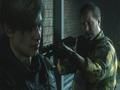
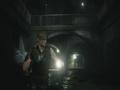

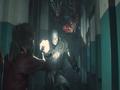
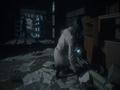
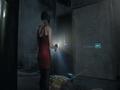

With all of the changes made to the game, players will be relieved to hear that the perfect balance between combat and puzzle-solving remains intact, so it rarely feels like you're doing too much of one at the expense of the other. Fans will be relieved to know that the horror aspect remains tight thanks to the presence of old intimidating enemies and new scares. There may be surprise appearances of bodies or insects or zombies in unexpected places. Boss fights and constant appearances by near-invincible tyrants will make you jumpy. It feels like the game returned to the core of what made the original entries so memorable.
Players will also be happy to know that all of the extras from the original title are still available. The A and B variations to Leon and Claire's stories are present, so there's some motivation to replay the campaign a few times after initially defeating it. A Hard Mode exists, where the new saving system has been replaced with the ink ribbon system, so save conservation becomes a thing again. The 4th Survivor is also present in addition to the Tofu version, so those playing this version of the game for the first time aren't going to miss out on anything that players of the original already experienced. This is also the deluxe edition of the game, and while that doesn't give you anything new in gameplay, it means that you'll get some new costumes and the ability to use the old soundtrack and effects instead of the newer stuff.
Compared to the ports of Resident Evil Biohazard and Resident Evil Village, there are no Switch 2-exclusive features. There are no touch-screen controls or mouse controls. There are also no motion controls present, something that the aforementioned ports had. That may initially seem like a drawback, but its absence isn't felt, since this acts less like an action game compared to those seventh and eighth mainline entries.
The audio has not degraded in quality after being ported from more powerful consoles. Even though the surround sound configuration goes no higher than an uncompressed PCM 5.1, the effects remain clean, and the sound of creaking doors and the drop of an empty bullet casing is both fresh and essential to creating the horror vibe. The same can be said for the music, which is actually muted. Compared to the original, the soundtrack isn't as prevalent, and when it does appear, it builds on suspense and lets you know if you're in a big fight. The soundtrack never feels like it's droning on, as sounds effects like barks and zombie groans comprise the majority of the audio. As expected, the characters have had their voices recast, and no one would accuse the series of returning to its roots in this respect. Every voice suits their character just fine, and the delivery is pitch perfect. The lines they say sound less silly this time around, and there are even bonus lines when anyone is trying to kill a monster and is frustrated at how many bullets it takes to down one.
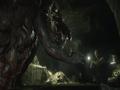
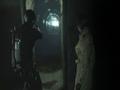
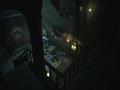
With the game built on the same RE Engine as past Switch 2 ports, it should come as no surprise to see the game helping the Switch 2 to punch above its perceived expectations. HDR is present, and while the use of it on the device's LCD can be hit-and-miss, the experience is excellent if you have an OLED set to play on. The technology benefits from this game's original use of light and shadow. It's mesmerizing to watch the light and shadows dance around, depending on the light source position. Those shadows are also sharp, but there are moments when you'll see the lighting break up in a few odd ways, such as seeing the light geometry cut near anything vertical, like a stairway post. Textures and character models remain as detailed as ever, and the game runs at 60fps with barely any drops unless you get into very heavy scenes full of monsters and particle effects. DLSS is no doubt doing all of the heavy lifting to achieve this, but the telltale signs are so few that you'll appreciate the upscaling for giving the system this kind of experience.
Resident Evil 2: Deluxe Edition is still a stone-cold classic after all these years, and this Switch 2 port doesn't disappoint. The core game remains as solid as ever with a memorable story and action, and it's great that this is no longer a cloud game on the platform. The presentation is brilliant, and even though we've seen this sort of result from a number of very good Switch 2 ports, it is still amazing to see what is essentially PS4-level graphics run on the portable and with a high frame rate to boot. Unless you've played this game on other platforms countless times and don't care for being able to take it with you, this is another title that solidifies the strength of the Switch 2 library.
Score: 9.0/10
More articles about Resident Evil 2