








 Star Wars: Galactic Racer is a runs-based, high-stakes reinvention of racing born in the Outer Rim. With the Empire gone and the galaxy rebuilding, The Galactic League is created: an underground, unsanctioned circuit where syndicates bankroll chaos and champions are forged.
The Star Wars franchise lends itself to all kinds of different games. Sure, there 's playing as a Jedi and beating up stormtroopers, but you can also engage in dramatic ship battles or smuggle your way through the underbelly of the Outer Rim. It 's no surprise that the franchise thrives in the racing genre, with Episode 1 's podracing sequence being arguably the high point of the movie. It 's been a long time since we 've gotten a full-throated Star Wars racer. Thankfully, Star Wars: Galactic Racer, the first game from former Burnout developer Fuse, shows that there 's still plenty of life in the Galaxy Far, Far Away.
Star Wars: Galactic Racer is set in the aftermath of the original trilogy. With the Empire defeated, the prohibition on galactic racing has finally been lifted. A new (and dangerous) racing league has come into existence under the umbrella of the plucky businessman Darius Pax. Unfortunately for Pax, his league is being dominated by the arrogant and politically powerful Kestar Bool. Bool is aiming to become the champion and take over the league from the inside, and he has the skills to back it up. Pax 's only hope is a pilot named Shade, a reluctant racer who has a history with Bool and a desire to get revenge in the only way they can: on the racetrack.

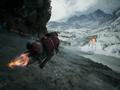

Probably the most distinct and potentially controversial element of the game is how its campaign is structured. Rather than a single story mode, you have what the developers are calling a "run-based" mode, which has a lot more in common with Slay the Spire than it does a standard racing mode. At the start of your campaign, you 're given a jalopy of a racer and a map of potential events and challenges. The events and challenges include regular races; "test runs," where you 're given a vehicle and must complete a specific objective; elimination races, where the last person in each lap loses; and special events, where you can interact with other racers to get potential bonuses. Succeed in races, and you gather bonuses and items. Fail and you crash out, and if you crash out enough, your run is over.
If you fail the campaign, you get to restart with benefits, such as currency to buy new vehicles; racer styles, which impact how your character plays; and Favors, which can make things easier in your next go-round. It 's a pretty Hades-like system where, even if you 're not Anakin Skywalker, you 're still able to gradually tune and adjust things to your skill level. I 'm quite fond of games like this, so discovering that the plot was built around runs was actually a huge boon. It made the simple act of booting up the game and going for a race a lot more fun than a static story mode. If you just want to drive, there are more generic races themed around the various racer styles.
There 's a huge variety of customization in the game. As mentioned, there are racer styles, which determine the basics of how your character plays. Your starting style is Survivor, which starts off equipped with a shield and gains benefits as you race without crashing. In comparison, the Tenacious style is all about going all-in on risk and gives you extra crashes before you 're disqualified. You'll also receive boosts when returning to the race after a crash. There are racer styles that prioritize disabling your opponent, pushing your machines to the limit, and more. You can even level up these styles by completing certain objectives. Likewise, favors are passive boosts that also level up and can be mixed and matched with racer styles to create something distinct.
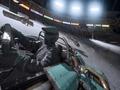
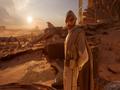
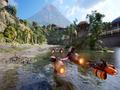
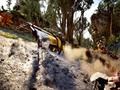
Speaking of vehicles, there 's a wide selection built around roughly four different vehicles. The first three are the Landspeeder, the Speeder Bike and the Skim Speeder. The Landspeeder is basically the default vehicle; it's easy to drive and capable of drifting. The Speeder Bike is like a motorcycle: fast, dangerous and fragile. It can store boosts Mario Kart-style when cornering but can easily lose control. The Skim Speeder is reliable and amazing at cornering with an ability to flip onto its side for tighter turns, but it has the lowest overall speed. Podracers are in a league of their own; they're stronger and more dangerous than everything else but limited to podraces.
How does the game actually play? It 's an arcade racer at heart and combines Burnout with the fast-paced excitement of something like Episode 1 Racer. Realism is not the name of the game, with a heavy emphasis on absurd speed and over-the-top brutality. While it 's possible to race as a legitimate and well behaved racer, your opponents will do everything they can to knock you off the track. This can include bullying you by smashing into you or using dangerous tools like Ion Blasters to absolutely mess up your day. As Episode 1 showed, the winner of the race isn 't necessarily the best racer but the one who is still intact at the end. You can crash multiple times during a race, so it's not exactly a case of one-and-done, but even with the game's arcade-style take on reality, slamming into a canyon wall at a thousand miles an hour is going to set you back a bit.
If you want to get an idea of Galactic Racer's focus on speed, you only need to look at the game's multiple boost mechanics. The first is Afterburner, which should be incredibly familiar to anyone who has ever played a racing game. Press the button and you go faster, but it needs time to recharge after being used. Ramjet is a second boost that needs time to warm up, but once it's activated, you can travel at absurd speeds. You can hold the Ramjet as long as you want, but once you deactivate it, you need time for it to cool down. More importantly if you hold it long enough, you start redlining, which means your chosen vehicle is at serious risk of overheating. Overheat, and it has explosive consequences, but certain play styles and upgrades reward you for taking these risks.
Having two boosts might sound like a small thing, but it 's my favorite part of the game because it means you 're constantly managing your speed. When do you need to boost? When is it best to save your boost? Is it worth redlining your Ramjet in a particularly risky area when your opponents might play it safe? The constant swapping between boosts means you really feel like you 're constantly going at mach speed and are moments away from disaster. It lends a sense of danger and speed to the racing that absolutely makes it feel like you 're in a death-defying sci-fi race and not just Star Wars-themed cars.
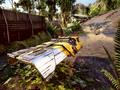
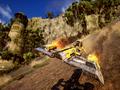
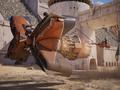

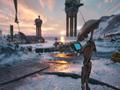
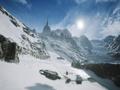
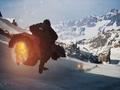
It also helps that each environment requires you to consider how you want to interact. The different planets you can visit are a mix of classic Star Wars locations, like Tantooine and more obscure locations like Ando Prime, a frozen hellscape some players might recall from Episode 1 Racer. Each environment is distinct and cool. Jakku is filled with the wrecks of Star Destroyers that you must race through, so it's far more dangerous than you'd expect. Crait from The Last Jedi has its iconic salt that turns blood red when you race over it in some of the coolest and most distinctive visuals in a game. The aforementioned Ando Prime is frozen, which means you can run your Ramjet longer, but remaining outdoors too long can cause your machine to act up; it's a delightful mix of risk and reward.
Galactic Racer is just a ton of fun. It doesn 't take itself too seriously, and it's very far on the arcade spectrum, but that works entirely in its favor. The run-based mechanics mean that races are exciting and engaging every single time, so it's a great game to pick up and play for a little while. The multiplayer is fast, frantic and exciting. It can easily become unbalanced once people really dig into the nitty gritty of the mechanics, but there 's room in the racing market for something wild and over-the-top. If you remotely like Burnout and Star Wars (or just one of the two), Galactic Racer is pretty much the ideal game.
It helps that it looks gorgeous. The insanely fast-paced racing doesn 't come at a cost to visuals, and every stage is dynamic, interesting and memorable. It 's a testament to the strong art design that even while I was racing through the ravaged wreck of a Star Destroyer, I never felt like it was difficult to follow what was going on. Crait is just jaw-dropping, taking one of my favorite Star Wars visuals and converting it perfectly to racing. The soundtrack is also quite good, and the voice acting leans heavily into the goofy and over-the-top excess from the goofier parts of Episode 1.
Star Wars: Galactic Racer is pretty much everything it should be. Threading the needle between next-gen Burnout and Star Wars-themed racer, it 's frantic, fun and incredibly enjoyable to play. The arcade-style action is a pure delight, and the run-based nature of the campaign gives it a ton of replay value, even if you don 't intend to dip your toes into the multiplayer. If you 're looking for a next-gen Episode 1 Racer, this is exactly what you 're hoping for.
Score: 9.0/10


More articles about Star Wars: Galactic Racer