





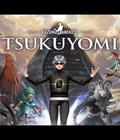
 Tsukuyomi is a tactical deck-building tower dungeon RPG from the legendary Demon artist, Kazuma Kaneko.
Kazuma Kaneko is one of my absolute favorite game artists. His distinctive and memorable art style defined the earlier Shin Megami Tensei games, and his art in other games led to some of my favorite designs ever, including the Devil Triggers from Devil May Cry and the Dis Astranagaunt from Super Robot Wars Alpha 3. He has a distinct and memorable style that stands out from the crowd. In theory, Kazuma Kaneko's Tsukuyomi is a game that I really want to love, but unfortunately, the flaws that drag it down are enough to distract from the overall whole. For those unaware, Tsukuyomi is a port of a mobile game where the primary gimmick was that it used as generative AI trained on Kaneko's art to create "custom" art for the in-game cards, rather than hand-drawn art. The home version does away with all the trappings of the mobile game and the custom generative AI feature, but its legacy lingers throughout.
Tsukuyomi is set in the not-so-distant future in Tokyo. In this world, there are specialized wizards known as Tsukuyomi, powered by the god of the same name, who have the ability to summon demons known as Jinma from magical cards. The four existing Tsukuyomi are drawn into a conflict when a high-tech tower known as THE HASHIRA (that's how it's always spelled) is suddenly surrounded by a barrier. The inside of the tower has become a hellscape of escaped Jinma who are attempting to slaughter all the residents inside, and it's up to the Tsukuyomi to figure out what happened and stop a ritual that threatens the life of everyone in Tokyo.
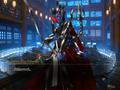
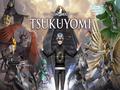
Tsukuyomi's narrative is fine. It's pretty much a standard Shin Megami Tensei story, right down to having incredibly blunt Chaos, Law and Neutral avatars and summoned demons. The characters are fairly simplistic, far more in line with the mainline SMT games than something like Persona, but that's not a problem. My biggest criticism of the game involves some serious spoilers, but it involves the plot devolving into something tremendously self-indulgent once you get past a certain point. Kazuma Kaneko's Tsukuyomi is named that for a reason, and it leads to something that I feel would lbe more charming if it weren't the context in which it is presented.
The core gameplay of Tsukuyomi is best compared to something like Slay the Spire. It's a roguelite random-run based card game where you take one of the Tsukuyomi through a series of three floors, and there's a boss battle at the end of each floor. Unlike Slay the Spire, Tsukuyomi is far more plot-based, and you'll face the same bosses and are locked to specific characters until you finish the game. Finishing the game unlocks THE HASHIRA mode, where things are more randomized.
Combat is straightforward — at first. You have a deck of cards from which you draw three cards at a time. You can use these cards by spending your energy (Odo), of which you have four to start. Some cards offer buffs, and others offer attacks. As you might expect, your goal is to defeat enemies before they defeat you by the time-honored method of hitting them until they don't have any life points left.
Once you use a card, you instantly draw the next card from your deck, until you've drawn every card. Managing your deck is important because your deck does not refill until you end a turn with zero cards in your deck. This means if you end a turn with only one card in your deck, on your next turn, you can only draw one card, period. This makes it important to balance card usage because if you play every card you can in a single turn, you end up with nothing in your hand, which can be extremely dangerous.

Unlike many games, your cards are conserved from turn to turn. Enemies attack by focusing on one or more of your three cards. Should the enemy succeed in their attack, they'll deal damage and knock that card to the discard pile. However, many cards have a defense stat. If the defense stat of the card that is being attacked is higher than the enemy's attack, it will block all damage. If it is lower, it will reduce damage to the difference is between the two. In either situation, you lose the card, but you also stop the damage.
There are five playable characters in Tsukuyomi: Hangetsu, Izayoi, Magetsu, Shingetsu and the unlockable Tomi Noriko. Each character has their own distinct play style. Izayoi is the standard character, who primarily relies on dependable low-gimmick cards. If he has a special feature, it is that he tends to get access to a lot more defensive options than the other characters, making him most viable for tanking. Shingetsu prioritizes generating and spending Odo in long combos with her "Virtue" mechanic, which can replenish her spent energy. Magetsu is the opposite; he prioritizes status effects and self-damaging moves bolstered by his Virtue mechanic, which offers immortality. Hangetsu is a mix between Magetsu and Shingetsu and has access to both of their mechanics. Tomi Noriko has a unique set of cards based on the game's bosses; the cards tend to be high value but complex to use.
The cards are representations of Jinma demons that the Tsukuyomi you're controlling has in their command. The bulk of your cards come from winning a fight or purchasing them from a shop. Most cards can be upgraded once to improve their effect. Each character has their own set of available Jinma. Some overlap, especially when it comes to Hangetsu, but generally, you'll prioritize specific demons for specific characters and never have to worry about someone dropping who doesn't fit the character's play style.
The defining gimmick of the game is likely the creation cards, which tend to represent the most notable gods and demons. Players can only obtain creation cards as a gift from the god Okami. As you progress through a level, your actions will garner Okami's notice, and once you've gathered enough, it will stop you and offer to create a custom card for you. This is done by telling you the name of the god and then asking you to select one of three prompts, which determines the artwork shown on the card. These cards also come in multiple rarities, so if Okami offers you one that you already have, it may unlock a stronger version of the card.
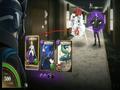
Once you've unlocked a creation card, it becomes available in all future playthroughs as that character. Unlocked creation cards can be selected at the start of a run or received as prizes for defeating elite enemies. Alternatively, you can choose one of your existing cards instead of the one that Okami makes for you. This serves as a "leveling up" system. Even if you fail a run, you can unlock stronger creation cards to make your next fight easier.
Fighting enemies is standard for the genre, with a few notable exceptions, such as the break mechanic. For certain enemy actions, they'll give you a warning that you can "break" them. This usually involves hitting them a certain number of times or with an attack of a certain level of power. If you're able to meet the requirements, not only does it interrupt the enemy's attack, but it also replenishes your four Odo. It's a nice way to reward aggressive play styles, but some of the Break requirements are so strict that you probably won't meet them.
As you play through the game, win or lose, you'll level up your chosen character. This increases their starting mana and HP, changes their starting deck by powering up certain cards or unlocking new ones, or unlocks special consumable items. One you've unlocked a consumable item, you have a random chance of getting one after fights and can hold up to three at once. These range from healing items to weapons and are best thought of as akin to potions in Slay the Spire. Leveling up further will increase the base level of these items, which makes it easier to progress against difficult bosses.
Tsukuyomi also has a few elements of Shin Megami Tensei in combat. When fighting regular enemies, you can sometimes force them into a state where you can have a conversation, which ends with them leaving the fight, getting angry, or even joining you as a card. While it's rare enough that it isn't dependable, it's a neat way to break up the combat, and some of the conversations can be pretty fun. I'm particularly fond of the gacha-addicted influencer demon who needs constant encouragement over their bad pulls.
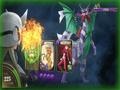
Between fights, you'll have small dungeons to explore, which mostly involve choosing a direction to explore on a map. This will lead to fights, stores, and events. Events tend to ask you to make a choice between a few different options that offer different rewards, which is standard for a card battler. Your options tend to be associated with either Vice or Virtue, which is basically a legally distinct Chaos and Law from Shin Megami Tensei. Selfish options push you toward Vice, lawful actions push you toward Virtue, and being in the middle qualifies you as "Nature." This morality system determines the pool of creation cards available to you, so it's largely ignorable unless you're trying to unlock new cards.
At the end of every floor, you'll face a boss, and most have a distinct gimmick. For the most part the game is quite good about making these gimmicks interesting. One boss might constantly inflict bad status effects, another does delayed attacks that require you to plan ahead for damage, and others may split in two and try to steal all your mana (the game's money). There's even a fight against John Wick in the form of a suit-wearing gunman named Baba Yaga. None of the fights are too punishing, but they do a good job of making you consider your actions, especially since some will massively power up if you do the wrong thing and don't take the time to read about how their gimmicks work.
Overall, Tsukuyomi's combat system is relatively fun. There's a good amount of flexibility in the combat and variety between the characters and the various bosses. The creation card system throws the balance out of whack. Rare cards in Slay the Spire aren't consistent, so it's much harder to fall back on the same reliable ones. Tsukuyomi makes it so easy to do that once you get a handful of really good creation cards, you can use them in every single stage because there's no reason to vary your build. This works for the RPG-like design of the main story, but it detracts from its value compared to other games in the same genre.
There are also some notable balance issues when it comes to enemy design. The gap of difficulty between different types of enemies is massive, and there's no rhyme or reason. Regular enemies are frequently more dangerous than the so-called dangerous elites, and bosses can be anything from a complete pushover to totally dangerous without warning. This especially stands out in THE HASHIRA mode, where enemies are boosted from the main game, and the difference between a "weak" enemy and a strong enemy is so massive that a winning run seems to depend on who you roll, rather than how you actually play, especially early on, when you have limited cards.

It's kind of impossible to not discuss the elephant in the room regarding Tsukuyomi's graphics: The bulk of the game's assets are AI generated. Coming from a game that markets itself on the distinct art style of Kazuma Kaneko, this really stands out. It's very clear that a lot of enemies aren't even designed in Kaneko's style; they have the same glossy sheen that I associate with generic AI-generated artwork, and they don't look very good. It stands out most with female demons who are hit the worst by this. It means that frequently, enemies don't come close to having the same art style, even when they're fighting next to each other. The proximity makes it even more apparent.
The creation cards, which are all done in an AI-trained version of Kaneko's style, are curated from AI artwork generated during the game's mobile release. Even though the cards have been curated, they don't look very good. You pick from a selection of different pieces of art without any ability to see it beforehand, and while some look passable, others look wrong or are clearly recognizable designs from Shin Megami Tensei, albeit slightly reworked. Due to the gacha-like nature of "rolling" for artwork, you're going to be as likely to see something that looks terrible as you are something that passes.
The result is that Tsukuyomi doesn't look very good because the card artwork is 95% of what you spend your time looking at. The areas where the artwork is either hand-drawn or passable AI are starkly lacking because Kaneko is an incredibly talented artist, and the hints of his style poking through make me wish the game were completely hand-drawn. If you don't mind the style, it might not bother you, but I found it to be extremely distracting, and it gave everything a slightly "off" feeling. The soundtrack is reasonably good and features some nicely moody tunes, such as the battle themes from Devil May Cry V.
Tsukuyomi is an odd duck of a game. As an off-brand Shin Megami Tensei card battler, it's pretty fun, despite some obvious balance flaws and a low budget. The story isn't anything great, but it was enough to bolster the gameplay, and I had a good time playing through the main story. For a game that prides itself as being the work of Kazuma Kaneko, the AI-bloated art style deeply detracts from the experience. It's a fun enough experience, but it has enough warts that it can be tough to recommend.
Score: 7.0/10
More articles about Kazuma Kaneko's Tsukuyomi