





 The Elder Scrolls IV: Oblivion Remastered is an RPG with lush visuals, expansive worlds and limitless character customization combine with unprecedented levels of player freedom and NPC interaction.
When the original Switch was revealed via an announcement trailer nine years ago, the first third-party game shown was The Elder Scrolls V: Skyrim. Even though it was six years old by the time it finally arrived on the console, the idea of Bethesda's massive open-world RPG being playable on a portable platform was mind-blowing at the time. Most of Bethesda's games eventually made their way to the highly successful Nintendo system, so it should come as no surprise that The Elder Scrolls IV: Oblivion Remastered would arrive on Switch 2 a little over a year after debuting on other platforms.
The game opens with a monologue from Emperor Uriel Septim VII, a character who has been part of the series for some time. He has lived a long life and knows his time is coming to an end, but he fears that war is about to descend upon the land. His dreams warn that the forces of Oblivion are waiting for the seal to break between their world and Tamriel, but they also tell of a hero who will save the kingdom. That hero happens to be you, a prisoner destined to meet the emperor as he attempts to flee to safety after all of his sons have been assassinated. As his life draws to an end, the emperor reveals that he has one more heir to the throne who was hidden away for protection. After giving you an amulet that only the rightful heir can bear, he implores you to find his hidden son and help save the kingdom.
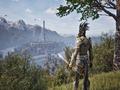
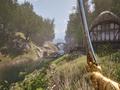
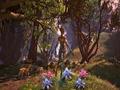
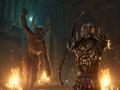
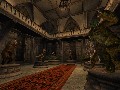
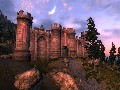
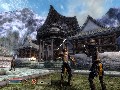
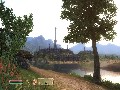
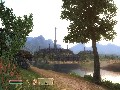
If you've only ever played games on Nintendo consoles, what you'll find is essentially the blueprint for Skyrim, albeit on a smaller scale. That doesn't mean Cyrodiil lacks variety. Its sprawling countryside and rocky hills give way to small towns, massive citadels, rivers, forests, and everything in between. The leveling system also differs considerably from other RPGs, as specialized stats improve through the actions associated with them. Want to increase your stealth? You'll need to sneak around more. The same applies to skills such as running and weapon proficiency. Traditional character leveling still exists, but you'll need to sleep to increase your general stats and make other character changes.
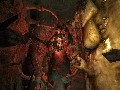
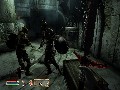
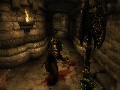
The main appeal, however, has less to do with its environments than with everything you can do and encounter. Once you leave the opening sewer, you're free to go almost anywhere and do whatever you want. There's still a main quest to follow, but the world is packed with enough activities and interesting characters that it's easy to get distracted by bandit camps, hidden dungeons, and stray Oblivion gates. You can spend hours doing all of this without making progress on the main quest. Solving murder mysteries and curing your own vampirism are just a couple of examples of the unexpected questlines you'll encounter. The world continues to operate without always requiring your involvement, which is the blueprint for most modern Bethesda RPGs. The formula works just as well in Oblivion thanks to the density of its world, with nearly every corner containing something worth investigating. This is especially apparent with the expansion packs, which blend so neatly into the main game that you might not realize you're playing one unless you know the game extremely well.
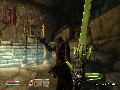
However, the experience isn't perfect, and some elements haven't aged particularly well. Closing Oblivion gates is exciting the first few times, but the process is largely identical each time, making it increasingly tedious. Sneaking can be unreliable, some skill requirements don't make much sense, and the world's rules can seem obtuse, such as utensils being treated as serious contraband when stolen. None of this completely dulls the excitement of exploring an open world packed with things to do, and some will argue that the rough edges are part of the game's charm. Still, anyone expecting the remaster to address some of the original's quirks may be disappointed.
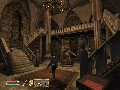
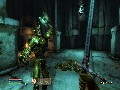
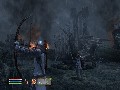
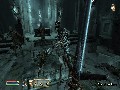
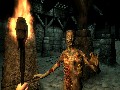
The remaster also retains plenty of technical oddities, although their severity varies. Some are amusing, such as weightless objects, bodies failing to fall properly after death, enemies moving strangely, or NPCs appearing to walk without going anywhere. Loading into an area in third-person view can briefly leave your character in a T-pose while the world assembles itself. Other issues are more frustrating, particularly enemies becoming stuck in level geometry and frequent traversal stutter. Moving quickly between areas can cause the game to hitch repeatedly for several seconds before stabilizing, especially if you're traveling without stopping to fight or loot. The save bug that could cause reduced performance after loading is less of an issue on Switch 2 than on other consoles, but it's still strange that Bethesda hasn't addressed similar problems on other platforms after more than a year. These quirks don't ruin the experience, but they're hard to ignore.
Switch 2-exclusive features are a hit-and-miss proposition for third-party ports, but Oblivion Remastered offers several useful ones. Gyroscopic controls and touch-screen support are available in portable mode, while mouse control works through both Joy-Con 2 devices. The latter is particularly useful for menu navigation and aiming projectile weapons if you're not a fan of analog-stick aiming.
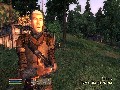
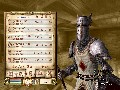
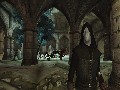
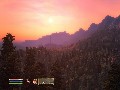
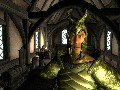
For the remaster, the developers have focused heavily on the graphics, and the results are impressive. Calling the makeover "transformative" might be overstating things, but it's difficult to describe the visual upgrade any other way. Character models are far more realistic, while the environments feature richer colors, denser foliage, cleaner textures, improved lighting, and mild ray tracing indoors. Facial animation remains the biggest weak point, with mouth movements still occasionally betraying the mechanical limits of the original.
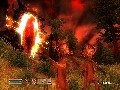
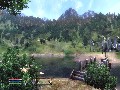
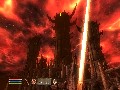
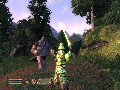
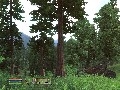
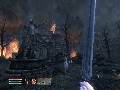
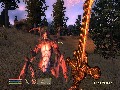
The Switch 2 version targets 30fps and generally maintains it, traversal stutter notwithstanding. DLSS helps balance frame rate and resolution in both docked and portable modes. There is some upscaling shimmer and fizzling, but the heavy ghosting found in the PC version isn't present. The hardware does require some graphical compromises, including blob-like shadows, shorter draw distances, low-frame-rate animations for distant characters, and more noticeable pop-in. None of these issues are particularly damaging individually, but they become apparent during extended play.
The audio has received a smaller overhaul. Additional voice actors and newly recorded lines give villagers more variety, but the original performances remain, so you'll still hear excellent work from Sean Bean, Sir Patrick Stewart, and others alongside the same voices being reused for multiple characters. Original mistakes and odd vocal inflections have also been preserved, adding to the nostalgia. The sound effects similarly mix new recordings with the originals, while the iconic soundtrack remains unchanged.
Your opinion of The Elder Scrolls IV: Oblivion Remastered will ultimately depend on your tolerance for performance issues and technical imperfections. The Switch 2 version improves on some problems found elsewhere, but it still has enough bugs and stuttering to keep the game from feeling fully polished. Even so, Oblivion remains a classic because of its immersive world and sheer number of things to do. Nintendo-only fans can finally experience it, while the Switch 2's portability makes the sprawling RPG even more appealing. Overall, it's a rough remaster, but RPG fans who enjoy Bethesda's modern formula will still want to check it out.
Score: 7.5/10
More articles about The Elder Scrolls IV: Oblivion