








 Mexican Ninja is a frantic fast-paced 2.5D beat 'em up roguelike full of crass, brass and incredibly badass.
Absolum has shown that the brawler can work well as a roguelike. The combination of randomization and the need to grow stronger through death and repetition feels appropriate for a genre where you're constantly moving from place to place and whaling away at everyone in your path. Mexican Ninja not only runs with this concept but also mashes it together with an oddball setting to surprising results.
Mexican Ninja begins with a very offbeat premise. At some undisclosed point in history, Japan invaded Mexico, and its immediate victory meant that Japanese and Mexican cultures fused at a rapid pace. One result was the merger of the Narcos and Yakuza into the Narkuza, a group that soon came to rule the land. They even took control of the local media so they could be portrayed as the good guys. You play the Mexican Ninja, who is on a mission of vengeance to free the city of Nuevo Tokyo from Narkuza forces.




The game leans heavily into the fusion of Mexican and Japanese elements to establish its atmosphere. This is apparent in the environments, which feature small touches of Japanese architecture and characters alongside chibi-fied versions of things like the Virgin Mary. The dialogue follows the same approach, although the Japanese is limited to commonly used words, while the Spanish is prevalent enough that you'll probably need to look up some translations to fully appreciate it. Even item names play with the fusion: healing drinks are called Sakila, a combination of tequila and sake. Even one of the slurs hurled at you by a boss reflects the game's bizarre mixture of cultures.
As mentioned before, this is a beat-'em-up with roguelike elements. On the brawler side, the mechanics are familiar. You have quick and heavy attacks, along with some basic combos from the outset. Destroyable objects throughout the world can reveal health and other bonuses, while the game uses the tilted perspective that has been common in the genre since the Double Dragon days. Most combat involves standard left-and-right movement, but the playable space is wider than usual vertically. There are also moments when the perspective shifts to an isometric viewpoint.
The combat lends itself well to the classic button-mashing that both genre enthusiasts and casual players will recognize, but there are clear inspirations from other games and genres. For example, you don't have a jump-kick, but jumping attacks lets you juggle enemies and keep them in the air for combos in a manner reminiscent of Devil May Cry or the classic God of War. Special moves called Mexican Jutsus can be activated with a single button, making them feel similar to powerful attacks in action RPGs, especially since they operate on cooldowns. You can also dodge and parry attacks like in a Souls-like, but there's no stamina to manage, keeping the overall pace closer to that of a brawler. Dodging works well, but don't be surprised if you rarely use the parry, counters, and subsequent fatalities. This simply isn't a genre where you always have the time or space to stop and watch for enemy tells.





There are several other combat systems that make Mexican Ninja distinctive, for better and worse. Its combo meter only increases when you're actually hitting enemies, preventing you from exploiting inanimate objects such as cars and barrels to build a higher count. However, the meter doesn't disappear until you're hit, allowing you to maintain a combo from one end of a stage to another as long as nothing interrupts you. Stages also contain traps, although their effectiveness against enemies is inconsistent. Sometimes a minion emerges unscathed from an exploding barrel; other times, a bear trap will knock one down. Explosive barrels are particularly strange because they only affect other explosive barrels. Blow one up next to a wooden fence, for example, and you'll still have to break the fence because it's apparently invincible against explosions.
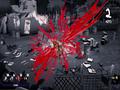
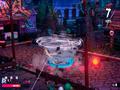
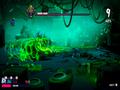
The result is a speedy combat system even before power-ups enter the equation. Unfortunately, some of that speed can work against the game. Midway through a run, enemies can trap you in loops, whether you're being endlessly juggled by a lingering ground hazard or caught in a boss attack pattern that's timed so perfectly that you'll be hit again the instant you recover from the previous attack. The action also has plenty of visual flair, but the sheer number of effects on-screen can make it difficult to keep track of your character. The camera creates a similar problem by occasionally hiding traps behind scenery, even though your character and enemies remain visible as outlines. Combined with the game's relatively small character models, this can make both combat and enemy identification more difficult than they should be.
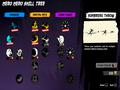
The roguelike elements are fairly conventional. Every run gives you temporary perks, boosts, and Mexican Jutsu choices that disappear when the run ends. Coins function as your XP, allowing you to purchase permanent upgrades such as increased health and damage or unlock additional combos and moves. Stage layouts are preset, as is the structure of two normal stages followed by a boss fight. The bosses always appear in the same order, but you get a choice between two sections on the way through each stage, with those paths randomized from run to run.




A few additional elements help flesh out the formula, even if they're relatively minor. Boss and ally dialogue changes after every run, creating small story threads and showing an impressive amount of attention to detail in an area that many games would ignore. Characters also provide side-quests, some of which encourage exploration by sending you to specific locations to fight and uncover something special. Rewards can include XP, but most are new suits and colorways that provide useful stat boosts and abilities, such as a larger parry window or explosions after every light attack. These are particularly nice for long-running repeat quests, such as the one where you give money to a drunk gambler. However, it would've been helpful to have a screen listing accepted quests, so you can keep track of what you're supposed to be doing.
Mexican Ninja is also purely a single-player experience. That's hardly unusual for a roguelike, and there have certainly been solo brawlers before, but single-player beat-'em-ups remain relatively uncommon in a genre traditionally built around co-op play. This may be particularly disappointing for anyone coming from something like Absolum and looking for another game that scratches that same multiplayer itch.
Graphically, the game is mostly good. The environments look nice, but it can be frustrating to find alternate pathways when passable and impassable areas look nearly identical. The effects are attractive, and the game maintains a good frame rate even on basic hardware, although the visual clutter makes combat harder to follow. The smaller-than-expected character models compound the problem by making characters easier to lose among the effects and making some of their visual details harder to appreciate. It can also be difficult to distinguish enemies based on their abilities, which isn't helped by the camera occasionally obscuring hazards and other important details.




The audio is generally fine. The music provides a suitable backdrop for bashing people, but expect an almost entirely Mexican-inspired soundtrack with no Japanese influence. Sound effects are strong, but some, particularly explosions, could use more impact because they sound somewhat muffled. Bystanders and random payphones in some areas also have voiced dialogue, all of it in Spanish. Given the amount of dialogue and the size of the team, it's understandable that characters don't have voices during cut scenes, but hearing the main cast would've been a nice addition.
As is the case with just about every single-player game released in the past few years, Mexican Ninja runs perfectly well on a Linux desktop without any issues or tweaking. Steam Deck users will find that it runs almost too well on the device, to the point where you'll want to reduce some settings to preserve battery life. For example, enabling V-Sync on the LCD version of the Deck drops the frame rate from 90fps or more to 60fps, giving you around two-and-a-half hours of playtime instead of roughly one-and-a-half. The lower resolution and farther camera angle also give the game more of a cel-shaded appearance compared with playing on a larger TV or monitor. The main complaint is that graphical options are limited to general presets rather than more granular settings, which may feel odd to longtime PC players.
Ultimately, Mexican Ninja is a fascinating curio. Its setting is interesting, and its humor lands in both good and bad ways. The beat-'em-up mechanics are solid and fun, even if some enemy tactics can make the game feel unfair at times. The roguelike elements give the experience some legs while also feeling like a natural fit for a genre traditionally built around games that can be completed in an hour or two. The presentation is solid, and while the lack of co-op may turn off players who expect beat-'em-ups to be multiplayer experiences, those willing to go it alone will find plenty to enjoy.
Score: 8.0/10




More articles about Mexican Ninja