






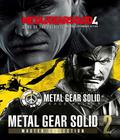
 This collection picks up where the 2023's Metal Gear Solid: Master Collection Vol. 1 left off by re-introducing two titles (Guns of the Patriots and Peace Walker) that further the stories of Solid Snake and Big Boss.
Metal Gear Solid: Master Collection Vol. 1 was released in late 2023. The PC version suffered from some technical issues and required several patches to get things into a better state, but the inclusion of seven titles, including some of the most influential stealth games ever made, made it worthwhile for fans of the franchise and genre. The fact that this was labeled as the first volume made a second volume inevitable. While this collection offers fewer games, what's included is still highly significant.
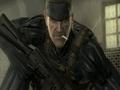
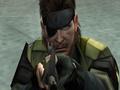
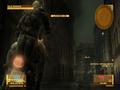
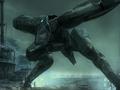
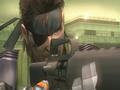
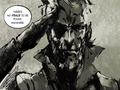
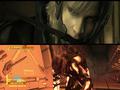
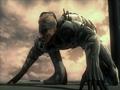
The compilation contains three titles, with Metal Gear Solid 4: Guns of the Patriots getting the most attention. The game was stuck on the PS3 for so long that streaming was, for a time, the only official way to play it on a modern platform. While it isn't the final game in the series, it acts as the chronological end of Solid Snake's storyline (for now). The story takes place in 2014, in a world when proxy wars happen constantly and have become a regulated business with investors and rules covering everything from biometric chips in weapons to nanomachines that allow soldiers to use those regulated guns. You play as Solid Snake, who has suffered an accelerated aging process because of his altered genetic makeup. As usual, he's being dragged into a conflict involving someone from his past. In this case, it is his genetic half-brother, who has somehow inhabited the body of Revolver Ocelot, a character who has been heavily involved in the lives of both Solid Snake and his father, Big Boss.
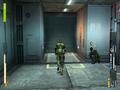
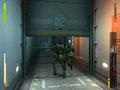
From a gameplay perspective, MGS4 closely follows the mechanics established throughout the series up through Metal Gear Solid 3: Subsistence, while modifying or adding several elements. The camo system remains and has been expanded to include disguises in certain areas. Your camouflage is also semi-automatic, so you simply need to lie on the ground or lean against an object for a few seconds before adopting that pattern for your suit and, later, your face.
One new element is Drebin, the gunrunner. With the conceit that most guns in the world are locked, you'll need him to unlock weapons you find in the field before you can use them. You'll find a ton of guns during combat, and collecting multiples of the same weapon earns points that can then be used to buy or unlock those guns. The basic economy is complicated by the fact that prices for weapons and services fluctuate wildly depending on the status of the area you're in and even the time of day. The system seems unnecessary for a game that rewards stealth over killing, but it is a neat way to demonstrate some of the different aspects of war.
MGS4 also introduces two new meters to monitor. Psyche needs to remain high, while Stress needs to remain low. One affects the other, so constantly being chased by guards, killing lots of people, or exposing yourself to extreme temperatures without relief increases stress and lowers psyche. This can lead to side effects such as unstable aiming or Snake stopping to vomit because of hallucinations. There are ways to increase your psyche, such as eating or smoking, but most players will rarely have to worry about those mechanics affecting gameplay. Unless you play on the highest difficulty and completely ignore stealth in favor of turning the game into a losing attempt at making it a standard shooter, you'll rarely encounter a non-story situation where maintaining these factors is important. As a result, most players will probably finish the game without giving them much thought.
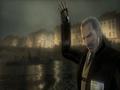
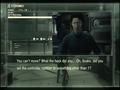
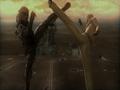
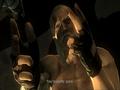
Yet all of these gameplay elements are eclipsed by the fact that the game is packed with cut scenes. Some are absolutely essential to the plot. In keeping with series tradition, others are opportunities for bosses to chew up the scenery through lengthy monologues or tragic backstories. Other scenes feed into Kojima's desire to make movies, even when doing so doesn't make much sense for the story. Some examples are the opening advertisement that seems to be about a gun or the scene where David Hayter is barely interviewed while holographic imagery about a completely different topic plays around him. Some of this is exactly what fans of Kojima expected, but the gameplay increasingly takes a backseat as the game progresses. What starts as a typical game gradually becomes more of a full-blown movie, with your interactivity eventually reduced to hitting prompts to advance a scene or save the game, or simply moving a gamepad to keep it from going to sleep.
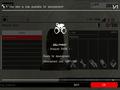
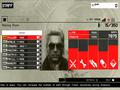
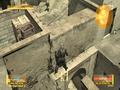
For fans of the game, there are two main points of concern with this port. The first is whether all of the licensed material is still present. The original release contained plenty of references to real companies such as Triumph and Apple, and with licensing issues being a major reason older games sometimes never receive re-releases, there was some concern that extensive editing might be required to remove those references. Surprisingly, none of this material has been touched. You can still use an iPod to listen to different music during gameplay, see Big Mama drive a Triumph motorcycle, and watch Vamp communicate using a Sony Ericsson phone. Even the Playboy magazines, which are used to distract guards, are still present. Some would argue that removing this material would diminish the overall impact because those elements were such a big deal when the game was originally released. While that may be a little too generous toward the power of licensing, it is still good to see an older game return relatively untouched, with multiplayer being the major exception.
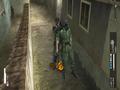
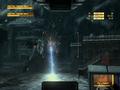
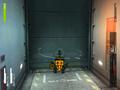
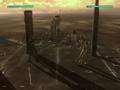
The second concern is the game's overall presentation and performance. The PS3 version could hit 30fps at times, but it often dropped to around 20fps when things became busy, an issue that plagued many games from the Xbox 360/PS3 generation. That isn't the case now. You can hit 60fps with strong enough hardware, or you can lock the game to 40fps or 30fps if your system isn't up to the task. The game can also run at up to 4K resolution. While some textures can look fairly low resolution, the overall presentation remains clean once you get past the heavy use of bloom. The frame rate boost alone makes the port a success in most eyes, but the other major improvement is the loading times. The game loads quickly at all times, so you aren't subjected to long stretches of Snake chain-smoking while a new section loads.
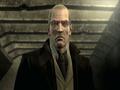
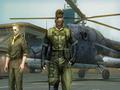
The second game is Metal Gear Solid: Peace Walker, originally made for the PSP. The story takes place a few years after the events of Metal Gear Solid 3: Snake Eater. After being forced to kill his mentor, Naked Snake was declared a hero and given the new moniker of Big Boss by the U.S. government. Instead of continuing to serve the government, however, he left with his friend Miller to create Militaires Sans Frontières, a group of soldiers loyal only to those who hire them. When a supposed university professor and his student approach the group for help in getting rid of revolutionaries from their country of Costa Rica, Snake initially refuses. He changes his mind after hearing the voice of Boss on a tape recording, the mentor he believed he'd killed all those years ago.
Compared with the other games in the series, the story leans more toward political intrigue than philosophy. There are still moments when the characters become introspective about what they're doing and their overall roles on the world stage, but there's an equal emphasis on surprise revelations and double turns involving several key characters. It makes for a good story, provided you can keep track of everything before the next big twist arrives.
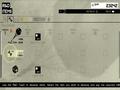
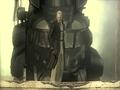
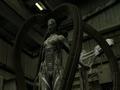
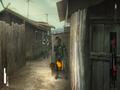
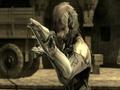
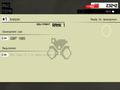
The gameplay follows the same general mechanics as Snake Eater, with more influence from the Subsistence version than the original PS2 release. A major reason for this is the camera, which uses the third-person, behind-the-back viewpoint found in the newer games rather than the more traditional top-down view of the base game. Most of the other elements from Snake Eater remain, including the revamped item selection menus, camouflage system, and use of sonar instead of radar for enemy detection. However, Peace Walker also builds on those mechanics with a mission structure and progression system that give it a distinct identity.
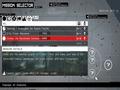
Instead of a long, sprawling world, the game uses smaller, more structured missions spread across a limited number of zones. Most are story-related and come with plenty of cut scenes, some containing interactive elements that play out like quick time events (QTEs). Others are side missions that provide bonuses. This structure was clearly designed with portable play in mind, but it works just as well during longer sessions because each mission is relatively digestible. The structure also ties directly into the game's base-building system. You're establishing an offshore facility for Militaires Sans Frontières, and the recruited soldiers can be assigned to research and development, support, or other roles that help expand your organization. You can also send soldiers into previously visited areas to recover incapacitated personnel using the Fulton parachute system. Those captured troops immediately become part of your army, allowing you to continue expanding your base. Like many things in the Metal Gear universe, the process is ridiculous and morally suspect, but it is also entertaining enough that you'll try to knock out as many people as possible so you can Fulton them away.
The mission and base-building systems also support several online modes. This is a welcome inclusion because, as seen with Guns of the Patriots, online play is often omitted from ports to newer platforms. In this game, the functionality doesn't require dedicated servers, and you can play co-op missions or participate in a 3v3 team deathmatch. Both modes were fun on the Xbox 360 and PS3. The timing of this review means there's no one to test these features with or against at the moment, so it remains unclear whether any cross-play has been implemented or whether PC players are limited to playing with other PC players.
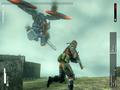
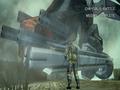
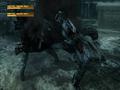
The title screen reveals that this is a port of the HD Edition that Bluepoint worked on several console generations ago. That version was absolutely solid and well liked because it provided proper dual-analog controls that weren't possible on the original PSP. By that standard, this port is good, but several elements could have been improved. There is an issue where the sound cuts out for a second, and when this happens during cut scenes, a word or two of dialogue can be lost. The polygon count also hasn't been increased, but the bigger problem is that the textures haven't been updated. Low-resolution textures are everywhere, from patches on the uniforms to the ground and other 2D elements, such as barbed wire. The HUD looks perfectly fine, but the dated textures stick out like a sore thumb. The game does support upscaling the internal resolution to 1080p and the overall image to 4K, but those textures make the port feel adequate rather than something more fitting for the modern era.
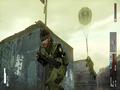
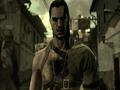

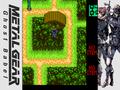
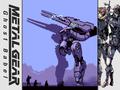
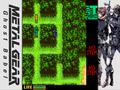
The final game in the package is Metal Gear: Ghost Babel, which was renamed Metal Gear Solid in some regions. This Game Boy Color title marks the first time the series appeared on a portable console. It is a game some people may have missed, especially since it was released about a year before the Game Boy Advance debuted. It is also not considered part of the main Metal Gear storyline. The story takes place seven years after the events of Metal Gear 2: Solid Snake, following the destruction of Metal Gear at the Outer Heaven base. Snake has spent that time living in Alaska in solitude when Colonel Campbell arrives to coax him into another mission involving terrorists and the potential for nuclear war. Just as Snake is about to walk away, two things convince him to accept: the nuclear threat involves another Metal Gear, something Snake thought he destroyed long ago, and the mission once again takes place in Outer Heaven.
Ghost Babel may be an alternate sequel to Metal Gear 2, but much of its story feels heavily influenced by Metal Gear Solid. The plot goes beyond a simple infiltration mission by dealing with themes such as legacy and the futility of a war that never seems to end. Bosses arrive with lengthy backstories that lead to tragic endings, while Snake is betrayed in practically every way possible yet continues to carry out his duty. Considering Game Boy Color titles didn't feature deep narratives at the time, it is impressive how much story Ghost Babel manages to fit onto the handheld. Even without Kojima's direct involvement, it feels right at home with his broader work on the series.
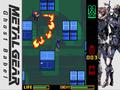
The gameplay similarly finds a balance between adapting Metal Gear Solid and retaining elements from the older games. It remains a top-down title with many familiar mechanics, including the ability to press against walls, but it lacks features such as a first-person viewpoint, enemy grabs, knockouts, and body dragging. Instead, some mechanics are closer to the NES and MSX games, with defeated enemies simply disappearing after being punched. The more limited move set is noticeable if you're coming from the PlayStation and PS2 titles, but it doesn't prevent the game from feeling familiar.
That familiarity extends to the boss fights and overall structure. The bosses have distinctive attacks that fit their code names, although none are so difficult that you'll spend numerous attempts figuring out how to beat them. More surprising is how much the game mirrors Metal Gear Solid through its use of cut scenes. There are no voices, but there is plenty of dialogue, and characters routinely receive lengthy sections to deliver their backstories and monologues. The writing is strong enough to keep these scenes from becoming tedious, giving the game a good balance between substantial gameplay and lengthy 8-bit storytelling.
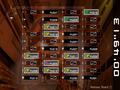
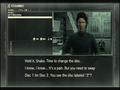
The game's 13-stage structure is another notable departure for the series. Rather than taking place in one large world divided into sections, each stage has its own results screen and score. Some revisit familiar areas with changes such as a blackout, while the stages remain fairly open to exploration. However, the overall progression is linear, and there is no backtracking. This format would go on to influence future portable entries, and it works surprisingly well.
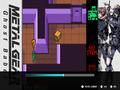
For a Game Boy Color title, the presentation is also impressive. The characters are large enough to remain recognizable while standing out against detailed backdrops, and the animations do a good job of re-creating what players saw in the original PlayStation game. The limited color palette occasionally becomes apparent during cut scenes, where colors can spill outside of their intended areas and create a blocky appearance, but otherwise, the visuals hold up well. The audio is similarly strong. There are no voices, but the mix of original compositions and 8-bit versions of Metal Gear Solid tracks sounds excellent. It's a shame that the full soundtrack isn't included in the bonus section.
The port adds a few interesting touches. Rewind is common in retro-emulated games, but it is still surprising to see it in the collection considering the main focus is 3D polygonal games that don't have the feature. Gamepad controls also make better use of the available buttons, mapping functions originally assigned to Select and Start to dedicated inputs. This makes actions such as going prone feel more natural while reducing some of the steps involved in inventory management. There are also the expected smoothing and LCD filter options, along with a fake blurred screen reflection that appears when the screen goes dark. Playing on an OLED display doesn't produce a pure black image during these moments, which actually does a good job of demonstrating how the LCD filter emulation works.
Like the first volume, the Steam version of the second volume splits the compilation into four separate entries. The first two represent the major games, while Bonus Content Vol. 2 contains selections from the Peace Walker and Guns of the Patriots soundtracks, with Ghost Babel being its main attraction. The fourth entry, titled Metal Gear Solid Master Collection Vol. 2, simply acts as a menu frontend for the other three. Unless you specifically need it to access web-based material such as the Metal Gear hub, YouTube channel, or X account, it is essentially useless and a waste of around 175 MB of storage.
The fourth app is made even less necessary by the fact that the bonus material for the two major games is already included in their respective packages. Both Peace Walker and Guns of the Patriots contain their screenplays and master documents, which detail their respective plots while summarizing other games in the series, including mainline and spin-off titles such as Metal Gear Survive.
This is great material, but it has a knock-on effect when it comes to the one extra exclusive to Guns of the Patriots: The Document of Metal Gear Solid 4. Like the game itself, this free stand-alone DLC was exclusive to the PS3, so its inclusion is welcome both as a preservation effort and because the eventual closure of the PS3 store means there would otherwise be no other way to access the software. At the same time, its contents are largely outdated by the master document, so few people will probably bother with it unless they want a nostalgia trip or want to compare the two documents for potential differences.

With 10 titles released across two collections, plus some other games still available separately, only a small handful of titles remain to be ported to PC and modern consoles. Interestingly, all of the missing titles are PSP games: the two Metal Gear Acid card-based games and both Portable Ops titles. None are considered canon and are instead treated as side stories, but with these collections already containing games such as Snake's Revenge and Ghost Babel, a third volume consisting solely of side stories isn't far-fetched. It would also be ideal for anyone wanting the complete experience on a single platform.
Thanks to the three different generations represented, performance across the package varies considerably on the Steam Deck. As expected, Guns of the Patriots is the heaviest game. It can run at 60fps most of the time, but major events such as explosions or large scenery changes can briefly drop it into the 30-40fps range. All of this comes with around two hours of battery life on the Steam Deck LCD model. Peace Walker fares better, staying at 60fps while providing around two-and-a-half hours of battery life. Ghost Babel comes in at around four-and-a-half, which is both good in itself and a reminder of the battery degradation that comes with using a four-year-old device.
Metal Gear Solid: Master Collection Vol. 2 is a good compilation overall. The games vary somewhat in their execution and porting quality, but they remain engaging titles in a series that isn't afraid to get weird or experiment. It is also nice to finally have a way to play the majority of these games on one platform at a time when some franchises still leave their biggest titles scattered across multiple inaccessible systems. Fans won't need much coaxing to pick up this compilation, but it is reassuring to know that some care went into putting it together rather than simply treating it as a quick-and-dirty ROM dump.
Score: 8.5/10
More articles about Metal Gear Solid: Master Collection Vol. 2