






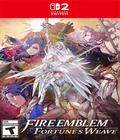
 Fire Emblem: Fortune's Weave is the newest entry in the Fire Emblem series featuring intertwining story, characters and turn-based tactical RPG gameplay.
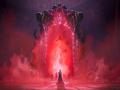
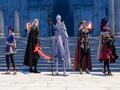
Fire Emblem: Fortune's Weave opens with the world destroyed. The demon god Balor has awoken and unleashed the risen dead as his army over the helpless land of Dadga. The only thing standing against him are the few survivors, rallied around a figure known as Eshmel who may be the only one who can defeat Balor. Unfortunately, Eshmel's power alone isn't enough, so the Goddess Fortuna sends them back in time to find and change the fate of four great heroes who can aid in the battle against Balor. The four heroes are Leda, a bard on a murderous revenge quest against those who destroyed her hometown; Cai, a young boy with a mysterious connection to the gods of Dagda; Dietrich, a bloodthirsty fighter from the far-off land of Fodlan; and Theodora, the queen of a kingdom seeking to redeem the honor of her goddess.
Fortune's Weave is absolutely wild for a Fire Emblem plot. When it opens with a battle between the hellish undead and a fort made out of a crashed futuristic spaceship, you know it's going all out, and the game somehow manages to stick to that level of crazy throughout. It's one of the more successful meshes of fantasy and sci-fi I can think of, and the cast and characters are consistently and constantly fun and engaging. It doesn't matter which path you follow or whose story you take; there's a lot to be engaged by, and I loved all four routes of the story.

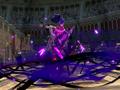

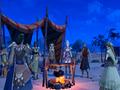

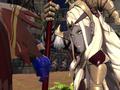

The story shows some very obvious signs of cut content. In playing the game, it's rather evident that it was originally intended to have eight protagonists, not four. The other four protagonists appear in the story and are even recruitable to join your party, but their stories are incomplete and truncated. There's even a pop-up later in the game telling you that to get their full story, you should do their storylines, but that's impossible to do! Considering how important some of these characters are, it's very distracting to have them in such a half-baked state. To the game's credit, they still are very present characters, and you get a reasonable idea about their plotline, but there are enough dangling mechanics and plot threads that it's easy to notice.
The gameplay in Fortune's Weave is divided into three separate parts. The premise is that the game begins in the postapocalyptic future, and your created protagonist Eshmel is stuck fighting a seemingly overwhelming battle against unstoppable forces. While you can decide to fight everything with the limited soldiers the game offers you, it's not a fantastic idea. Instead, your ally Fortuna is able to use her powers to send Eshmel back in time to attempt to avert the fates of great heroes who, if they survive, will be able to help turn the tide of battle in the dark future.
The first part is the pre-apocalypse scenario, where you can choose one of the four protagonists and take them through the Dagdan Games. The four heroes have overlapping but distinct storylines, and you guide the selected hero through their arena fights and storyline. Once you've saved at least one of the four heroes, you can opt to take that hero into the second part of the story, where you fight through the war and conflict that lead up to the apocalyptic endgame. The third and final part is that any surviving heroes, as well as any recruited characters, team up with Eshmel to fight Balor's forces and avert the end of days.
The first and third parts of the game use a calendar system similar to Three Houses. You're given a certain amount of "time periods" between each major conflict that you're able to use in a variety of ways, including exploring the world map, training, or gaining experience points. Major events, side-quests and hidden secrets can occur over time, particularly focused on the central city of Dagison, so you need to consider the exploration and training carefully to make sure you don't miss out on secrets or optional content.

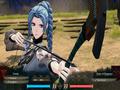
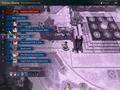
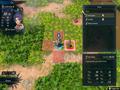
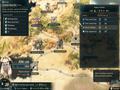
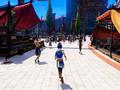
I mentioned a world map, and that is probably the biggest new feature in Fortune's Weave. Dagda is a massive continent, and you're able to explore the world map by moving your characters along set paths. There are countless directions to explore that can lead you to towns that have shops, farming locations that can be used to gather items for crafting or trade, dungeons that can be explored, skirmishes you can fight, and more. There are secret paths, hidden locations, and a frankly absurd amount of secrets to discover.
This is further amplified by the fact that each of the four playable heroes has their own distinct gimmicks on the world map. Cai is a child, so he's blocked from certain parts of the map, but in exchange, he can plant and harvest crops on empty squares and lure and capture mounts that he can use in combat. Leda can perform at various taverns for rare items and upgrades. As a queen, Theodora can recruit battalions from towns and use them to gather supplies; they can also use waterways. Dietrich's magical sword allows him to summon enemies to fight; in turn, the enemies can be harvested for magical crystals that can power up attacks.
This gets even more complex in the third part of the game, where you can deploy multiple character squads at once, allowing you to explore in multiple directions and use all of the character's gimmicks. This also comes with a mild strategic element, where enemies attempt to storm and destroy your home base, so you need to keep track of incoming enemies to stop them from invading. You can even use Theodora's battalions to temporarily delay them! The world map feels like a central part of the game, rather than an afterthought.
Of course, combat is a central part of the game, and it is both familiar and different from the standard Fire Emblem gameplay. The core strategy gameplay is still present, and a lot of the basic mechanics are still in play, but they've been changed or adjusted in some fashion. If you've never played a Fire Emblem game before, they are turn-based strategy RPGs where you and the opponent take turns acting, with combat playing out automatically based on a character's equipped weapons and stats once an attack has been initiated. Combat is intended to be brutal and lethal, with the option for a Classic mode, where killed units are lost permanently. A Casual mode does exist for those who don't want to risk losing units.

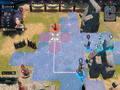

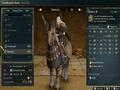
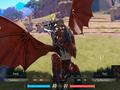
However, there are some notable changes. For one thing, the entire concept of weapons has changed significantly. The classic weapon triangle is gone. Now, each type of weapon has its own gimmicks: Swords do more damage if you can attack twice in a row, axes do flat damage no matter what, spears are strong against mounted foes, and gauntlets (ranging from fists to laser guns) are more efficient at dodging foes. This is in addition to bows, which can attack from a distance to retain their classic Fire Emblem strength.
Weapon durability has also changed a lot. Weapons have durability, but this durability is not used up when attacking. Instead, it only is spent if you use special Weapon Arts. These Arts are powerful techniques that can modify how a weapon functions, such as giving it higher hit rate, bonuses against certain types of defenses, and more. Use up your durability, and your weapon becomes borderline useless until repaired, with stronger weapons requiring rarer items to repair. It's an interesting change, but it means that certain good weapons are almost too good because they can be used in every fight.
Likewise, magic is familiar but different, using the Shadows of Valencia style versus the classic system, where magic is just another form of weapon. Each character has a distinct pool of magic spells they can learn, ranging from attacks to healing to support spells. Magic has a limited number of casts, which can only be replenished by resting (requiring either a time slot or certain foods) or at certain pre-determined points in the plot. This makes magic far more varied and interesting than classic Fire Emblem magic because it changes up how valuable or interesting certain characters are. One of my favorite characters was Mu, a brawler-focused slow-burn character who also happens to learn some amazing white magic spells if you decide to invest in her. She is a late-game class built around brawling, so white magic was perfect for her.
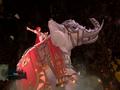
Classes return in a familiar way. There are five tiers of classes, ranging from common stuff like Gladiator to more esoteric things like War Elephants or Charioteers. Generally, each class specialized in one or two different kinds of weaponry, and changing to a specific class grants them access to specific skills and abilities. Master a class, and you can carry over some of those abilities to other classes, eventually allowing you to customize your ideal warriors. This is in addition to battalions and mounts, which also give bonuses to your characters.
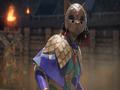
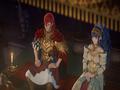
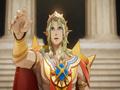
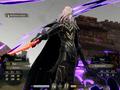
The cherry on top is Blaze Arts. Each of the eight protagonists, in addition to Eshmel, can access Blaze Arts. These are special character-specific abilities that they can use in combat, and for each character, they function differently. For example, Cai has a magical jewel in his palm and can use it to shoot fire that hits multiple spots at once. Dietrich can teleport. Leda can cast powerful buffing spells. Theodora can use her magic arm to hurl chunks of rocks halfway across the battlefield. Anatolia can use powerful martial arts that get stronger the more she fights without them. Orchel is immune to curses and negative status effects and can eventually enter a super mode. Bertrand can give himself a one-round power-up to various stats, while Talmun can debuff enemies.
However, Blaze Arts are tricky, as each character functions in different ways. Generally, the way Blaze Arts work is that using them will cost some HP and will build up a "Blaze" meter. Once that meter is about halfway through, the character will enter into an Overblaze, state where they can access stronger Blaze Arts and enhanced stats. If the meter fills up, they will "Burst," which causes them to lose max HP for the rest of the stage. This isn't a hard and fast rule, though. Dietrich is immune to Burst state. Anatolia and Eshmel build up Blaze by fighting and spend it to perform attacks. Cai and Theodora can nullify their Blaze in exchange for an action, while Leda can put herself permanently into Overblaze state (with the increased risk of Bursting). It's a very cool mechanic that makes each of the protagonists feel more distinct and useful, but it ties into the aforementioned "these feel like cut content" bits for the four Flame Lords who didn't get a protagonist spot.
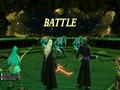
In addition to regular combat, there's also Clash combat, which mostly exists in the game's dungeons. Instead of strategy-RPG combat, this is turn-based RPG combat. You have a party of five characters, and you fight enemies in what amounts to a simplified version of the standard combat. The enemy picks one of their units to fight, and you select a unit to counter them. You can spend LP to give your character buffs, such as having another character attack alongside them or heal them after combat. The entire party shares one HP pool, and once that HP pool is drained, the side loses. HP doesn't replenish between combats, only when resting, so you need to be careful not to waste all your HP.

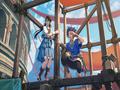
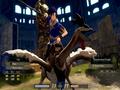
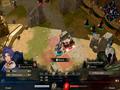
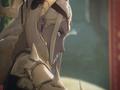
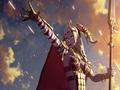

Overall, Fortune's Weave has excellent level design for its main stages. Each has distinct gimmicks and cool features, like stages where you deal with swarms of chariots trying to run you down or stages that take place entirely in the dark. It's a big step up from Three Houses' gimmicks. The randomized Skirmishes are rather lackluster, and I wished they were replaced with Clashes, but overall, the gameplay is solid, varied and interesting.
The only real negative is that the game isn't very hard. Even on the Hard difficulty mode, it takes a long while to get going, and it isn't until you hit the second part that things start to have a serious bite. You even get Godly Boons to use to give huge temporary buffs to your characters, and I avoided using them because they could trivialize danger in stages (up to and including rewinding time to undo a bad move). It's still a fun and engaging game, but I wish it had more of a bite.
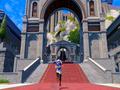
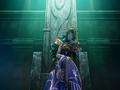
Visually, Fire Emblem: Fortune's Weave is a big step up from Three Houses in terms of model fidelity, graphics, and overall cut scene design. It has some incredibly cool visuals, and it looks and runs great. The character models aren't the fanciest on the market, but they do their jobs well. The voice acting is quite good, and there are several standouts who knock their role out of the park. My personal favorite is Dietrich's scheming false priest Fabio, whose voice actor absolutely nails his scenes. The soundtrack is also fantastic, containing a wide variety of brand-new tracks that make it one of my favorite Fire Emblem soundtracks ever.
Fire Emblem: Fortune's Weave is a genuine classic of a game. It's ambitious beyond belief, filled to the brim of content, constantly exciting and engaging, and I was barely able to put it down. Even with the obviously trimmed content, it doesn't feel like it's lacking anything. If anything, it's the most cohesive and fully featured Fire Emblem game I've ever played. The low difficulty level can be a touch of a drag, but it's the smallest of complaints and absolutely won't get in the way of the game being a true masterpiece.
Score: 9.5/10





More articles about Fire Emblem: Fortune's Weave